Why Choose a Fountain Maker for Global Sourcing?
Why Choose a Fountain Maker for Global Sourcing? The answer begins with practical experience, not attractive catalog images. A qualified Fountain Maker understands water pressure, pump efficiency, lighting, stone weight, drainage, and long-term maintenance. These details become critical when a project crosses borders. A fountain may look perfect in a showroom, yet fail when local water quality, voltage, or climate changes.
Mark Fuller, founder of WET Design and a respected fountain designer, once said, “Water is a powerful medium for creating emotion.” His view explains why global buyers should assess more than price. An experienced supplier can translate a design concept into accurate drawings, tested components, installation guidance, and dependable after-sales support. This process reduces communication gaps between architects, contractors, and purchasing teams.
Still, choosing internationally is not effortless. Samples may hide production weaknesses. Factory photos can look better than reality. I have seen sourcing decisions focus too heavily on discounts, while spare parts and service remain unclear. That is a mistake worth examining. A reliable Fountain Maker should provide material specifications, pump data, quality-control records, packaging details, and clear delivery terms. Video inspections and prototype testing can reveal problems early. Even then, no supplier is perfect.
The strongest partnership combines creativity with evidence. It considers the fountain’s sound, spray height, maintenance access, and nighttime appearance. It also respects local safety standards and environmental expectations. Global sourcing works best when trust is supported by documentation, transparent communication, and measurable performance.
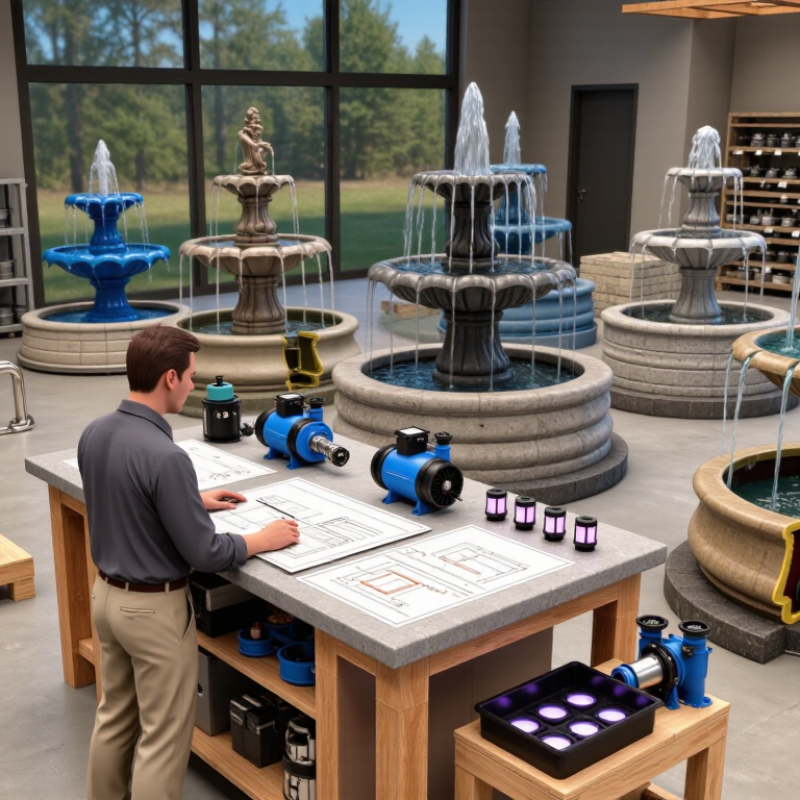
Understanding the Role of a Fountain Maker in Global Sourcing
Why Choose a Fountain Maker for Global Sourcing?
Understanding the Role of a Fountain Maker in Global Sourcing
A fountain maker does more than produce decorative water features. In global sourcing, this role connects design, engineering, production, and delivery. The maker translates drawings into workable structures, selecting suitable stone, metal, pumps, lighting, and waterproof coatings. During supplier evaluations, I look for clear material records, stable production methods, and practical quality controls. A reliable fountain maker also explains limitations before production begins. Small details matter.
Experienced makers can adjust designs for different climates, installation sites, and maintenance routines. For example, a fountain installed in a cold region may need stronger drainage and freeze-resistant components. A coastal project may require better corrosion protection. They should provide drawings, sample finishes, pump specifications, and packaging plans. A sample should be tested before mass production. That step is often skipped. This is where risk grows. In my experience, even skilled suppliers can miss a detail when communication is rushed. A dependable maker welcomes questions, records revisions, and confirms responsibilities in writing.
Tips: Request a material sample and a small working prototype. Ask how the pump will be accessed for cleaning. Confirm crate dimensions, spare parts, inspection points, and installation guidance. Keep one written specification for everyone. It may feel slow, but unclear instructions usually cost more later.
Why Choose a Fountain Maker for Global Sourcing? - Understanding the Role of a Fountain Maker in Global Sourcing
| Global Sourcing Dimension | What a Fountain Maker Handles | Relevant Data or Deliverable | Why It Matters to Buyers | Recommended Verification Evidence |
|---|---|---|---|---|
| Product Design and Engineering | Converts the project brief into a fountain design covering basin structure, water flow, pump capacity, access panels, drainage, lighting, and maintenance access. | Technical drawings, 3D files, water-flow specifications, pump requirements, material schedule, and installation drawings. | A coordinated design reduces compatibility problems between the basin, pump, pipework, lighting, and control system. | Approved drawings, bill of materials, sample inspection records, and documented design revisions. |
| Material Selection | Selects materials according to application, climate, water exposure, structural load, appearance, and maintenance requirements. | Material grade, thickness, surface treatment, color reference, corrosion resistance requirements, and approved samples. | Outdoor installations may face rain, ultraviolet exposure, freeze-thaw cycles, chemicals, and continuous water contact. | Material certificates, coating specifications, sample approval, and inspection photographs. |
| Pump and Hydraulic System | Matches pump performance with fountain height, nozzle arrangement, pipe diameter, water volume, filtration, and operating conditions. | Flow rate, total head, power input, pipe size, nozzle type, filtration method, and operating duty. | Incorrect hydraulic sizing can cause weak water effects, excessive energy use, noise, or premature pump failure. | Pump datasheet, hydraulic calculation, factory test, water-pattern test, and electrical test record. |
| Electrical Safety and Controls | Coordinates pumps, underwater or outdoor lighting, timers, control panels, sensors, cables, earthing, and protection devices. | Rated voltage and frequency, ingress-protection requirement, control logic, cable specification, emergency isolation, and wiring diagram. | Water and electricity require controlled installation, suitable enclosures, correct isolation, and protection against moisture. | Wiring diagram, electrical safety test, enclosure rating documentation, grounding test, and installation manual. |
| Regulatory and Market Compliance | Identifies the applicable requirements for the destination market and separates product compliance from installation and site obligations. | Applicable standards, electrical ratings, product test reports, declarations, labeling, manuals, and local installation requirements. | Requirements differ by destination, product configuration, voltage system, public-access conditions, and installation environment. | Independent laboratory reports, technical file, conformity documentation, labels, and destination-market review. |
| Prototype and Sample Validation | Builds prototypes or production samples and verifies dimensions, appearance, water patterns, sound, drainage, access, and assembly. | Approved sample, dimensional report, water-effect test, assembly checklist, defect list, and corrective-action record. | Early validation identifies design problems before tooling, bulk production, packing, and international shipping. | Signed sample approval, inspection checklist, dated test video, and controlled revision history. |
| Quality Control | Defines incoming-material checks, in-process controls, final inspection, leak testing, functional testing, and packing inspection. | Inspection level, acceptance criteria, critical defects, dimensional tolerances, water-leak result, electrical test result, and packing status. | Documented inspection criteria make quality measurable and reduce disputes between buyers, factories, installers, and logistics providers. | Pre-production, during-production, and pre-shipment inspection reports with photographs and corrective actions. |
| Packaging and International Logistics | Plans product separation, moisture protection, shock protection, crate design, spare-part packing, loading, and shipping documentation. | Packed dimensions, gross and net weight, carton or crate count, handling marks, spare-parts list, and agreed Incoterm. | Fountains may combine fragile finishes, heavy structures, pumps, glass, lighting, and small installation components in one shipment. | Packing specification, loading photos, packing list, commercial invoice, transport documents, and damage-prevention procedure. |
| Installation and Commissioning | Provides installation guidance for foundations, leveling, pipe connections, electrical interfaces, water treatment, testing, and commissioning. | Site requirements, foundation loads, connection points, commissioning checklist, water-quality requirements, and operating procedure. | A well-made product can still fail if the site preparation, pipework, electrical work, or water treatment is unsuitable. | Installation manual, site checklist, commissioning report, training record, and as-built documentation. |
| After-Sales Support and Spare Parts | Maintains replacement-parts information and supports troubleshooting for pumps, nozzles, seals, filters, lights, controllers, and valves. | Parts list, exploded drawings, maintenance schedule, troubleshooting guide, warranty terms, and service contact process. | Accessible spare parts can reduce downtime and total lifecycle cost for commercial and public installations. | Spare-parts compatibility list, service manual, warranty procedure, and documented response workflow. |
| Total Cost of Ownership | Evaluates purchase price together with energy use, water treatment, cleaning, consumables, maintenance, replacement parts, freight, and installation. | Equipment cost, estimated power demand, maintenance frequency, consumables, spare-parts pricing, installation scope, and operating assumptions. | A lower initial price does not necessarily mean a lower lifecycle cost when energy, maintenance, downtime, and replacement parts are included. | Cost model, operating assumptions, maintenance plan, energy data, spare-parts quotation, and lifecycle review. |
Note: Applicable regulations, electrical requirements, test methods, and installation obligations should be confirmed for the destination country and the specific fountain configuration.