Industrial Machinery Company

What Are the Top Types of Restaurant Coolers?

Choosing a Restaurant Cooler is not just about finding a cold box that fits. It is about matching storage to the pace, menu, and layout of a working kitchen. A busy line may need chilled ingredients within arm’s reach, while a high-volume operation may rely on larger, shared storage. Small details matter. Door swing, shelf depth, airflow, and cleaning access can shape daily work more than a product photo suggests.

This guide looks at the main types of restaurant coolers, including reach-in units, walk-in coolers, undercounter models, prep-table refrigerators, and display merchandisers. Each serves a different purpose. A reach-in keeps backup stock close; an undercounter unit can save steps in a tight bar; a prep table keeps toppings chilled beside the work surface. Walk-ins offer substantial capacity, but they require suitable space and careful planning. There is no universal best choice.

Reliable selection starts with practical checks. Compare usable capacity, temperature controls, door construction, energy use, and service access. Review manufacturer specifications, and confirm that equipment suits your menu and local food-safety requirements. Ask installers or qualified refrigeration technicians about ventilation, clearances, and maintenance before committing. These checks may feel tedious. They can prevent costly surprises. Still, specifications do not tell the whole story: staff habits and delivery schedules matter too. The sections ahead explain where each cooler type fits, what trade-offs to expect, and which questions deserve a second look.

What Are the Top Types of Restaurant Coolers?

How Restaurant Coolers Are Classified by Design and Use

Restaurant coolers are best classified by installation and task, not by a single size label. Walk-in coolers hold bulk stock and support deliveries; reach-ins keep frequently used ingredients close to prep counters. Undercounter units save floor space, while display coolers make packaged foods visible to customers. The categories overlap. A busy kitchen may use all four.

Use determines the best layout. A reach-in beside a grill should keep raw ingredients separate from ready-to-serve foods, with shelves easy to wipe and inspect. Walk-ins need clear aisles for carts and airflow around stored cases.

For time/temperature control for safety foods, the FDA Food Code 2022 sets cold holding at 41°F (5°C) or below. A cooler’s label does not guarantee safe storage; staff need to check actual product temperatures.

Design also affects energy use. Glass doors help customers see products, but frequent opening can raise heat gain. Solid-door units may suit back-of-house storage better. The U.S. EPA reports that qualified commercial refrigerators use about 20% less energy than standard models. That figure is a useful comparison, not a promise of equal savings in every kitchen. Door seals, loading habits, and warm kitchen air matter. A cooler can look right on paper and still underperform in daily service.

Reach-In Coolers for Convenient Everyday Storage

Reach-in coolers keep ingredients close to the prep line, making them useful during busy service. A cook can grab a pan of chopped onions without leaving the station. Choose a door layout that fits the available space and the way staff move through the kitchen. A narrow aisle may make a wide door awkward. Small details matter.

Inside, adjustable shelves help separate containers and accommodate taller items, such as stockpots. Leave room for cold air to circulate instead of packing every shelf tightly. Use a visible thermometer and check temperatures regularly; follow applicable food-safety guidance for the foods you store. Keep raw ingredients below ready-to-eat foods in covered, clearly identified containers. That takes practice.

Daily habits affect performance. Wipe spills promptly, inspect door gaskets for gaps, and avoid holding doors open while searching for supplies. Dust and grease on condenser coils can reduce cooling efficiency, so clean them according to the equipment manual and your maintenance schedule. A reach-in is convenient, but it is not a substitute for sensible stock rotation. In a crowded kitchen, even a well-sized cooler can feel cramped by the end of a shift; reviewing shelf use can reveal what needs to move.

Reach-In Coolers: Everyday Food Storage Temperature Benchmarks

Use a thermometer to check storage temperatures regularly. Keep cold-held time/temperature control for safety (TCS) foods at 41°F (5°C) or below; USDA recommends keeping freezers at 0°F (-18°C) or below.

Sources: FDA Food Code (cold holding); USDA Food Safety and Inspection Service (freezer storage guidance). Values shown in °F.

Walk-In Coolers for Bulk Food Storage

A walk-in cooler is a practical choice when a restaurant receives large deliveries or stores ingredients for several service periods. It offers room for cases of produce, dairy, and prepared foods without crowding smaller reach-in units. Before choosing a size, measure the available floor area and consider how staff will move carts through the doorway. A roomy cooler can still be awkward if shelves block the main path.

Good storage depends on airflow, temperature control, and daily habits. Leave space between products and the walls so cold air can circulate. Keep raw ingredients below ready-to-eat foods, and use clearly marked shelves to reduce mix-ups. A reliable thermometer and simple temperature log can reveal problems early. Follow local food-safety requirements for storage temperatures. Door seals matter. A damaged seal may let warm, humid air in, increasing frost and energy use. Even well-designed rooms need attention; busy staff may leave doors open longer than planned.

Tips: Put frequently used items near the entrance, and store heavier cases on sturdy lower shelves. Check temperatures and door seals daily. Don’t overload the room; blocked vents can create warm spots. Review the layout after a few weeks. The first arrangement may not suit actual service.

Undercounter and Prep-Table Coolers for Kitchen Workstations

What Are the Top Types of Restaurant Coolers?

Undercounter and Prep-Table Coolers for Kitchen Workstations

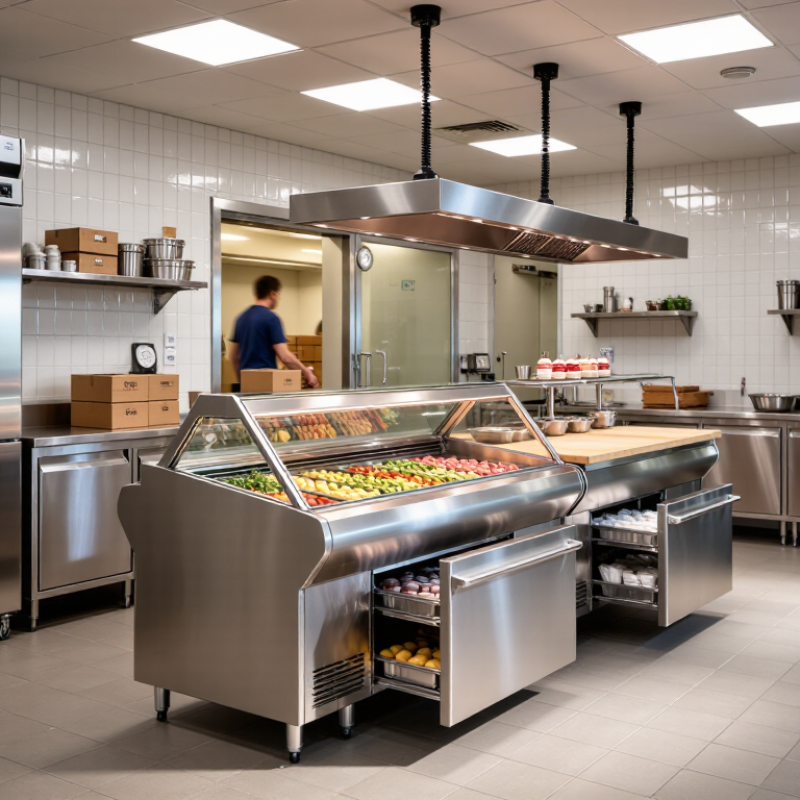
Undercounter coolers keep backup ingredients close to the cooking line, while prep-table coolers place chilled storage directly beneath the work surface. The right choice depends on the task. A compact unit can save steps beside a grill; a prep table suits stations assembling salads or sandwiches.

Small details matter. The FDA Food Code 2022 sets cold holding for time/temperature control foods at 41°F (5°C) or below. That is a holding limit, not a guarantee that every shelf stays evenly cold.

ENERGY STAR reports that certified commercial refrigerators use about 20% less energy than standard models. Treat that figure as a useful benchmark, not a promise for every kitchen. Frequent door opening, blocked vents, and hot product loads can affect performance.

For prep tables, check pan depth and layout against the actual menu. A crowded rail may slow service, even when the cabinet has ample storage underneath.

A common planning mistake is choosing by exterior size alone. Measure doorway clearance, aisle space, and peak prep volume before ordering. Then log temperatures during busy service, when lids may stay open longer.

Even a well-sized cooler can struggle if airflow is blocked or warm ingredients are loaded too quickly. That part is easy to overlook.

Display and Beverage Coolers for Service Areas

Display and beverage coolers keep drinks visible and within reach in dining rooms, bars, and pickup areas. Glass-door models suit bottled water, juice, and canned drinks; open-front cases allow quicker access during busy service. Visibility helps. Before choosing, measure the space with doors open and staff moving past. A cooler that fits on paper may still obstruct a service path.

Check the unit’s usable shelf area, lighting, and temperature range rather than relying on exterior dimensions alone. Bottles need enough clearance to stand upright, while adjustable shelves help accommodate different containers. For reliable performance, follow the manufacturer’s installation and loading guidance, and confirm that the equipment suits the products being held. Local food-safety requirements may also apply. Small details matter.

Placement affects both sales and daily work. Keep the cooler away from ovens, direct sunlight, and tight corners that restrict airflow. Leave room to restock without blocking customers or servers. Glass doors make products easy to browse, but fingerprints and condensation can dull the display, so plan for regular cleaning. I would not treat an attractive case as a substitute for good temperature checks; busy shifts can make small problems easy to miss. A simple log near the service station can help staff notice changes.