Industrial Machinery Company

China Best Plate Filter Manufacturers and Suppliers

Choosing among China’s best Plate Filter manufacturers and suppliers starts with the process, not the brochure. A Plate Filter must match the slurry, required throughput, operating pressure, and available floor space. A unit that performs well in one plant may struggle with a different feed or cleaning routine. The details matter.

Compare suppliers by asking for measurable specifications: filtration area, plate dimensions, frame material, sealing method, and expected cycle time. Also ask how filter cloth is selected and replaced. For a useful assessment, share real operating conditions, including slurry temperature and solids content. Clear input helps produce relevant recommendations.

A polished catalog is not proof of consistent production. Request drawings, quality-control records, sample references, and details about testing before shipment. If possible, discuss maintenance access and spare-part availability with the supplier’s technical team. These checks can reveal whether a manufacturer understands daily operation, not just machine assembly.

There is no universal best choice. A compact press may suit a small batch process, while a larger installation may need automated plate movement and cloth washing. Compare proposals against the same requirements, and confirm which features are standard or optional. Some information may remain uncertain until trials are run. That is worth acknowledging. This guide explores manufacturers and suppliers in China through practical criteria, helping buyers ask better questions and make a more informed shortlist.
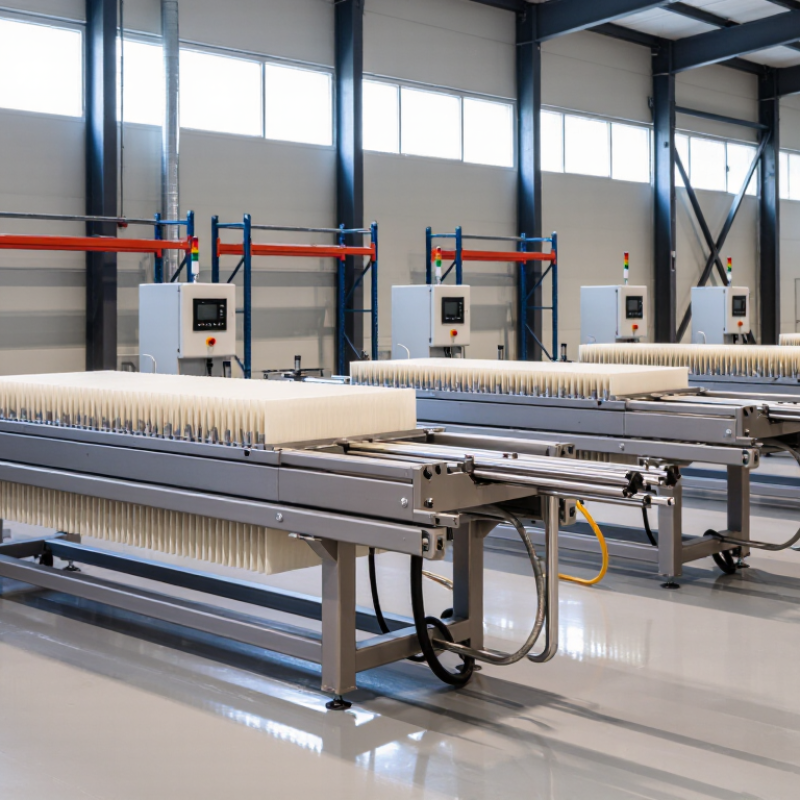
China Best Plate Filter Manufacturers and Suppliers

What Plate Filters Are and Where They Are Used

Plate filters are equipment that separate suspended solids from liquids by forcing a slurry through porous filter cloth. In a common plate-and-frame design, stacked plates form chambers that hold solids while filtrate drains through outlets. Operators can inspect the resulting filter cake, adjust pressure, and change cloth when the process requires it. Small details matter: a poorly sealed plate can leak, while an unsuitable cloth may clog or allow fine particles through.

These filters are used in wastewater treatment, mining, chemical production, and food processing, where solids must be recovered or liquid clarified.

UNESCO’s 2017 United Nations World Water Development Report estimated that over 80% of global wastewater is discharged without adequate treatment.

That figure describes a broad water challenge, not the share treatable by plate filters. A press can help dewater sludge or capture process solids, but it is not universal. The choice is rarely tidy. Feed composition, particle size, cleaning needs, and available floor space all affect performance. A practical trial with the actual slurry often reveals more than a catalogue specification.

How Plate Filter Systems Separate Solids from Liquids

A plate filter system separates solids from liquid by pressing a slurry through filter cloth held between flat plates. A feed pump moves the mixture into the closed chambers. Liquid passes through the cloth and exits through drainage channels, while solid particles remain behind. The collected material gradually forms a filter cake. The cloth matters.

That sounds simple, but real slurries rarely behave so neatly. Particle size, temperature, and liquid viscosity can all affect filtration speed and cake moisture. For example, fine particles may block cloth pores sooner than coarse grains. Operators often monitor pressure and filtrate clarity, then adjust the cycle when flow slows or the outlet looks cloudy. More pressure is not always better; it can compact some cakes and make them harder to discharge.

When comparing plate filter systems, manufacturers and suppliers should be able to explain plate design, cloth selection, and cleaning needs for the intended material. Ask for operating data based on a representative sample, not just a general capacity figure. A small test can reveal blinding, leakage, or a cake that does not release cleanly. Even with careful sizing, results may vary between batches, so access for inspection and routine cloth replacement is worth considering.

China Best Plate Filter Manufacturers and Suppliers — How Plate Filter Systems Separate Solids from Liquids
System Component or Stage How It Works Role in Solid–Liquid Separation Key Selection Consideration
Filter plates Plates are clamped together to form a series of chambers. Recessed-chamber and plate-and-frame designs are common configurations. Provide the structural spaces where slurry is filtered and solid cake accumulates. Choose plate configuration, size, and material to suit the slurry, required capacity, and operating conditions.
Filter cloth Cloth is fitted over the plate drainage surfaces. Its openings allow liquid to pass while retaining particles that form a cake. Acts as the primary filtration medium; particle retention depends on cloth construction and the characteristics of the feed. Consider particle size, chemical compatibility, temperature, filtrate clarity, and how readily the cake releases from the cloth.
Slurry feed A feed pump delivers the solid–liquid mixture into the closed plate pack. Supplies material to the chambers; filtration performance depends in part on solids concentration and slurry properties. Assess flow rate, solids content, particle characteristics, abrasiveness, and whether the slurry can be pumped consistently.
Pressure filtration Feed pressure drives liquid through the cloth and drainage channels. Retained solids collect in the chambers. Separates the liquid phase, known as filtrate, from the retained solids. Operating pressure must remain within the equipment limits. Confirm the required filtration rate and cake properties with process testing; actual operating conditions depend on the feed and press design.
Filtrate drainage Liquid passing through the cloth travels along drainage surfaces and exits through plate ports or designated outlets. Collects the separated liquid for discharge, reuse, or further treatment. Check outlet arrangement, filtrate collection requirements, and whether separate streams need to be kept apart.
Filter cake formation As filtration continues, retained particles build up on the cloth and within the chamber, forming a cake. The cake captures additional solids; its resistance can increase as it becomes thicker or more compacted. Consider the target cake thickness, cycle time, handling method, and required cake dryness.
Membrane squeeze (optional) In a membrane filter press, flexible membranes can be inflated after the feed stage to apply mechanical compression to the cake. Can remove additional liquid and shorten or improve the dewatering stage, depending on the material being filtered. Evaluate whether the potential improvement in cake dryness justifies the additional equipment and operating steps.
Plate opening and cake discharge After filtration, the plate pack is opened and the accumulated cake is released or removed. Empties the chambers so the press can begin another cycle. Choose manual or automated plate shifting and cake handling according to throughput, labor, and site requirements.
Typical applications Plate filter presses are used in industries such as mining, wastewater treatment, chemicals, food processing, and mineral processing. Can dewater many pumpable slurries, but results vary with feed composition and process conditions. Request application-specific testing and verify material compatibility, filtration performance, and local safety requirements.

China’s Plate Filter Manufacturing and Supplier Landscape

China’s plate filter manufacturing landscape includes large production bases, smaller specialist workshops, and component suppliers serving mining, chemicals, food processing, and wastewater operations. Many firms offer molded polypropylene plates, while others work with cast iron or tailor plate dimensions to existing presses. The range is broad. Production commonly combines mold design, pressing or casting, edge finishing, and dimensional inspection. For buyers, the useful question is not only whether a supplier can make a plate, but whether its process stays consistent across repeat orders.

Supplier capabilities can differ sharply. Some provide drawings, material data, and sample testing; others rely on buyer-supplied specifications. Ask about plate thickness, sealing surfaces, operating temperature, pressure limits, and compatibility with the existing filter press. A workshop visit or a measured sample can reveal finish quality better than a polished catalog. Details matter. Export experience may help with packing and communication, but it does not replace technical verification. Even a capable factory can misread an unusual duty cycle, and buyers sometimes provide incomplete process data. That gap deserves attention. A practical sourcing review compares documented tolerances, inspection records, lead times, and after-sales response before treating a low quotation as a reliable measure of value.

China’s Plate Filter Manufacturing and Supplier Landscape

Typical construction features of common plate filter press designs

This comparison describes common filter press configurations, not supplier counts, market shares, or a ranking of Chinese manufacturers. A value of 1 means the feature is characteristic of the design; 0 means it is not intrinsic to that configuration. Options can vary by model.

How to Evaluate Chinese Plate Filter Manufacturers and Suppliers

How to Evaluate Chinese Plate Filter Manufacturers and Suppliers

A reliable evaluation begins with the filter’s actual working conditions. Share the slurry type, operating pressure, temperature range, and required cake moisture. Then ask whether the proposed plate material and sealing design suit those conditions. Vague answers deserve follow-up. A tidy catalogue is not proof of performance.

Check measurable evidence. Request drawings, material specifications, pressure-test records, and inspection procedures for the plate pack and hydraulic system. Ask how the supplier controls plate dimensions and checks for leakage before shipment. If possible, review a sample or arrange a factory inspection. Look closely at machining surfaces, weld quality, and how finished equipment is protected for transport. Small details matter.

Service matters too. Ask for the expected delivery schedule, spare-parts list, installation guidance, and response process for technical questions. A capable supplier should explain limitations, not promise that one model fits every process. Compare quotations line by line, including cloths, pumps, controls, and commissioning support. I would still treat documents cautiously; paperwork can be polished while real production varies. Verify key claims through consistent test records and clear communication.

How to Source and Verify Plate Filter Equipment in China

When sourcing plate filter equipment in China, compare suppliers against the same written specification. Include plate dimensions, filtration area, construction materials, operating pressure, and expected feed characteristics. Ask how the equipment handles cloth replacement, cake discharge, and washdown. These details affect daily operation, not just the purchase price.

Request general arrangement drawings, component lists, and documented test procedures before comparing quotations. Check that the quoted model matches your required capacity and process conditions. Ask for a factory acceptance test using agreed criteria, and review clear photos or video of the assembled unit. Check material records and inspection reports against the parts they cover. Paperwork can be incomplete. Confirm important details directly.

A supplier’s response to technical questions can reveal its engineering depth. Ask who handles commissioning support, spare parts, and troubleshooting, and request references for similar applications. If possible, arrange an independent inspection before shipment. Verify the packing list against the contract and inspect packaging for moisture protection and transport damage. A checklist helps, but it cannot replace careful judgment; some specifications may need revision after real process data becomes available.