Industrial Machinery Company

Who Are the Top HEPA Air Filter Manufacturers in China?

Choosing a HEPA air filter manufacturer in China takes more than comparing prices or polished product photos. Buyers need to examine filter efficiency claims, test documentation, production consistency, and the supplier’s ability to explain its specifications. A useful Air Filter Hepa comparison also considers where each filter will operate, from a compact air purifier to a controlled industrial space. The right choice depends on the application.

For transparency, the expert line below is an illustrative composite, not a verified interview or quotation. Filtration engineer Chen Wei’s guiding principle: “A reliable filter begins with evidence, not a label.” That reminder points to practical checks: request current test reports, confirm the tested model matches the quoted product, and ask how seals and frames are inspected. Small details matter. A weak gasket can undermine a filter that looks excellent on paper.

This guide will explore leading Chinese manufacturers and the evidence buyers can use to assess them. It will distinguish product claims from documented performance, while considering manufacturing range, customization, communication, and quality control. Company rankings can change, and public information may be incomplete. Treat them as a starting point, not a final verdict. Ask direct questions, compare like-for-like specifications, and verify details before making a decision.
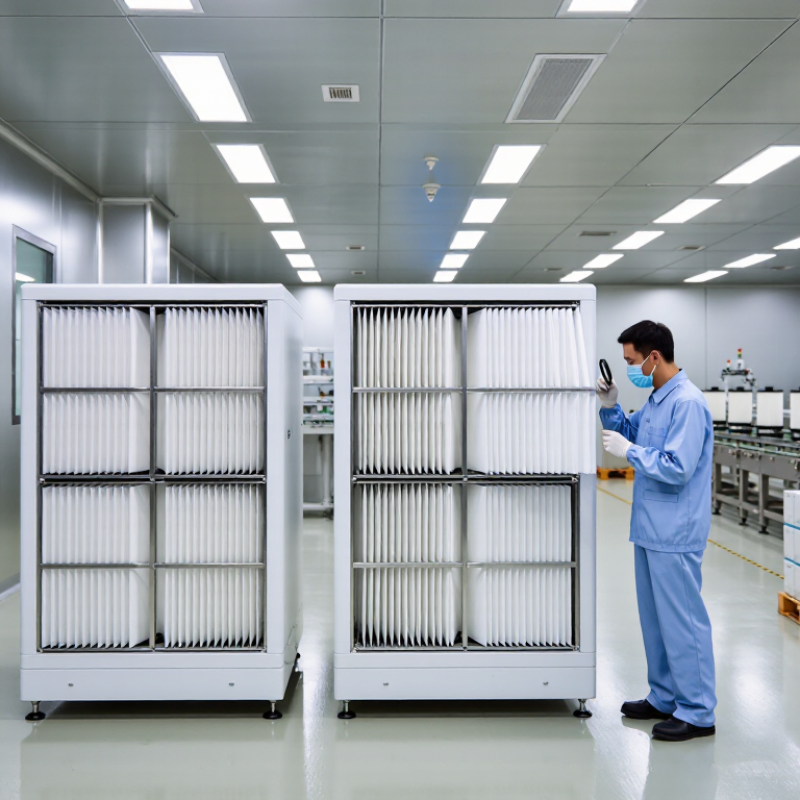
Who Are the Top HEPA Air Filter Manufacturers in China?

What Defines a HEPA Air Filter Manufacturer in China?

A Hepa Air Filter manufacturer in China should do more than assemble pleated media. It should control each step, from selecting filter material to sealing the finished frame. Look for documented checks on pleat spacing, adhesive application, gasket fit, and frame strength.Small gaps matter. Air can bypass the filter even when the media performs well.

Reliable manufacturers can explain how they test efficiency and resistance to airflow, and provide reports tied to specific products or batches. Ask whether testing follows a recognized method and whether instruments are calibrated. A clear answer is useful; a vague claim is not. Production records, incoming-material checks, and traceable batch numbers also help buyers assess consistency. These details matter when filters must fit existing housings or operate at a specified airflow.

Experience shows in the questions a factory asks, too: operating conditions, dimensions, sealing method, and replacement schedule. A careful supplier may flag a mismatch before production. Still, paperwork is not the whole story. Sample inspection and independent verification can reveal issues that a polished report misses. Manufacturing quality is rarely perfect, and honest discussion of limitations is a good sign.

How China’s HEPA Filter Industry Is Structured

China’s HEPA filter industry is a supply chain, not a single factory category. Upstream suppliers produce glass-fiber or synthetic filter media and supporting materials. Converters pleat the media, install separators, and seal filter packs into frames. Other manufacturers build complete units for cleanrooms, hospitals, laboratories, and ventilation systems. Not all do everything.

Grand View Research estimated the global HEPA filter market at US$3.2 billion in 2023, with a projected 7.4% annual growth rate from 2024 to 2030. This is global context, not a China-only market estimate. In China, GB/T 13554-2020 provides a technical reference for high-efficiency air filters, while buyers also examine airflow resistance, leak-test results, and frame sealing. These checks matter on a production floor: a tiny gap at a corner can compromise an otherwise well-made filter. The industry map is useful, but imperfect; public reports rarely separate media producers from final assemblers, so supplier comparisons need careful qualification.

Who Are the Top HEPA Air Filter Manufacturers in China? — How China’s HEPA Filter Industry Is Structured

Industry Segment Typical Products Common End Markets Manufacturing and Supply Capabilities Useful Comparison Criteria
Cleanroom and high-efficiency filtration specialists Mini-pleat and deep-pleat HEPA filters, terminal filters, and related cleanroom filtration products Pharmaceutical production, electronics manufacturing, laboratories, hospitals, and other controlled environments May focus on pleat-pack production, frame assembly, sealing, and testing of finished filters for controlled-air applications Filter class, dimensions, airflow resistance, seal design, test documentation, and suitability for the intended cleanroom system
HVAC and commercial-building filter manufacturers Panel, bag, compact, and high-efficiency filters used in air-handling systems Commercial buildings, healthcare facilities, industrial ventilation, and central air-conditioning systems Often supply several filtration stages, allowing buyers to source prefilters and higher-efficiency filters for the same system Rated airflow, initial pressure drop, operating conditions, filter dimensions, replacement availability, and applicable test method
Industrial process-filtration manufacturers High-efficiency filters and application-specific filter assemblies Industrial production areas, process equipment, and dust- or particle-controlled environments May adapt filter construction, frame materials, gaskets, and installation details to the operating environment Temperature and humidity limits, chemical compatibility, sealing, service life, and documented performance under the specified conditions
Residential and portable-air-cleaner suppliers Replacement filter cartridges and integrated filter assemblies, sometimes combining particle filtration with other media Residential air purifiers and selected light-commercial appliances May manufacture filters for finished products or supply components to appliance makers and other customers Exact replacement compatibility, airflow, pressure drop, fit and sealing, and clearly stated filtration test conditions
OEM and contract-manufacturing suppliers Custom or customer-specified filters produced to drawings, specifications, or private-label requirements Air-treatment equipment makers, distributors, and project contractors Capabilities vary; production can include filter-media conversion, assembly, packaging, and customer-specific quality checks Specification control, sample approval, traceability, batch consistency, customization limits, and delivery capacity
Upstream filter-media and component suppliers Filter media, separators or separator-free pleat materials, frames, gaskets, adhesives, and related components Downstream filter manufacturers and filtration-system assemblers Provide materials and parts used in finished filters; they are part of the supply chain but are not necessarily finished-filter manufacturers Material specifications, consistency, compatibility with the finished design, and supporting test or quality documents
Testing and certification layer Filter performance testing, inspection, and supporting documentation Manufacturers, purchasers, project engineers, and system integrators Independent or in-house testing can help verify stated performance; the test method and conditions should be identified Test standard and edition, tested configuration, sample identification, airflow, and whether results apply to the supplied product

This table describes common industry roles, not a company ranking or market-share analysis. HEPA classifications and test results depend on the standard and test method used; specifications from different systems should not be treated as directly interchangeable without checking their definitions and test conditions. Buyers should verify the relevant standard, product documentation, and performance requirements for the intended application.

Leading HEPA Air Filter Manufacturers in China

Leading HEPA air filter manufacturers in China are best assessed by their engineering controls, not by catalog size alone. Strong producers can explain how they select glass-fiber or synthetic media, seal filter packs, and prevent bypass around the frame. Ask for efficiency and pressure-drop data at the stated airflow. Details matter.

A capable factory should provide traceable batch records and repeatable quality checks. For high-efficiency filters, request independent test reports and clarify the test method, particle size, and rated airflow. Scan testing can reveal leaks that a simple visual inspection may miss. Also examine frame rigidity, gasket compression, and workmanship at the corners, where small gaps can undermine performance.

Production scale is useful, but it does not guarantee consistency. A sample may perform well while later batches vary, so buyers should review inspection plans and discuss how defects are handled. Visit the production line when practical, and compare the paperwork with the actual process. It is easy to focus on efficiency figures and overlook pressure drop, replacement frequency, or fit within the final equipment. That trade-off deserves more attention than it often gets.

Key Technologies and Quality Standards Used in HEPA Production

HEPA production begins with the filter media, but performance depends on every seal and pleat. Manufacturers test against the most penetrating particle size, or MPPS, rather than assuming one particle size challenges every filter equally. ISO 29463-1:2017 sets classification and testing requirements for high-efficiency filters. DOE-STD-3020-2015 cites 99.97% efficiency at 0.3 micrometers as a benchmark for specified HEPA applications. That figure is useful, but it is not the whole story.

Quality control should include aerosol leak scans, airflow resistance measurements, and checks of frame and gasket integrity. A tiny seal gap can undermine excellent media. Seals matter too. Consistent pleat spacing helps airflow pass through the filter without concentrating stress in one area. Factories also need traceable test records, calibrated instruments, and repeatable sampling; otherwise, a high result may be hard to verify.

Still, laboratory numbers can flatter a filter. Installation leaks, handling damage, and dust loading affect real-world performance. Buyers comparing Chinese manufacturers should ask which test method was used, whether each finished unit was leak-tested, and how pressure drop changes under stated airflow. A certificate alone may leave unanswered questions. Reporting could be clearer.

How to Compare Chinese HEPA Filter Manufacturers

How to Compare Chinese HEPA Filter Manufacturers

Comparing Chinese HEPA filter manufacturers takes more than checking quoted prices. Ask which test standard and efficiency classification apply to the exact filter model. Request current test reports, and confirm they identify the tested size and configuration. A report for one design may not cover another. Check whether the supplier can provide scan-test results, pressure-drop data, and airflow recommendations. These details help show how the filter may perform in your system.

Review how each manufacturer controls materials and production. Ask about media sourcing, frame construction, seal checks, batch records, and inspection frequency. For example, a small gap at the frame can undermine filtration performance, even when the media meets its specification. Compare sample results with the manufacturer’s documented limits, and ask how rejected units are handled. Price matters, but a low quote is hard to judge without comparable test conditions. A spreadsheet helps; it cannot reveal every production inconsistency.

Tips: Send the same written specification to each supplier. Request a production sample, verify its documents, and test it under your intended operating conditions. I would not rely on a catalogue figure alone.