Top 10 Enclosed Circuit Breaker Manufacturers 2026
Electricity systems are expanding, but every new connection still needs dependable fault protection. The International Energy Agency’s Electricity 2024 report projected average global electricity-demand growth of 3.4% annually from 2024 to 2026, following 2.2% growth in 2023. The U.S. Department of Energy’s 2023 National Transmission Needs Study also describes substantial long-term grid expansion needs. These trends do not predict sales for any single product. They do underline why reliable circuit protection matters.
An Enclosed Circuit Breaker combines switching and overcurrent protection within a housing designed for a particular installation. Selection depends on more than brand recognition. Buyers should compare rated current, voltage, interrupting capacity, enclosure protection, applicable standards, and the availability of technical support. A breaker chosen for a dusty workshop may not suit a damp outdoor cabinet. Details matter.
This 2026 manufacturer overview compares companies using publicly available product documentation, certification information, market presence, and support resources. It is intended as a practical starting point, not a substitute for engineering review or local requirements. Rankings cannot capture every project condition, and published specifications may change. Some manufacturer claims also deserve closer verification. That is worth remembering. Check current datasheets and consult a qualified professional before specifying equipment for a real installation.
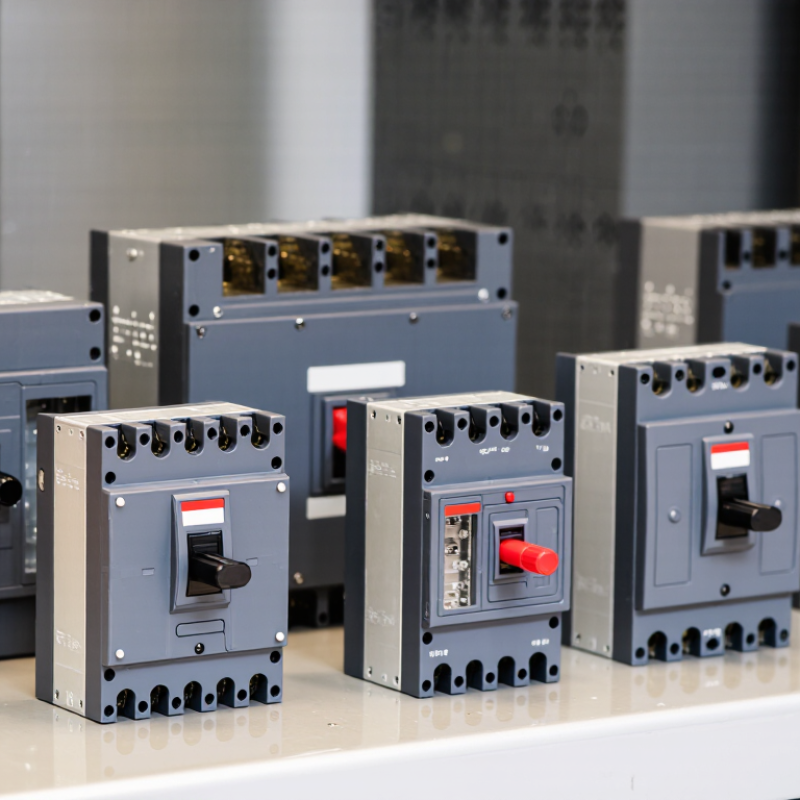
What Enclosed Circuit Breakers Are and How They Work
An enclosed circuit breaker combines switching contacts and protective mechanisms inside an insulated or metal housing. It opens a circuit when current exceeds a safe level. During an overload, a thermal element—often a bimetal strip—heats and bends, releasing the trip mechanism. A short circuit produces a much faster magnetic response. The contacts separate, and an internal arc-control assembly helps extinguish the resulting arc. A small click. The handle may move to a tripped position, but resetting it without finding the cause can invite another fault.
IEC 60947-2 sets requirements for low-voltage circuit breakers used in industrial and similar applications. Selection depends on factors such as rated current, voltage, pole count, and short-circuit breaking capacity. The enclosure helps contain and protect components, but it does not make an incorrectly rated breaker safe. A trip is a clue, not a diagnosis. NFPA’s 2021 report, Electrical Fires, estimated an annual average of 46,700 U.S. home structure fires involving electrical failure or malfunction during 2015–2019. That figure covers many electrical causes, not breaker failures alone. It shows why protection needs sound sizing, installation, and inspection—not just a sturdy-looking case.
| Top 10 Enclosed Circuit Breaker Manufacturers 2026 - What Enclosed Circuit Breakers Are and How They Work | |||
|---|---|---|---|
| Brand-neutral guide to enclosed circuit breakers and practical criteria for evaluating manufacturers. The factors below are not a company ranking. | |||
| Evaluation Dimension | What to Check | Why It Matters | How to Verify |
| 1. Product definition | An enclosed circuit breaker is a circuit breaker installed in a protective case or enclosure, often supplied as a self-contained unit for mounting and connection. | The enclosure helps protect people from contact with live parts and can shield the device from specified environmental conditions. It does not, by itself, guarantee suitability for every environment. | Check the product documentation for the breaker type, enclosure construction, intended mounting, and stated environmental limits. |
| 2. Current rating and application | Confirm the rated current, number of poles, system voltage, frequency, and whether the device is intended for the specific circuit and load. | A breaker must be selected for the electrical system and the conductors and equipment it protects. The correct current rating depends on the installation and applicable electrical rules. | Compare the nameplate and technical data with the system design and the applicable local electrical code. |
| 3. Overload protection | Review the breaker’s long-time or thermal protection function and the available trip settings, where adjustable. | Overload protection responds to current above the normal operating level for a sustained period, helping limit overheating of conductors and equipment. | Review trip curves, setting ranges, and coordination requirements. Do not assume every enclosed breaker has adjustable settings. |
| 4. Short-circuit operation | Check how the breaker detects and interrupts high fault current, including its instantaneous or short-time trip functions where provided. | During a fault, the breaker’s contacts separate and an arc is controlled and extinguished by the device’s internal design. The enclosure is not a substitute for the breaker’s interrupting capability. | Consult the manufacturer’s time-current curves and rated short-circuit data for the intended voltage and installation conditions. |
| 5. Interrupting capacity | Verify the rated short-circuit breaking or interrupting capacity at the applicable system voltage. | The breaker must be able to safely interrupt the prospective fault current at its installation point. A rating stated at one voltage should not automatically be applied at another. | Compare the published rating with the calculated or otherwise established prospective fault current and follow the applicable standard. |
| 6. Trip unit and sensing | Determine whether protection is thermal-magnetic, electronic, or another documented design, and identify which protection functions are included. | Trip technology affects available settings, measurement features, and coordination options. Features vary by model and should be verified rather than presumed. | Check the trip-unit specification, protection-function list, setting instructions, and any required configuration tools. |
| 7. Enclosure protection | Review the enclosure’s stated ingress protection, material, corrosion resistance, and suitability for indoor or outdoor use. | Dust, water, corrosive atmospheres, and temperature can affect service life and safety. An IP rating describes specified ingress protection; it does not alone establish all environmental suitability. | Check the enclosure rating and installation conditions. Confirm that covers, cable entries, and fittings preserve the required protection level. |
| 8. Standards and certification | Identify the standards and approvals applicable to the breaker, enclosure, and target market. Examples include IEC 60947-2 and UL 489 for relevant circuit-breaker categories. | Standards and certifications provide a basis for assessing design and test requirements, but requirements differ by product type and jurisdiction. | Request the exact standard edition, certification details, and documentation for the specific model and configuration. |
| 9. Accessories and installation | Assess terminal arrangements, cable-entry options, auxiliary contacts, shunt trips, undervoltage releases, and other accessories where available. | Compatible accessories can support system control and monitoring, while unsuitable connections or installation conditions can compromise performance. | Use the product’s compatibility tables, wiring diagrams, installation instructions, and specified conductor requirements. |
| 10. Testing, support, and lifecycle | Evaluate technical documentation, product traceability, warranty terms, replacement availability, and access to qualified service support. | Reliable documentation and service help with commissioning, maintenance, fault investigation, and future replacement. | Ask for test reports or declarations where applicable, maintenance guidance, spare-part information, and support arrangements for the intended region. |