China Top Circular Knitting Machine Manufacturers?
Choosing among China’s top Circular knitting machine manufacturers requires more than comparing prices or browsing polished product photos. A Circular knitting machine must match the fabric, production volume, and operating conditions of the mill. Gauge, cylinder diameter, feeder configuration, and knitting speed all affect what a machine can produce. Small specification differences can change fabric weight, texture, and output consistency.
Details matter.
This guide introduces manufacturers and the factors buyers can use to assess them. It considers machine range, customization options, quality-control practices, technical documentation, and after-sales support. Buyers should also ask for clear specifications, sample-fabric results, spare-parts availability, and realistic delivery and service commitments. Where possible, a factory visit or live machine demonstration can help verify how equipment performs beyond the catalogue. Not every machine fits every mill. A high-speed model may appear attractive, yet prove unsuitable for a particular yarn or production plan. Manufacturer claims should therefore be checked against actual requirements and, ideally, independent references. The comparisons that follow aim to make that evaluation more practical, while recognizing that product lines and service quality can change over time. The right choice is not simply a famous name; it is a dependable machine and support arrangement suited to the buyer’s work.
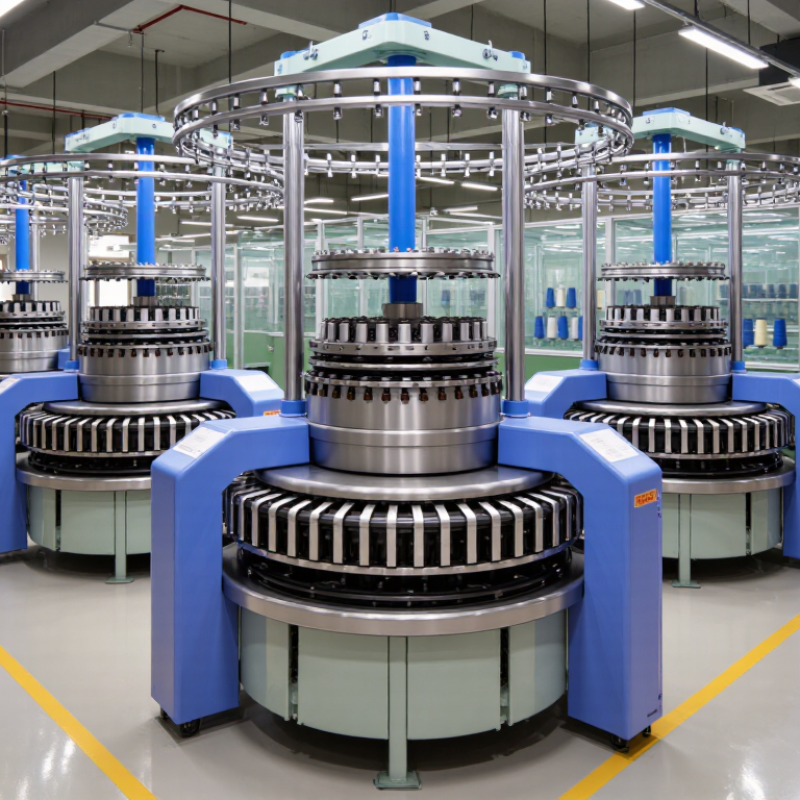
Overview of China's Circular Knitting Machine Industry
China’s circular knitting machine industry is closely tied to a large, varied textile base. The China National Textile and Apparel Council reported that above-designated-size textile enterprises generated about RMB 4.7 trillion in operating revenue in 2023. That figure covers the wider textile sector, not knitting machinery alone, but it shows the scale of the domestic market. Demand comes from producers making jersey, rib, and interlock fabrics for apparel, underwear, and home textiles.
Machine selection depends on fabric type, gauge, diameter, and expected production speed. Buyers should also examine needle and cylinder quality, electronic control stability, spare-part availability, and the time needed for routine maintenance. Small details matter. A consistent stitch on a sample roll may not guarantee stable output across a long production run. The International Textile Machinery Federation’s International Textile Machinery Shipment Statistics tracks machinery shipments by category and region, offering useful context on investment cycles. However, shipment figures do not reveal every factory’s utilization or service experience. That gap deserves attention. China’s manufacturing ecosystem offers broad equipment choices, yet specifications and after-sales support can vary between suppliers. A careful assessment should include fabric trials, energy use, and repair response times—not only quoted speed or purchase price.
| Industry Dimension | Overview | Practical Details |
|---|---|---|
| Industry Scope | China's circular knitting machine industry supplies equipment for producing tubular knitted fabrics. | The manufacturing ecosystem includes machine assembly, knitting components, control systems, spare parts, and technical services. Capabilities vary by manufacturer and model. |
| Single Jersey Machines | Produce single-knit fabrics with a distinct face and back. | Common fabric uses include T-shirts, lightweight apparel, and some lining materials. Machine configuration and yarn selection determine fabric weight and hand feel. |
| Rib and Interlock Machines | Use needle arrangements on more than one needle bed to form double-knit structures. | Rib fabrics are commonly used for cuffs, collars, and stretch garments; interlock fabrics are often used where a more balanced, stable surface is required. |
| Fleece and Terry Machines | Designed to form fabrics with a looped or fleecy back, depending on the machine setup. | Typical applications include sweatshirts, casualwear, and selected towel or terry fabrics. Yarn feeding and loop formation affect fabric appearance and performance. |
| Jacquard Machines | Provide pattern-selection capabilities for knitted designs. | Depending on the system, they can produce patterned fabrics for apparel, sportswear, and home textiles. Pattern complexity and production speed depend on machine design and settings. |
| Key Specifications | Important specifications include cylinder diameter, machine gauge, number of feeders, and knitting system. | Gauge describes needle density along the needle bed and is commonly expressed as needles per inch. Diameter, gauge, and feeder count should be selected for the target fabric and production requirements. |
| Yarn Compatibility | Machine suitability depends on yarn type, yarn size, fabric structure, and feeding equipment. | Commonly knitted fibers include cotton, polyester, viscose, nylon, and blends. Elastane can be used on appropriately equipped machines and requires suitable yarn-feeding control. |
| Production Factors | Output is influenced by machine speed and configuration as well as the fabric being produced. | Stitch length, yarn characteristics, feeder count, machine diameter, pattern complexity, and downtime all affect production. Actual output should be confirmed through a model-specific trial. |
| Quality and Maintenance | Consistent fabric production relies on correct setup, component condition, and process control. | Routine checks commonly cover needles, sinkers, cams, yarn tension, lubrication, fabric defects, and machine cleanliness. Spare-part availability and service support are important purchasing considerations. |
| Purchasing Checklist | Match the machine to the intended fabric, yarn, and production plan. | Compare machine structure, supported gauges and diameters, automation, energy requirements, commissioning, training, warranty terms, spare parts, and after-sales support. Confirm specifications directly with the supplier. |
Note: This overview describes common machine categories and selection factors. Specifications and performance depend on the individual machine model and operating conditions.