Industrial Machinery Company

What Are the Top Bathroom Towel Holder Types in 2026?

In 2026, choosing a Bathroom Towel Holder is about more than matching a faucet finish. The right style keeps towels within reach, helps them dry, and fits the room’s daily rhythm. A slim wall-mounted bar can free up floor space beside a narrow vanity. Hooks suit busy family bathrooms, though thick towels may bunch together and dry more slowly. Freestanding racks offer flexibility, but their bases can feel awkward in a tight walkway. Small details matter.

This guide compares the main types, including towel bars, rings, hooks, freestanding stands, over-door options, and heated holders. It considers installation, usable space, material, cleaning, and the number of towels each design can handle. Measure first. A holder that looks compact online may extend farther than expected once its arms or towels are in place. Check wall material and mounting instructions before choosing a fixed model; secure installation affects both stability and everyday use. For renters, a removable option may be practical, but adhesive products still need a suitable, dry surface and realistic load expectations. No single type suits every bathroom. A household with several damp bath sheets has different needs from a guest powder room. Even the neatest-looking choice can disappoint if towels stay crowded or the holder blocks a door. The comparisons ahead aim to make those trade-offs easier to judge, rather than treating one style as universally best.
What Are the Top Bathroom Towel Holder Types in 2026?

How Bathroom Towel Holders Differ in Form and Function

A towel bar gives bath towels room to spread, which helps them dry between uses. A single straight bar suits a narrow wall, while a double bar adds capacity without using much more space. The trade-off is reach: towels on the lower rail may hang close to a vanity or toilet. Small details matter.

A ring keeps a hand towel close to the sink and takes up little wall space. Hooks are even more compact, and they work well for robes or towels used by one person. But a towel folded over a bar generally dries faster than one bunched on a hook. Not always. A freestanding rack can solve a no-drill problem, though its base may crowd a small floor.

Placement and construction affect daily use as much as shape. Measure the towel’s width and the available wall before choosing a bar; leave enough clearance for doors and drawers. In damp bathrooms, favor finishes made to resist corrosion, and check that the mounting hardware suits the wall surface. A secure bar matters. It should hold a wet towel without pulling loose. The best type depends on how many people share the room, where towels are used, and whether clear floor space matters more than extra hanging room. A neat-looking holder can still be awkward if it sits too far from the shower.

Wall-Mounted Towel Bars and Rings for Everyday Use

Wall-mounted towel bars and rings keep everyday towels visible, dry, and within reach without taking up counter space. A straight bar suits bath towels because it lets fabric spread instead of bunching. A ring works well beside a sink, where a hand towel needs only a short reach. Measure the door swing and nearby drawers before drilling; a holder that looks neat can still block a cabinet. Small detail. Big payoff.

The 2024 Houzz U.S. Bathroom Trends Study reported that 86% of renovating homeowners upgraded plumbing fixtures, reflecting close attention to functional bathroom hardware. A towel holder is not a plumbing fixture, but it deserves the same practical planning: choose corrosion-resistant metal, secure the mounting points into a stud or suitable wall anchor, and leave enough clearance for the towel to hang freely. AARP’s 2024 Home and Community Preferences Survey found that 75% of adults aged 50 and older want to remain in their homes as long as possible. That makes reachable placement worth considering now, not only during a later remodel. I would not assume one height suits every household; test the reach with the people who use the bathroom daily.

Hooks, Racks, and Ladders for Compact Bathrooms

What Are the Top Bathroom Towel Holder Types in 2026?
Hooks, Racks, and Ladders for Compact Bathrooms

In a compact bathroom, towel holders need to dry fabric without blocking drawers or doorways. Hooks take up little wall space and suit towels used every day, but folded towels may dry slowly. A short wall rack keeps towels spread out. Check its depth against nearby cabinets before installing it. A leaning ladder adds several drying bars and can move when needed. It still needs a stable, level floor.

Tips: Measure first. Leave room for towels to hang freely, and check that a door won’t hit the holder. For damp rooms, choose rust-resistant hardware and follow the fitting instructions. Wall-mounted racks should attach to suitable supports, not just decorative surface layers.

Match the holder to your household’s routine. One person may need only a hook beside the shower; a family might prefer a rack with separate bars. Ladders look airy, though their feet can crowd a narrow walkway. I’ve found that the prettiest option is not always the easiest to use when towels are wet and heavy. Test the spot with a folded towel before drilling. A small adjustment can save daily frustration.

Freestanding and Over-the-Door Holders for Flexible Placement

Freestanding and over-the-door towel holders offer flexibility when drilling into tile is impractical or a bathroom layout may change. A freestanding rack can sit beside a tub, vanity, or laundry basket; its position can shift as household needs change. Check its footprint and base stability before buying. A narrow rack may fit beside a vanity, but a crowded walkway is still a crowded walkway.

Over-the-door holders use otherwise idle space and work well in rentals or compact bathrooms. Measure the door thickness and clearance first; a poorly fitted hook can scrape paint or stop the door from closing. Keep damp towels spread apart, too. A crowded bar slows drying, so convenience has limits.

The AARP 2021 Home and Community Preferences Survey found that 77% of adults aged 50 and older want to remain in their homes as they age. That finding is not about towel racks, but it supports planning for everyday reach and adaptable placement. NKBA’s 2024 Bath Trends Report also highlights accessibility as an ongoing design consideration. In practice, place frequently used towels where the user can reach them without stretching or stepping around obstacles. A freestanding rack is movable, not automatically safer; its weight, floor grip, and clearance matter. I would rethink placement after a week of actual use. The best spot is often less obvious than expected.

What Are the Top Bathroom Towel Holder Types in 2026? - Freestanding and Over-the-Door Holders for Flexible Placement

Holder type Placement and installation Typical capacity Best suited to Main advantages Things to consider
Freestanding towel rack Stands on the floor; no drilling or permanent fitting required. Often 2–4 bars, depending on the design. Rentals, larger bathrooms, and households that want to move a holder easily. Portable, easy to set up, and can provide several hanging levels. Uses floor space; a stable base and room for airflow between towels are helpful.
Over-the-door rack or hooks Hangs over the top edge of a door; generally needs no drilling. Commonly several hooks or 1–2 bars, depending on the model. Small bathrooms and spaces with unused door surfaces. Makes use of vertical space and is usually simple to reposition. Check door thickness, clearance, and whether the door can close without scraping the frame.
Over-the-door towel bar Suspends one or more horizontal bars over a door or shower enclosure edge, as specified by the design. Usually 1–2 bars. People who prefer towels to hang open rather than folded on hooks. Offers a hanging surface without wall mounting and can keep towels off the floor. Measure the mounting edge first; not every bar fits every door or enclosure.
Wall-mounted towel bar Secured to a wall, typically with screws and suitable anchors. Usually one bar per fitting; multiple bars can be installed separately. Bathrooms with an available wall and a preferred permanent position. Keeps the floor clear and provides a fixed place for towels. Requires appropriate fixings for the wall surface; relocating it leaves mounting holes.
Suction-cup towel holder Attaches to a smooth, clean, non-porous surface using suction. Typically one bar or a small number of hooks. Temporary placement on suitable tile or glass surfaces. Can be removed or repositioned without drilling when the surface is compatible. Grip depends on surface condition and correct installation; textured or porous surfaces may not work.
Tension-pole towel rack Fits between floor and ceiling using adjustable tension; no permanent wall fitting is usually needed. Often has multiple adjustable bars or arms. Bathrooms with a suitable floor-to-ceiling space and limited wall options. Uses vertical space and can be adjusted or moved without drilling. Requires a stable, compatible ceiling and floor; check height range and installation instructions.

Capacity and fit vary by product. Measure available space and check the installation requirements before choosing a holder.

Heated Towel Rails and How to Choose the Right Type

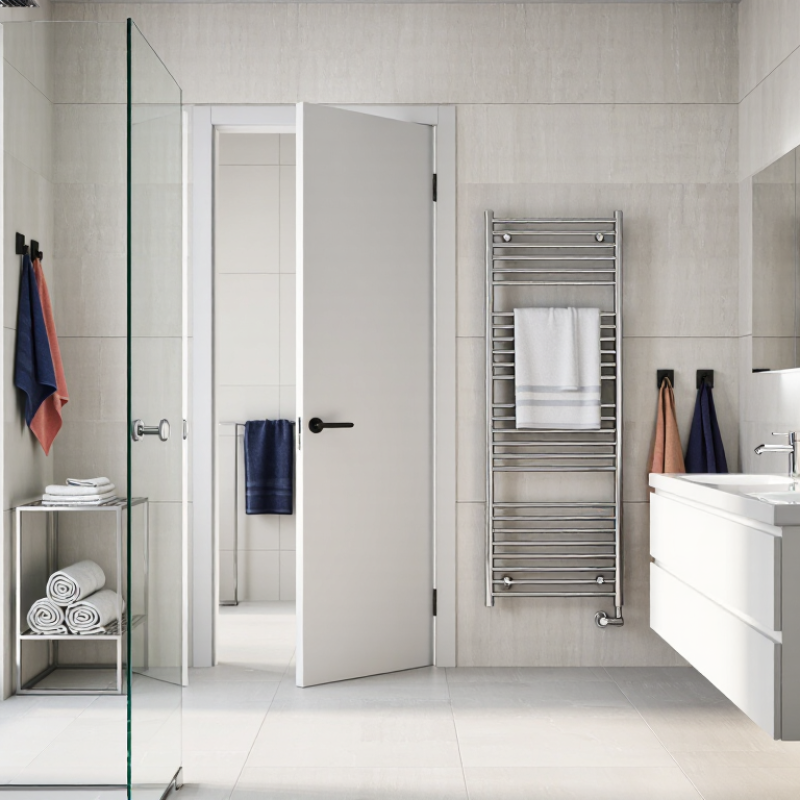
Heated towel rails add gentle warmth while keeping towels off the floor. In 2026, common options include electric rails, hydronic rails connected to a heating system, and dual-fuel models. Electric rails can suit bathrooms without central heating pipes. Hydronic models may work well in homes with compatible heating, but their output depends on the system. A ladder-style rail holds several towels; a slim vertical design can fit a narrow wall. Warmth matters. So does usable hanging space.

Choose a rail by measuring the wall and checking how many towels your household uses. Look at the manufacturer’s stated heat output, control settings, and installation requirements. A timer or adjustable thermostat can help avoid running the rail longer than needed. Think about towel thickness, too: bulky bath sheets need wider gaps to dry properly. It is easy to focus on appearance and overlook reach. That small oversight can make daily use awkward.

Tips: Measure twice, including nearby doors and fixtures. Confirm that the chosen model is suitable for your bathroom and intended location. Have a qualified installer assess electrical connections or pipe compatibility. If possible, mark the rail’s outline on the wall before installation. It may feel fussy, but it can reveal a cramped fit.

What Are the Top Bathroom Towel Holder Types in 2026?

Compare the typical installation connections for five common towel holder types. A value of 1 means the connection is typically required; 0 means it is not.

For a simpler installation, consider a freestanding or over-door holder. Electric heated rails need an electrical supply; hydronic heated rails connect to a hot-water heating system. Requirements vary by model and installation.