Industrial Machinery Company

What Are the Top Agitators for Global Buyers?

Global buyers are not choosing Agitators from a simple popularity list. They are matching equipment to viscosity, solids concentration, batch volume, and operating temperature. A thin liquid may need a high-speed turbine. A heavy slurry may require a low-speed, high-torque impeller.

The International Energy Agency reports that electric motor systems consume roughly half of the world’s electricity. That finding makes motor efficiency important during agitator selection. A small efficiency difference can become expensive after thousands of operating hours. Grand View Research also identifies rising demand for industrial agitators across chemicals, pharmaceuticals, food processing, and water treatment. However, market growth does not prove that one design fits every plant.

Edward L. Paul, co-author of Handbook of Industrial Mixing, stated, “Mixing is the process of reducing or eliminating inhomogeneities in a fluid.” This principle remains practical for global purchasers. They should examine power per volume, tip speed, shaft strength, seal design, and cleanability. Materials matter too. Stainless steel may suit hygienic production, while corrosion-resistant alloys can protect aggressive chemical processes.

Look inside the tank.

A useful purchasing comparison should include verified test data, not only catalog claims. Buyers can request mixing-time curves, motor efficiency certificates, noise data, and references from similar applications. ISO, IEC, and local safety requirements should also be checked before installation. The difficult part is often overlooked: a cheaper agitator may consume more energy or create maintenance delays. No single ranking is universally correct. The best choice depends on measurable process conditions, reliable supplier support, and honest review of operating experience.
What Are the Top Agitators for Global Buyers?

What Is an Agitator and How Does It Work?

What Are the Top Agitators for Global Buyers?

What Is an Agitator and How Does It Work?

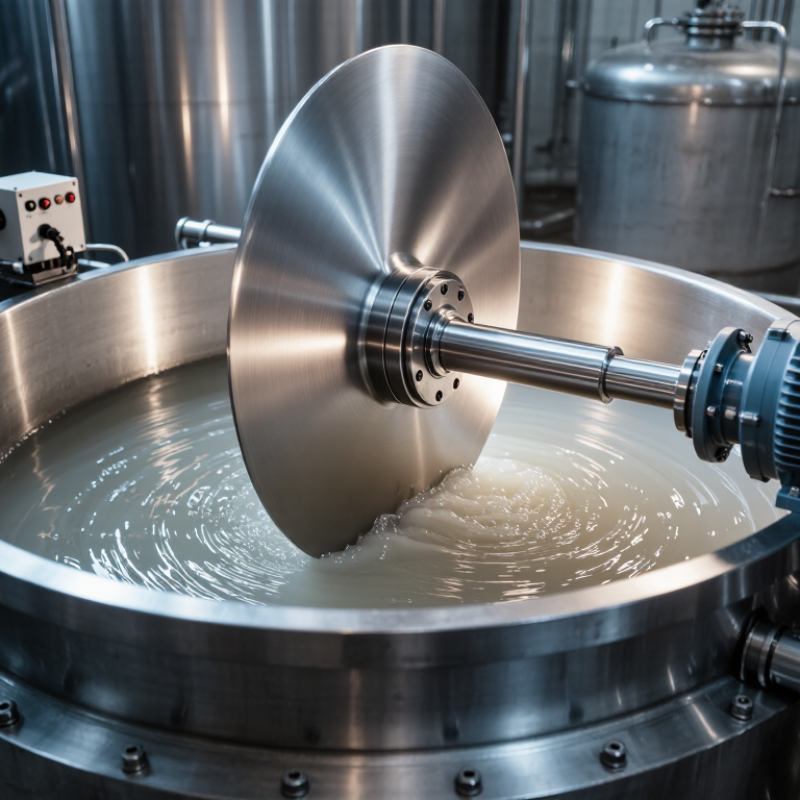
An agitator is a mechanical device that moves liquid, powder, or slurry inside a tank. Its motor turns a shaft connected to an impeller. The impeller creates circulation, blending materials throughout the vessel. Some designs produce strong axial flow, while others generate radial movement. The correct pattern depends on viscosity, tank shape, solids content, and mixing goals.

Common options include propeller agitators for low-viscosity liquids, paddle agitators for gentle blending, and turbine agitators for stronger dispersion. Anchor agitators suit thick materials because they sweep close to the tank wall. Scrapers can reduce buildup on heated surfaces. Baffles may prevent unwanted swirling and improve energy transfer. In practical plant evaluations, operators should check vibration, seal condition, noise, and mixing time. A small design mistake can leave heavy material near the bottom.

Tips: Define the required volume and viscosity before selecting an agitator. Ask for shaft speed, motor power, impeller diameter, and material specifications. Request test data when possible. Watch the tank during operation. Uneven color, floating powder, or sediment often reveals poor circulation. Buyers sometimes focus only on motor power. That can be misleading. Lower speed with the right impeller may protect sensitive materials and reduce energy use. Specification sheets help, but real process conditions still need careful review.

What Are the Top Agitators for Global Buyers?

Typical operating speeds of widely used industrial agitator types

An agitator is a rotating mixing device that transfers mechanical energy into a liquid or slurry to blend materials, suspend solids, disperse gases, or improve heat transfer. Propellers generally operate at higher speeds for low-viscosity fluids, while anchors and helical ribbons use lower speeds and higher torque for viscous products. The values shown are representative midpoints of commonly used industrial operating ranges; actual selection depends on viscosity, tank geometry, density, solids content, and the required mixing duty.

Which Agitator Types Serve Different Mixing Requirements?

Global buyers should match agitator geometry to the mixing duty, not simply choose the highest motor power. Propeller agitators suit low-viscosity liquids, such as water-based chemicals, where strong axial circulation matters. Pitched-blade turbines handle blending and suspended solids in medium-viscosity tanks. For gas dispersion, radial-flow turbines can create intense turbulence near the impeller. They may also consume more energy.

High-viscosity products need a different approach. Anchor agitators sweep close to the vessel wall, reducing stagnant zones in creams, coatings, and syrups. Helical-ribbon designs move thick material upward and downward through a narrow vessel. Scrapers can improve heat transfer when material sticks to the wall. The U.S. Department of Energy’s 2023 Motor Systems Market Assessment states that motor-driven systems consume about 70% of industrial electricity in the United States. Efficient impeller design therefore affects operating cost, not only mixing speed. A small calculation error can remain expensive for years.

Tips: Check viscosity at operating temperature, not room temperature. Request power-per-volume data and test results. Compare torque, tip speed, baffle design, and cleaning access. Use computational fluid dynamics carefully; it supports decisions but cannot replace pilot testing. The 2024 mixing equipment outlook from Grand View Research also identifies process efficiency and automation as major market priorities. Yet market reports often generalize across industries. Actual performance still depends on vessel shape, fill level, solids loading, and operator practice.

How Do Global Buyers Compare Agitator Performance?

Global buyers rarely compare agitators by speed alone. They examine mixing results under real operating conditions. A pitched-blade agitator may circulate low-viscosity liquids efficiently, while an anchor design suits thicker materials. High-shear units disperse powders faster, but they can increase heat and energy demand. The best choice depends on viscosity, tank geometry, batch size, and required product quality.

Performance testing should begin with measurable targets. Buyers can compare blend time, temperature rise, power consumption, and concentration differences between samples. A practical trial may collect samples from the tank top, center, and bottom. Uniform readings matter more than impressive motor ratings. Watch the current load. It often reveals whether the agitator is struggling with viscosity changes. Small details matter.

Maintenance also affects long-term performance. Buyers should inspect shaft vibration, seal condition, impeller wear, and cleaning access. A reliable agitator should maintain stable operation across expected batch variations. However, laboratory results may not predict full-scale behavior perfectly. Scale-up can expose dead zones or unexpected heating. I have seen a design perform well in a small vessel, then require revised impeller clearance after production testing. That is why independent trials, documented data, and supplier support deserve serious weight. Cheap equipment is not always economical. Neither is the most powerful option.

What Materials and Features Affect Agitator Selection?

For global buyers, agitator selection begins with the process material, not the motor size. Stainless steel suits many food, pharmaceutical, and water applications because it resists corrosion and supports cleanable surfaces. However, chloride-rich liquids can attack common stainless grades. Higher-alloy steel, plastic-lined vessels, or specialty coatings may offer better protection. The NACE IMPACT study estimated global corrosion costs at about 2.5 trillion dollars annually, equal to 3.4% of global economic output. Material choice deserves serious attention.

Viscosity and solids content also shape the impeller and drive system. Low-viscosity liquids often need axial-flow impellers for circulation. Thick adhesives, slurries, and creams may require close-clearance designs and higher torque. A 2024 industrial agitators market analysis by Grand View Research identifies chemical processing, food production, and wastewater treatment as major application areas. These sectors demand different combinations of shear, suspension, and sanitation. One design rarely fits every vessel.

Features such as variable-speed control, mechanical seals, load monitoring, and hygienic welds improve operating reliability. A sealed gearbox matters when dust or washdown water reaches the drive. Yet more features can increase maintenance complexity. That trade-off is easy to underestimate. Buyers should test the agitator with the actual liquid, temperature, solids, and cleaning cycle. Laboratory data helps, but scale-up still involves uncertainty. In practice, a slightly slower agitator with stable torque may outperform a powerful unit that creates foam, heat, or unnecessary wear.

How Can Buyers Evaluate Suppliers, Costs, and Compliance?

For global buyers, an agitator is more than a motor and impeller. It must match viscosity, tank geometry, temperature, and batch size. Select the design first, such as turbine, anchor, or helical ribbon. Ask suppliers for test data from comparable applications, not polished catalog images. Request shaft drawings, wetted-material specifications, seal details, and a clear duty statement. Small details matter. A minor shaft change can affect vibration and maintenance.

Supplier evaluation should combine technical evidence with factory discipline. Review calibration records, welding procedures, inspection photos, and references from similar process environments. A video call can reveal more than a brochure. Ask who performs final assembly and how defective parts are controlled. Compare total landed cost, including freight, duties, installation, spare seals, energy use, and downtime risks. The lowest quotation may become expensive after delivery.

Compliance needs its own checklist. Confirm material traceability, pressure-related documentation, electrical protection, and applicable regional requirements before placing an order. Request signed inspection reports and readable certificates. Requirements differ between countries and industries. Never assume one document satisfies every market. In supplier reviews, I have seen attractive offers fail because drawings were incomplete or certificates arrived late. That mistake is avoidable, but buyers sometimes rush. Leave time for an independent factory acceptance test, while admitting that even good tests cannot predict every production problem.

What Are the Top Agitators for Global Buyers? - How Can Buyers Evaluate Suppliers, Costs, and Compliance?
Agitator Type Typical Applications Recommended Viscosity Range Typical Tank Capacity Typical Operating Speed Indicative Power Range Main Supplier Evaluation Points Common Compliance Requirements
Propeller Agitator Low-viscosity liquids, blending, solids suspension, water treatment and chemical dilution Approximately 1–500 mPa·s 0.5–100 m³ 100–1,500 rpm 0.25–30 kW Hydraulic efficiency Vortex control Shaft rigidity Seal design Electrical safety, machinery safety, ingress protection, hazardous-area certification where applicable
Pitched-Blade Turbine General-purpose mixing, liquid blending, gas dispersion and moderate solids suspension Approximately 1–5,000 mPa·s 1–500 m³ 40–600 rpm 0.75–150 kW Axial-flow performance Baffle design Power number data Scale-up method Pressure-vessel interface requirements, electrical conformity, material traceability and site safety rules
Hydrofoil Agitator Energy-efficient blending, wastewater treatment, bulk storage and large-volume circulation Approximately 1–2,000 mPa·s 20–5,000 m³ 20–250 rpm 2.2–250 kW Low power consumption Flow distribution Fatigue analysis Submergence limits Motor and electrical conformity, structural calculations, corrosion protection and environmental operating limits
Anchor Agitator High-viscosity products, creams, coatings, polymers and heat-transfer applications Approximately 1,000–100,000 mPa·s 0.1–50 m³ 5–80 rpm 1.5–250 kW Wall clearance Torque capacity Jacket performance Wiper configuration Machinery safety, pressure and temperature limits, hygienic design for food or pharmaceutical service
Helical-Ribbon Agitator Very viscous materials, adhesives, sealants, pastes and heavy polymer formulations Approximately 10,000–1,000,000 mPa·s 0.05–20 m³ 2–60 rpm 3–300 kW High-torque gearbox Ribbon clearance Start-up torque Thermal control Gearbox safety, guarding, emergency-stop provisions, material compatibility and hazardous-area rules where relevant
High-Shear Rotor-Stator Emulsification, dispersion, particle-size reduction, cosmetics, food and specialty chemicals Approximately 1–50,000 mPa·s 0.005–10 m³ per batch or continuous process line 1,000–12,000 rpm 1.5–250 kW Shear-rate data Temperature rise Wear resistance Cleanability Guarding, noise limits, hygienic construction, electrical conformity and explosion protection for solvent service
Magnetic-Coupled Agitator Closed, sterile or contamination-sensitive processing in pharmaceutical, biotechnology and fine chemical production Approximately 1–10,000 mPa·s 0.01–20 m³ 50–1,500 rpm 0.1–45 kW Zero dynamic seal Containment integrity Sterilization compatibility Bearing life Clean-in-place and sterilize-in-place validation, hygienic design, surface-finish records and material certificates
Side-Entry Agitator Large storage tanks, petroleum products, wastewater equalization and low-to-medium viscosity blending Approximately 1–2,000 mPa·s 100–50,000 m³ 30–300 rpm 5.5–250 kW Nozzle loads Mechanical seal Tank reinforcement Maintenance access Tank and piping codes, hazardous-area electrical requirements, emissions control and structural approval
Buyer Evaluation Framework: Supplier, Cost and Compliance
Supplier Capability Review engineering resources, manufacturing capacity, export experience, reference installations and after-sales coverage in the destination market. Request process calculations, general arrangement drawings, motor and gearbox data, spare-parts lists and a documented quality plan. Recommended evidence: factory acceptance test procedure, inspection and test plan, weld-quality records, material certificates and service response commitments.
Purchase Cost Compare the complete delivered package rather than the agitator body alone. Include motor, gearbox, mechanical seal, control panel, variable-frequency drive, mounting plate, freight, customs duties, installation and commissioning. Commercial benchmark: obtain at least three technically equivalent quotations with identical duty conditions, delivery terms, warranty scope and spare-parts assumptions.
Operating Cost Assess motor efficiency, required power per cubic metre, annual operating hours, maintenance intervals and seal or bearing replacement frequency. For large tanks, a lower-speed hydrofoil or axial-flow design may reduce energy use compared with an unnecessarily high-shear configuration. Calculation basis: annual energy cost = rated operating power × annual operating hours × site electricity tariff, adjusted for actual load factor.
Materials and Corrosion Match wetted materials to pH, chloride concentration, temperature, solvents, abrasives and cleaning chemicals. Common choices include corrosion-resistant stainless steels, duplex grades, nickel alloys, coated carbon steel and engineered plastics, subject to process validation. Required records: material certificates, coating specification, surface-finish data, galvanic-compatibility review and corrosion allowance where applicable.
Compliance Review Confirm the regulations of the installation country and the process sector before placing the order. Typical checks include machinery safety, electrical conformity, electromagnetic compatibility, pressure equipment interfaces, hazardous-area requirements and occupational noise limits. Documentation: declaration of conformity where required, risk assessment, user manual, wiring diagrams, certificates and inspection records.
Factory and Site Testing Define acceptance criteria before production begins. Testing may cover no-load operation, vibration, noise, rotation direction, seal leakage, motor current, control interlocks and process-performance validation. Best practice: use signed inspection checkpoints, retain test data and specify corrective-action responsibilities in the purchase contract.
Note: Technical ranges are indicative engineering benchmarks for preliminary supplier comparison. Final agitator selection must be verified against tank geometry, liquid density, viscosity curve, solids loading, operating temperature, pressure, batch time, required mixing result, cleaning method and local regulatory requirements.