Choosing sheet metal fabrication machines is no longer a simple comparison of price, power, and cutting speed. Buyers now examine automation, energy use, software compatibility, service coverage, and operator safety. Deloitte’s 2024 Smart Manufacturing and Operations Survey found that 86% of manufacturers view smart manufacturing as important for competitiveness. That finding matters on a busy shop floor, where a connected press brake can reduce setup delays and expose production data in real time.
Automation is growing. According to the International Federation of Robotics’ World Robotics 2024 report, factories installed 541,302 industrial robots worldwide in 2023. Sheet metal plants increasingly connect laser cutters, bending systems, welding cells, and material towers. Yet advanced equipment does not automatically create better results. A poorly trained team can still produce scrap beside a premium machine.
Jeffrey K. Liker, a respected manufacturing systems expert, wrote, “The right process will produce the right results.” His statement fits this market closely. Machine selection should follow production needs, not showroom excitement. Material thickness, batch size, tolerance requirements, floor space, maintenance skills, and local technical support all deserve scrutiny.
This guide reviews ten leading sheet metal fabrication machines for global buyers. It considers practical performance, automation potential, operating costs, and supplier reliability. No ranking is perfect. Some comparisons remain difficult because manufacturers publish different testing conditions and incomplete lifecycle data. Buyers should verify specifications directly, request sample parts, and calculate total ownership costs before signing an order. A shiny specification sheet is not enough. The real test starts with metal on the table.
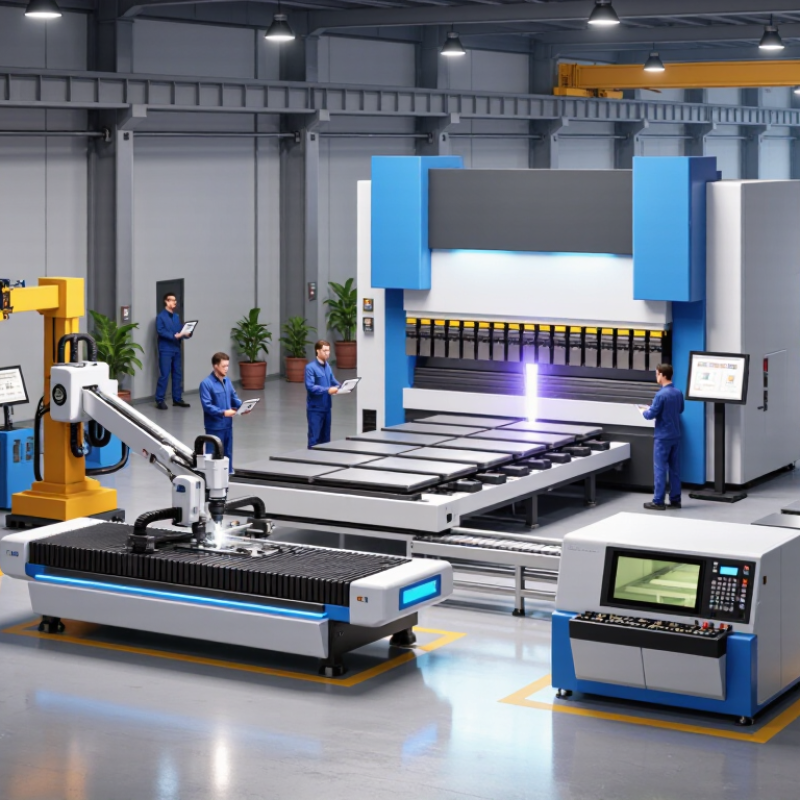
Top 10 Sheet Metal Fabrication Machines for Global Buyers
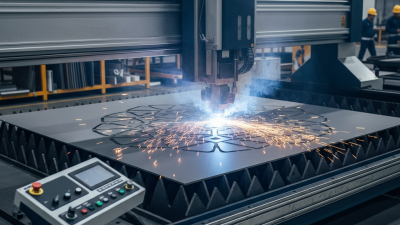
Sheet metal fabrication machines perform different tasks across cutting, forming, punching, and finishing. Laser cutting machines create precise profiles with narrow heat-affected zones. Plasma cutters handle thicker steel quickly, although their edges may need more finishing. Waterjet machines cut heat-sensitive materials without thermal distortion. Mechanical and hydraulic shears provide straight cuts for repeated production.
Press brakes bend flat sheets into accurate angles using controlled force. Turret punch machines produce holes, slots, and shaped openings efficiently. Roll forming machines create continuous profiles, such as channels and panels. Tube and profile machines process three-dimensional sections. Welding machines join prepared components, while deburring and grinding equipment improves edge safety and surface quality. Every machine has limits. A fast cutter may not deliver the cleanest finish.
Tips: Match the machine to material thickness, batch size, tolerance, and available floor space. Check power requirements, guarding, training needs, and spare-part support before purchasing. Request sample testing with your actual metal and drawings. This often reveals problems that brochures hide.
Experienced buyers also inspect control systems, tooling access, maintenance records, and operator ergonomics. For global purchasing, confirm electrical compatibility and local safety requirements. A reliable supplier should provide manuals, training, installation guidance, and measurable performance data. Automation can reduce labor pressure, but it adds software and maintenance complexity. Sometimes, a simpler machine is the more dependable choice.
| No. | Machine | Machine Type | Core Function | Typical Materials | Key Capabilities and Common Applications |
|---|---|---|---|---|---|
| 1 | Fiber Laser Cutting Machine | CNC thermal cutting machine | Uses a focused fiber-laser beam to melt or vaporize sheet metal along programmed contours. | Carbon steel Stainless steel Aluminum Brass | High-speed profiling, holes, slots, and complex 2D shapes; commonly used for prototypes, enclosures, brackets, panels, and general production parts. |
| 2 | CO₂ Laser Cutting Machine | CNC thermal cutting machine | Directs a gas-laser beam through optics to cut, engrave, or mark suitable sheet materials. | Mild steel Stainless steel Non-metal sheets | Provides accurate contour cutting and can process a broad range of non-metallic materials with suitable configurations; often used for signage, covers, panels, and fabricated components. |
| 3 | CNC Plasma Cutting Machine | CNC thermal cutting machine | Uses a high-temperature ionized gas jet to cut electrically conductive metal. | Carbon steel Stainless steel Aluminum | Well suited to medium and thick plate, fast rough-to-moderate precision cutting, bevel cutting, structural parts, equipment bases, and industrial fabrication. |
| 4 | CNC Waterjet Cutting Machine | Abrasive or pure-water cold cutting machine | Cuts material with a high-pressure water stream, often mixed with abrasive particles for hard metals. | Steel Stainless steel Aluminum Copper Stone | Produces no heat-affected zone and handles heat-sensitive or reflective materials; useful for thick plate, intricate profiles, and mixed-material fabrication. |
| 5 | CNC Press Brake | Programmable sheet bending machine | Applies controlled force through a punch and die to form precise bends in sheet metal. | Carbon steel Stainless steel Aluminum | Performs air bending, bottoming, and related forming operations; used for boxes, channels, frames, brackets, cabinets, and machine panels. |
| 6 | CNC Turret Punch Press | CNC mechanical punching machine | Selects tooling from a turret to punch, nibble, form, and emboss programmed features in sheet metal. | Mild steel Stainless steel Aluminum | Efficient for repeated holes, louvers, knockouts, and formed details; suitable for electrical enclosures, HVAC panels, brackets, and high-volume flat parts. |
| 7 | CNC Shearing Machine | Guillotine or hydraulic plate shear | Cuts sheet or plate in straight lines using opposing blades with controlled clearance. | Carbon steel Stainless steel Aluminum | Provides fast, straight blanking before bending or welding; commonly used for rectangular blanks, strips, panels, and general preparation work. |
| 8 | CNC Roll Forming Machine | Continuous profile-forming machine | Progressively bends a continuous metal strip through multiple roller stations to create a constant cross-section. | Galvanized steel Carbon steel Stainless steel Aluminum | Produces long, consistent profiles at high production rates, including channels, rails, roof panels, studs, tracks, and structural sections. |
| 9 | CNC Sheet Metal Folding Machine | Panel folder or automated folding machine | Folds sheet metal along programmed lines using clamping and folding beams rather than conventional punch-and-die tooling. | Pre-painted steel Stainless steel Aluminum | Supports accurate multi-sided panels with reduced surface marking; useful for architectural panels, HVAC ducts, trays, covers, and cabinet components. |
| 10 | Sheet Metal Welding Machine | MIG, TIG, or resistance welding system | Joins cut and formed sheet-metal parts by melting the base material, adding filler metal, or applying localized electrical resistance. | Carbon steel Stainless steel Aluminum | Creates structural and sealed assemblies; MIG is widely used for production, TIG supports clean precision welds, and resistance welding is effective for overlapping thin sheets. |
Choosing the right machine depends on material, thickness, output, and local service capacity. A perfect ranking is impossible. The top ten usually include fiber laser cutters, plasma cutters, waterjet cutters, guillotine shears, press brakes, turret punch presses, plate rolls, section rolls, welding machines, and deburring systems. Laser cutters suit clean, detailed profiles, while plasma machines handle thicker steel at lower entry cost. Waterjets protect heat-sensitive materials. Press brakes shape panels with repeatable angles.
Industry data supports this investment trend. The World Steel Association reported about 1.89 billion tonnes of crude steel production in 2023. More steel means continued demand for reliable processing equipment.
The International Federation of Robotics recorded 541,302 industrial robot installations in 2023. Automation is growing, but not every workshop needs a robotic cell. Many buyers still need skilled operators and simple maintenance access.
Tips: Compare cutting tolerance, electrical standards, software compatibility, spare-part delivery, and technician response time. Ask for a test sample using your actual sheet thickness. Check noise, dust extraction, guarding, and training requirements before ordering. A cheaper machine may become expensive when downtime crosses borders. I have seen buyers focus on speed and overlook tooling costs. That mistake is common. Also, published cycle times can feel optimistic; request verified production data, not only showroom demonstrations.
Top 10 Sheet Metal Fabrication Machines for Global Buyers
When comparing sheet metal fabrication equipment, begin with measurable specifications, not impressive brochures. The World Steel Association’s World Steel in Figures 2024 reports 1.89 billion tonnes of crude steel production in 2023. That scale increases pressure on cutting speed, uptime, and repeatable quality.
For laser cutters, record rated power, maximum sheet thickness, working area, positioning accuracy, and acceleration. A larger wattage does not guarantee better edge quality. Ask for test cuts on your actual material, including 2 mm stainless steel and 10 mm carbon steel. For press brakes, compare nominal force, bending length, stroke, throat depth, and backgauge axes. A 1,000-ton machine may be excessive for small parts. It may also increase energy and tooling costs.
Look closely at service data. The International Federation of Robotics reported more than 4 million industrial robots operating worldwide in 2023, showing how automation supports production consistency. Yet automation without reliable sensors can create expensive errors. Check cycle-time evidence, calibration procedures, electrical requirements, and spare-part availability. ISO 230-2 offers a useful reference for positioning accuracy tests, while IEC 60204-1 supports safer machine electrical design. These standards help, but they do not replace factory trials. Real-world results can differ. That uncomfortable gap deserves attention.
Key Specifications for Comparing Sheet Metal Fabrication Equipment
The chart compares representative maximum mild-steel processing thicknesses commonly available in industrial equipment ranges. Actual capacity varies with machine configuration, power rating, material grade, cutting speed, tooling, and working size. Buyers should also compare accuracy, automation level, bed dimensions, energy consumption, and maintenance requirements.
Choosing among the top ten sheet metal fabrication machines starts with material, thickness, and order volume. The World Steel Association reported about 1.89 billion tonnes of crude steel production in 2023. Steel work therefore demands machines with stable cutting power, rigid frames, and reliable thermal control.
For thin stainless steel, a fiber laser can produce clean edges with limited heat distortion. Thicker mild steel may justify plasma cutting, although edge cleanup can increase labor. Waterjet cutting suits aluminum, copper, and heat-sensitive materials. The International Aluminium Institute recorded approximately 70.6 million tonnes of primary aluminum production in 2023, reflecting strong demand for lightweight fabrication. Aluminum needs careful clamping because soft surfaces scratch easily.
Production needs change the decision. A press brake with automatic angle measurement helps repeat complex bends. A turret punch works well for repeated holes and louvers. Roll forming fits long, consistent profiles, while tube-cutting equipment supports frames and rail systems. For mixed orders, flexible tooling may matter more than maximum speed. Short runs expose setup costs. High-volume lines reward automation, but maintenance access is often underestimated. I have seen buyers compare advertised cutting speed, then overlook nesting software, extraction capacity, and operator training. That mistake becomes expensive. Check ISO 9013 for thermal-cut quality classifications, request sample parts, and measure cycle time using your actual material, not a showroom coupon.
Choosing among the top ten sheet metal machines requires more than comparing prices. The list may include laser cutters, press brakes, turret punches, shears, rolling machines, tube cutters, stamping presses, welding systems, deburring machines, and bending cells. In my experience, a precise machine can still fail commercially if spare parts arrive slowly. Check frame rigidity, cutting accuracy, repeatability, electrical safety, and sample production before signing an order. Ask for inspection records, factory acceptance tests, and clear documentation in your working language. Compliance claims should be verified, not simply accepted.
Service often decides whether a machine earns its cost. Confirm remote support hours, technician response times, installation training, software updates, and replacement-part availability. A low purchase price can hide expensive tooling, energy use, freight, customs handling, or downtime. Total cost matters more than the quotation. I still see buyers overvalue automation and undervalue operator training. That mistake is costly. Compliance also varies by destination, so request current certificates and consult qualified local advisers when needed.
Tips: Compare at least three written quotations. Test your own material and thickness range. Measure finished parts after a full production cycle. Request references from similar users. Leave room for negotiation on training, tooling, and service terms, but do not sacrifice essential safety features. A perfect comparison is impossible. Recheck the assumptions.