Top 10 Electromagnetic Wire Manufacturers in the World
Electromagnetic Wire is a key component in motors, transformers, generators, and other electrical equipment. Its conductor and insulation must suit the operating temperature, voltage, and manufacturing process. A small variation in coating thickness can affect winding consistency. Material choice matters, too.
This guide explores ten prominent manufacturers serving markets around the world. It considers factors buyers can verify, including product range, technical documentation, quality controls, production capabilities, and customer support. No single supplier is right for every application. Not every buyer has the same priorities.
A company with broad international reach may offer useful supply options, while a specialized producer may better meet a particular design requirement. Buyers should compare specifications carefully and request current product data for their intended use. Claims about performance deserve scrutiny. A familiar name alone is not proof of a good fit.
The companies discussed here represent a starting point for research, not a universal ranking. Product availability, certifications, and regional support can change over time. Even a well-known manufacturer may have gaps in a specific product category. That is worth checking.
By examining these manufacturers and the characteristics that distinguish them, readers can make more informed comparisons. The aim is practical clarity: understand what each supplier offers, identify relevant questions, and confirm technical details before making a purchasing decision.
Understanding Electromagnetic Wire and Its Industrial Applications
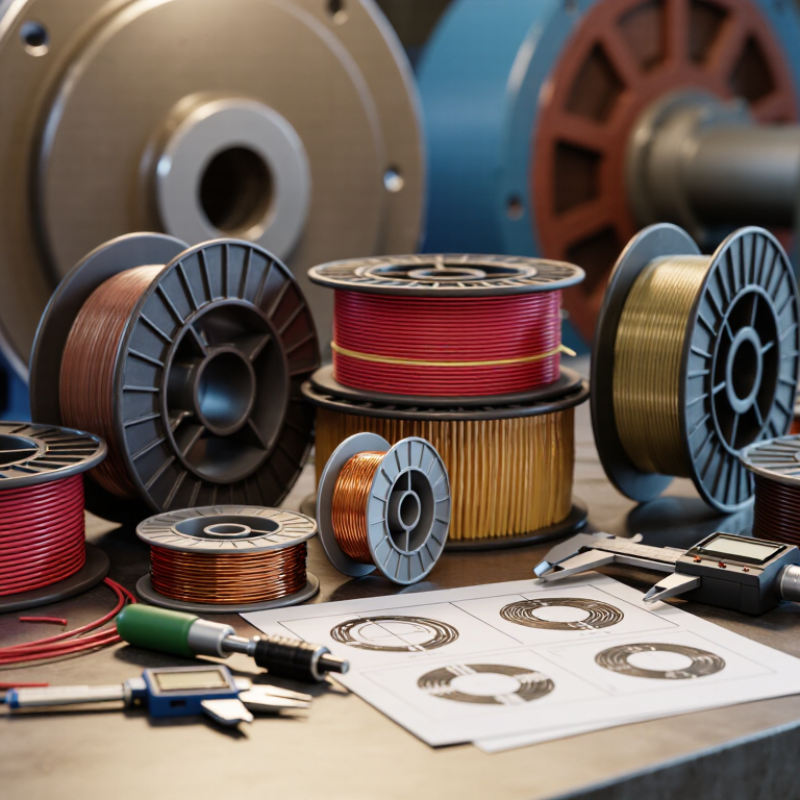
Electromagnetic wire, often called magnet wire, carries current through motors, transformers, generators, and relays. Its thin insulation allows tightly packed coils, while the conductor’s resistance and heat tolerance affect efficiency and service life. Copper is widely used for its conductivity; aluminum can reduce weight in some designs. A motor winding may face vibration, repeated temperature changes, and limited cooling space. Heat matters. Insulation damage can lead to short circuits, so designers match wire dimensions and insulation systems to operating conditions. A specification sheet helps, but it cannot capture every real-world stress.
Demand is linked to electrification and expanding power networks. The International Energy Agency’s Global EV Outlook 2024 reports nearly 14 million electric cars sold in 2023, around 18% of global car sales. Electric traction motors rely on carefully wound coils, making conductor quality and consistent insulation important. The IEA’s Electricity Grids and Secure Energy Transitions (2023) estimates that 80 million kilometres of grids must be added or refurbished by 2040. It also says annual grid investment must exceed $600 billion by 2030. These figures point to continued needs for transformers and other electrical equipment, though they do not directly measure wire demand. That distinction matters. Even a well-designed winding can underperform if assembly, cooling, or maintenance falls short.
Top 10 Electromagnetic Wire Manufacturers in the World - Understanding Electromagnetic Wire and Its Industrial Applications
The table compares ten widely used electromagnetic wire product categories. It is not a ranked list of manufacturers; insulation systems, dimensions, and ratings vary by product and specification.
| No. | Wire category | Typical conductor | Insulation or construction | Common industrial applications | Key selection consideration |
|---|---|---|---|---|---|
| 1 | Round enamelled copper wire | Copper | Thin polymer enamel coating | Motors, transformers, relays, solenoids, and small inductors | Conductor diameter, insulation build, thermal class, and winding space |
| 2 | Rectangular or square enamelled wire | Usually copper; aluminum is also used | Enamel insulation, sometimes with additional covering | Large motors, traction machines, and power transformers | Flat dimensions, corner geometry, insulation integrity, and slot fit |
| 3 | Enamelled aluminum winding wire | Aluminum | Polymer enamel; round or rectangular formats are available | Distribution transformers, motors, and weight-sensitive electrical equipment | Lower conductivity than copper requires design attention to conductor area and joints |
| 4 | Paper-covered winding wire | Copper or aluminum, commonly rectangular | Electrical-grade paper or cellulose-based covering | Oil-immersed power and distribution transformers | Paper condition, moisture control, oil compatibility, and insulation design |
| 5 | Glass-fiber-covered wire | Copper or aluminum | One or more glass-fiber layers, often with a bonding or protective treatment | Industrial motors, generators, and equipment requiring robust thermal insulation | Abrasion resistance, covering thickness, impregnation, and operating temperature |
| 6 | Polyimide-insulated wire | Typically copper | Polyimide film or polyimide-based insulation system | High-temperature motors, aerospace equipment, and specialized transformers | Thermal, chemical, mechanical, and electrical requirements of the complete system |
| 7 | Self-bonding magnet wire | Usually copper | Enamel insulation with an additional bondable outer layer | Compact coils, loudspeakers, sensors, and small motors | Bonding method, activation conditions, coil geometry, and thermal rating |
| 8 | Corona-resistant magnet wire | Usually copper | Enamel insulation formulated or constructed for improved resistance to partial-discharge damage | Inverter-fed motors and other windings exposed to voltage pulses | Drive waveform, voltage stress, winding design, and insulation-system validation |
| 9 | Litz wire | Many individually insulated fine copper strands | Strands are bundled or transposed; an outer serving may be added | High-frequency transformers, inductors, and resonant power circuits | Operating frequency, strand size, strand count, termination, and winding space |
| 10 | Continuously transposed conductor (CTC) | Multiple enamelled rectangular copper strands | Strands are transposed along the conductor and commonly paper-covered | Large power-transformer windings | Strand arrangement, dimensions, transposition pattern, and transformer design |
Specifications for winding wires are commonly defined using applicable parts of the IEC 60317 series or NEMA MW 1000, together with customer and equipment requirements. The applicable standard and rating depend on the specific wire construction.