Industrial Machinery Company

7 Tips for Choosing a Tube Cutting Machine

Choosing a tube cutting machine is not simply a matter of comparing laser power, cutting speed, or purchase price. The right system must match your materials, production volume, tube dimensions, and quality expectations. A machine that cuts mild steel efficiently may struggle with reflective stainless steel or thin-wall aluminum. Small details matter. Burrs, heat marks, poor nesting, and repeated setup delays can quietly increase production costs.

Manufacturing quality expert W. Edwards Deming said, “Without data you’re just another person with an opinion.” That principle applies strongly when selecting a tube cutting machine. Buyers should request sample cuts using their own tube grades, diameters, wall thicknesses, and typical drawings. Measure edge quality, cycle time, scrap rate, and operator workload. Do not rely only on polished demonstrations. They can hide practical weaknesses.

These seven tips examine the factors that deserve careful attention, including cutting technology, automation, software, maintenance, safety, and long-term service support. A strong machine should deliver repeatable results during ordinary production, not only under ideal showroom conditions. It should also leave room for future growth. This part is often overlooked.

There is no perfect machine for every workshop. A compact system may suit custom fabrication but limit high-volume output. A fully automated line may improve productivity but require greater training and floor space. Honest evaluation sometimes reveals an uncomfortable answer: the most expensive option is not always the most suitable. Your best decision may come from verified data, practical testing, and a clear understanding of daily production demands.

7 Tips for Choosing a Tube Cutting Machine

Define Your Tube Cutting Requirements and Materials

Before choosing a tube cutting machine, define the actual material and production conditions. Record outside diameter, wall thickness, tube length, alloy, hardness, and required cut tolerance. A 6 mm stainless tube behaves differently from a 6 mm mild-steel tube. Stainless steel creates more heat and may demand controlled cutting speed, coolant, or assist gas. Aluminum cuts quickly but can produce sticky chips and poor edge quality.

Material volume matters too. World Steel Association reported approximately 1.89 billion tonnes of crude steel production in 2023. The International Aluminium Institute reported global primary aluminum production above 70 million tonnes in the same year. These figures show the scale of material diversity that cutting systems must handle. However, market volume alone should not determine your machine. Your specific alloy and wall thickness matter more.

Set measurable targets before comparing equipment. Specify hourly output, kerf width, burr limits, nesting accuracy, and acceptable heat-affected zones. Thin-wall tubes may deform under excessive clamping pressure. Heavy-wall sections may require higher power and slower feed rates. I have seen purchasing teams focus on maximum diameter and overlook minimum wall thickness. That mistake can damage productivity. Recheck the drawings, test real samples, and request cut reports based on your materials. A perfect machine specification on paper may still fail beside the production line.

7 Tips for Choosing a Tube Cutting Machine: Define Your Tube Cutting Requirements and Materials

Material selection directly affects cutting force, heat generation, tool wear, and machine capacity. The chart shows representative tensile-strength midpoints for common tube materials; actual values vary by alloy, grade, and heat treatment.

Selection guide: Higher-strength materials generally require greater machine rigidity, cutting force, and tool durability. Also verify tube diameter, wall thickness, required cut accuracy, production volume, burr limits, and whether dry or coolant-assisted cutting is preferred.

Compare Cutting Technologies for Accuracy and Production Speed

Choosing a tube cutting machine starts with the material, tolerance, and required output. A fiber laser usually delivers narrow kerfs, low mechanical force, and clean edges on thin and medium-wall tubes. A cold saw can provide excellent dimensional consistency on high-volume steel work, but it may create burrs and require tool changes. Plasma cuts faster on thicker sections, although its heat-affected zone and edge taper can reduce precision.

Compare the complete process, not only the cutting head. Check positioning accuracy, repeatability, acceleration, loading time, and tube rotation control. A machine that cuts quickly may still lose production time during setup or manual unloading. According to Grand View Research’s 2024 analysis, the global laser cutting machine market was estimated at about 5.3 billion dollars in 2023. That growth reflects demand for flexible, automated cutting systems, not speed alone.

Automation matters.

World Robotics 2024 reported 541,302 industrial robot installations worldwide in 2023. This trend supports automated loading, sorting, and inspection around tube cutting cells. Ask for measured samples using your actual diameter, wall thickness, and alloy. Inspect the first and last parts from a production batch. I would not trust a brochure tolerance without those tests. Also compare maintenance access, assist-gas use, blade or nozzle costs, and software training. The fastest machine on paper may become slower when operators correct heat distortion, burrs, or inaccurate nesting. Allow some uncertainty; real workshops are rarely as clean as demonstrations.
Check Machine Capacity, Compatibility, and Adjustment Options

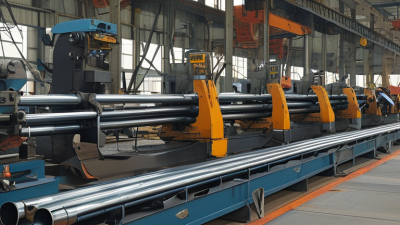
A tube cutting machine should match your real workload, not an optimistic forecast. Check maximum diameter, wall thickness, tube length, material hardness, and daily cutting volume. A machine rated for 80 mm tubing may perform poorly with thick stainless steel at continuous speed. Measure twice. Do not guess. The 2023 World Machine Tool Survey reported continued global demand for production equipment, but capacity alone does not guarantee stable output. Confirm motor power, cutting speed, chuck range, and heat management under your actual conditions.

Compatibility deserves equal attention. Test round, square, and rectangular profiles with your common alloys. Ask for cut samples, because a clean edge on mild steel proves little about abrasive stainless steel. Verify blade or laser compatibility, kerf width, loading space, and waste removal. The International Federation of Robotics recorded 541,302 industrial robot installations worldwide in 2023. This growth makes repeatable positioning and reliable machine interfaces increasingly important. Still, automation can expose weak adjustments rather than fix them.

Look closely at adjustment options. Tool height, feed rate, clamping pressure, and cutting angle should be easy to set and repeat. Clear scales help, but digital settings reduce operator guesswork. In practice, operators often need small corrections after material batches change. I have seen impressive machines lose time through awkward access and unclear controls. That detail is easy to overlook. Review maintenance access, setup records, and operator training before purchase. A slightly slower machine may deliver more usable parts when adjustments are faster and safer.

7 Tips for Choosing a Tube Cutting Machine - Check Machine Capacity, Compatibility, and Adjustment Options

Tip Evaluation Dimension Typical Data or Range What to Check Before Buying
1 Machine Capacity Confirm the maximum outside diameter, wall thickness, tube length, and allowable workpiece weight. General-purpose machines commonly cover tube diameters from approximately 10–150 mm, while heavier systems may handle larger sections. Choose a machine with at least 15–20% more capacity than your largest regular tube. Check whether capacity changes when cutting thick-wall, rectangular, or bundled tubes.
2 Material Compatibility Common compatible materials include carbon steel, stainless steel, aluminum, copper, brass, and selected alloys. Cutting performance depends on hardness, heat conductivity, coating, and wall thickness. Verify that the machine supports your exact material grades and coated surfaces. Confirm suitable blades, abrasives, lubricants, or laser settings for each material.
3 Cutting Method and Quality Cold saws generally provide clean, low-burr cuts; abrasive saws are economical for many metals but create more heat and debris; laser systems can produce precise cuts and complex profiles when properly configured. Match the method to the required edge quality, heat-affected zone, burr allowance, kerf width, and downstream operations such as welding, bending, or coating.
4 Cutting Accuracy and Repeatability Typical production requirements may range from approximately ±0.1 mm for precision applications to ±0.5 mm or more for general fabrication, depending on machine design, material stability, and setup. Request test-cut results using your own tube size and material. Check length-stop accuracy, angular accuracy, repeatability, fixture rigidity, and compensation for blade or tool wear.
5 Adjustment and Setup Options Useful adjustments include blade or tool speed, feed rate, clamping pressure, cutting angle, length stop, coolant flow, and automatic compensation. Mitre-cut capability commonly covers 0° to 45°, with some machines offering wider ranges. Prioritize tool-free or quick adjustments when processing multiple sizes. Confirm whether settings can be stored digitally and recalled for repeat jobs.
6 Throughput and Automation Production output is affected by cutting time, loading, unloading, tool changes, and material handling. Automatic feeding and length positioning can reduce manual handling and improve repeatability. Compare cycle time per cut, batch size, maximum feed length, bundle-cutting capability, automatic loading, unloading, chip removal, and compatibility with barcodes or production software.
7 Safety, Maintenance, and Operating Cost Important factors include guarding, emergency stops, interlocks, coolant or dust control, noise, blade life, energy use, consumables, and access to replacement parts. Maintenance intervals vary by cutting method and workload. Check conformity with applicable workplace safety requirements, operator access, maintenance time, consumable cost per cut, warranty coverage, training, spare-part availability, and total cost of ownership.

Note: Capacity, accuracy, and production figures vary by machine configuration, tooling, material grade, tube geometry, and operating conditions. Always confirm specifications through application testing before purchase.

Evaluate Safety Features, Automation, and Ease of Maintenance

7 Tips for Choosing a Tube Cutting Machine

A safe tube cutting machine should protect people before it protects production targets. Look for fixed guards, clear viewing panels, and an emergency stop within easy reach. Test the stop function during a site inspection. Do not rely only on written claims. Door interlocks matter too. They should prevent cutting when access panels remain open. I have seen operators overlook awkward button locations during demonstrations. That mistake becomes obvious after several hours of work.

Automation should reduce handling, not create new confusion. Check whether the machine loads lengths accurately, detects tube position, and adjusts cutting parameters consistently. Reliable sensors can reduce scrap and protect cutting tools. However, automatic functions need clear manual controls. Operators should understand what the machine is doing. A polished interface is not enough. Ask for a realistic trial with different tube sizes and wall thicknesses. Small errors often appear there.

Maintenance access deserves equal attention. Inspect how quickly staff can reach blades, clamps, filters, and lubrication points. Removable covers should open without excessive effort. Ask how often critical parts require inspection. Request maintenance instructions written in practical language. Service records should be easy to complete and review. Training also matters, especially when troubleshooting alarms. In my experience, machines are often judged too heavily by speed. I have made that mistake myself. A slightly slower machine may deliver better uptime when cleaning, adjustment, and repairs are simple. Reliability grows from details that are easy to ignore.

Review Total Costs, Supplier Support, and Long-Term Value

7 Tips for Choosing a Tube Cutting Machine

Tip 1: Calculate total ownership cost, not only the purchase price. Include tooling, blades, electricity, calibration, training, and downtime. A cheaper machine may become expensive after six months. Measure your tube sizes and monthly volume before comparing quotations.

Tip 2: Check setup time and material waste. A machine that cuts quickly may still lose money through frequent adjustments or rejected parts.

Tip 3: Review supplier support carefully. Ask about response times, spare-parts availability, remote diagnosis, and on-site service. Request references from users processing similar materials and wall thicknesses. Support promises sound helpful. Written commitments are safer.

Tip 4: Request sample cuts using your own tubes. Inspect burrs, squareness, heat marks, and dimensional consistency. Small defects can create extra grinding or rework. I once underestimated setup time, making the production forecast too optimistic.

Tip 5: Consider future capacity, not just today’s workload. Check whether the machine can accept new tooling, software updates, or automation modules.

Tip 6: Examine warranty coverage and operator training. Clear training can prevent avoidable damage and inconsistent cutting.

Tip 7: Compare the cost per acceptable part over several years. Include maintenance, labor, waste, and resale value. Do not overbuy. Impressive features have little value when the machine sits idle. Long-term value often comes from reliable support and simple daily operation.