Industrial Machinery Company

What Is a Seawater Membrane and How Does It Work?

A Seawater Membrane is a key part of reverse osmosis, a process that turns salty water into fresh water. But it is not a simple sieve. In most modern systems, pressure pushes seawater against a thin, semi-permeable membrane. Water molecules pass through; most dissolved salts and other substances remain behind. The fresh water then needs checks and treatment before it is ready for use.

Membrane researcher Menachem Elimelech’s work highlights that desalination depends on more than the membrane alone. In paraphrase: membrane performance must be considered alongside energy use and system design. That distinction matters. A membrane may reject salt effectively, yet still perform poorly if feedwater pretreatment is inadequate or operating conditions are poorly controlled. Fouling can build up on the membrane surface. Operators may then need cleaning, maintenance, or replacement. Nothing works in isolation.

The details are physical. Pumps pressurize seawater; pipes carry concentrated brine away; sensors track pressure and water quality. Energy-recovery devices can reuse some pressure from the brine stream. Still, real plants are messier than a diagram. Results vary with water conditions, equipment, and maintenance. A clear overview should explain these trade-offs, not promise effortless fresh water.
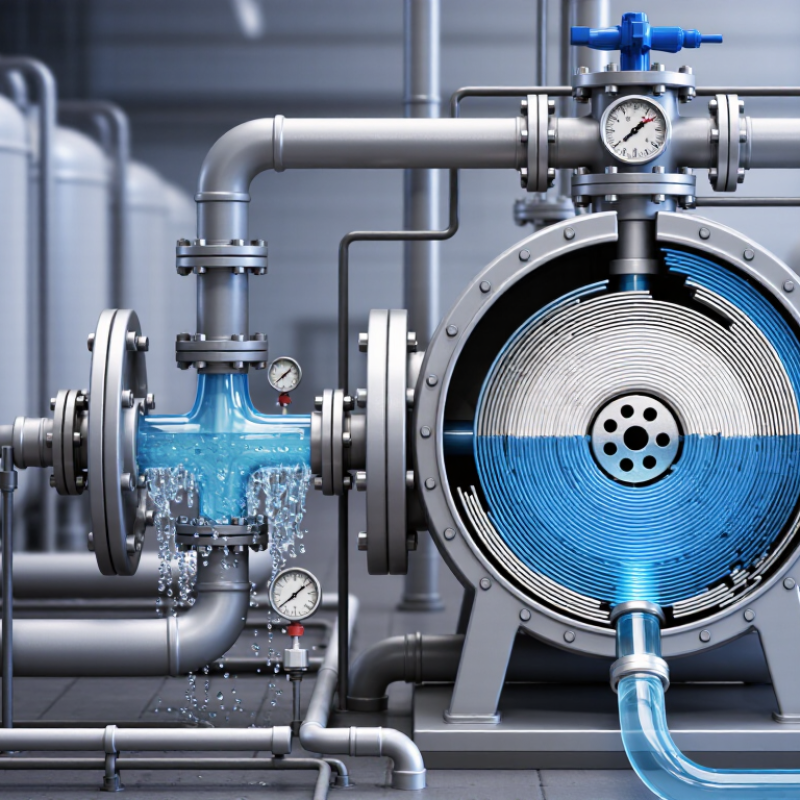
What Is a Seawater Membrane and How Does It Work?

Definition and Purpose of a Seawater Membrane

A seawater membrane is a selective barrier used in reverse osmosis desalination. Most commonly, it is a thin-film membrane that lets water molecules pass while rejecting much of the dissolved salt. High-pressure pumps push pretreated seawater against its surface. Fresh water crosses the membrane; concentrated brine remains on the other side. The membrane does not work alone. Fine screens and filters help limit particles and biological material that can clog or damage it. Small details matter: a poorly maintained filter can affect the whole process.

The purpose is to turn seawater into water suitable for drinking or other uses, especially where freshwater supplies are limited. A 2019 World Bank report, The Role of Desalination in an Increasingly Water-Scarce World, estimated global desalination capacity at about 97.2 million cubic metres per day in 2018. That figure describes capacity, not necessarily actual daily production. It also shows why membrane performance matters at scale. Operators monitor pressure, salt passage, and flow, then clean or replace membranes as performance declines. The term can sound simpler than the engineering. A membrane rejects salt, but it cannot remove every operational concern, and desalination also produces concentrated brine that requires careful management.

Membrane Materials and Structure

A seawater reverse-osmosis membrane is a layered composite, not a single sheet. Its backing is usually a polyester fabric, which gives the element strength. Above it sits a porous support, commonly polysulfone. A very thin polyamide skin forms the selective surface. It is a laminate. The skin controls which molecules pass; the support helps it withstand pressure without blocking water flow.

That selective skin is typically only about 100–200 nanometres thick, so surface defects matter. Salt can slip through imperfections, while fouling can cover the active area. The U.S. National Research Council’s report Desalination: A National Perspective notes that seawater RO commonly operates at roughly 800–1,000 psi.

That pressure makes the backing and support more than packaging: they help hold the delicate layer in place. Small, but essential.

In practice, the layers are not perfectly uniform, and real feedwater can behave less neatly than a lab sample. Cleaning and pretreatment therefore protect membrane performance, but cannot erase every defect or material trade-off.

How Reverse Osmosis Separates Salt from Water

A seawater reverse-osmosis system starts by removing grit and suspended particles, which can foul the membrane. A high-pressure pump then pushes the pretreated water against a semipermeable membrane, often at several dozen bar. Pressure overcomes seawater’s natural osmotic pull. Water molecules dissolve into and diffuse through the membrane; most dissolved salts remain behind. The membrane does not work alone. Pumps, filters, and careful monitoring matter just as much.

That pressure has an energy cost. The U.S. National Research Council’s 2008 report, Desalination: A National Perspective, gives an approximate range of 3.7–5.5 kilowatt-hours per cubic meter for seawater reverse osmosis. Energy-recovery devices can transfer pressure from the salty reject stream to incoming feed water, reducing demand. The World Bank’s 2019 review, The Role of Desalination in an Increasingly Water-Scarce World, also identifies energy use and concentrate management as operational challenges. Fouling is easy to underestimate. A thin deposit can reduce water flow, so operators track pressure and clean membranes when needed. The process separates salt effectively, but it does not make maintenance optional. That part is less elegant.

Key Stages in Seawater Membrane Desalination

Seawater membrane desalination is a sequence of controlled steps, not a single filter doing all the work. At the intake, screens catch seaweed, shells, and other larger debris. Pretreatment then reduces suspended particles that could clog or damage the membrane. Depending on the water, this may include fine filtration and careful chemical adjustment. The exact setup varies. Small details matter. Operators monitor pressure and water quality because changing tides and seasonal algae can affect the incoming seawater.

In reverse osmosis, a high-pressure pump pushes pretreated water against a semipermeable membrane. Water molecules pass through, while most dissolved salts and other substances remain in a concentrated brine stream. The pressure must be high enough to overcome seawater’s natural osmotic force, but excessive pressure can increase wear and energy use. Some systems recover energy from the brine before it leaves the process. The fresh permeate is then checked and often remineralized to improve taste and stability; disinfection may also be needed before distribution. Membranes do not make every operating problem disappear. Fouling can still develop, and cleaning itself requires careful control. That part is easy to underestimate. Regular measurements help teams decide when to adjust pretreatment, clean a membrane, or investigate a change in performance.

Factors That Affect Membrane Performance and Lifespan

A seawater membrane, commonly used in reverse osmosis, has a selective layer that lets water pass while rejecting most dissolved salts. Its performance depends on feedwater quality and stable operating conditions. Small changes matter.

Higher salinity requires greater pressure to produce fresh water, which can increase energy use and stress membrane elements. Temperature also affects water flow: warmer feedwater may increase output, while cold water can reduce it. Operators should adjust pressure carefully rather than chase a target flow. More pressure is not always better. Suspended particles, algae, and organic matter can foul the surface, while mineral scale may build up when dissolved salts become concentrated. Effective pretreatment, regular monitoring, and cleaning suited to the membrane help limit these problems.

Lifespan is not a fixed number. It varies with feedwater, operating hours, cleaning practices, and sudden pressure changes. A gradual rise in salt passage or a drop in permeate flow can signal trouble, though neither reading tells the whole story alone. Check trends alongside pressure and feedwater conditions. Cleaning too late may leave deposits behind; cleaning too aggressively can also damage the selective layer. That balance takes attention.