Industrial Machinery Company

How to Choose the Best 18650 Battery for Your Needs?

Choosing the best 18650 Battery is not simply a search for the highest capacity number. A cell marked “3,500 mAh” may perform poorly in a high-drain flashlight, power tool, or portable energy device. Chemistry, discharge limits, temperature, age, and manufacturer quality matter just as much. Small details matter.

The International Energy Agency reported that global battery demand for electric vehicles reached 750 GWh in 2023, increasing by about 40% from the previous year. This growth has intensified attention on cell performance, supply-chain traceability, and responsible testing. BloombergNEF’s 2024 Battery Price Survey also recorded an average lithium-ion battery pack price of 115 dollars per kWh, showing why efficiency and service life remain important purchasing factors. These figures do not directly define every 18650 Battery, but they reveal the wider industry’s priorities: reliable energy density, controlled costs, and measurable safety.

This guide compares practical specifications rather than attractive labels alone. It examines nominal voltage, true capacity, continuous discharge rating, internal resistance, protection circuits, and operating temperature. Independent testing remains valuable. Manufacturer datasheets should be checked against credible laboratory results, including IEC 61960 and relevant UL safety requirements. A protected cell may not fit every device. An unprotected cell may create unacceptable risks in unsuitable equipment. That distinction is easy to overlook. Some recommendations may also change as new chemistries and verified testing methods appear. Careful selection means matching the cell to the device, not choosing the biggest number on the package.
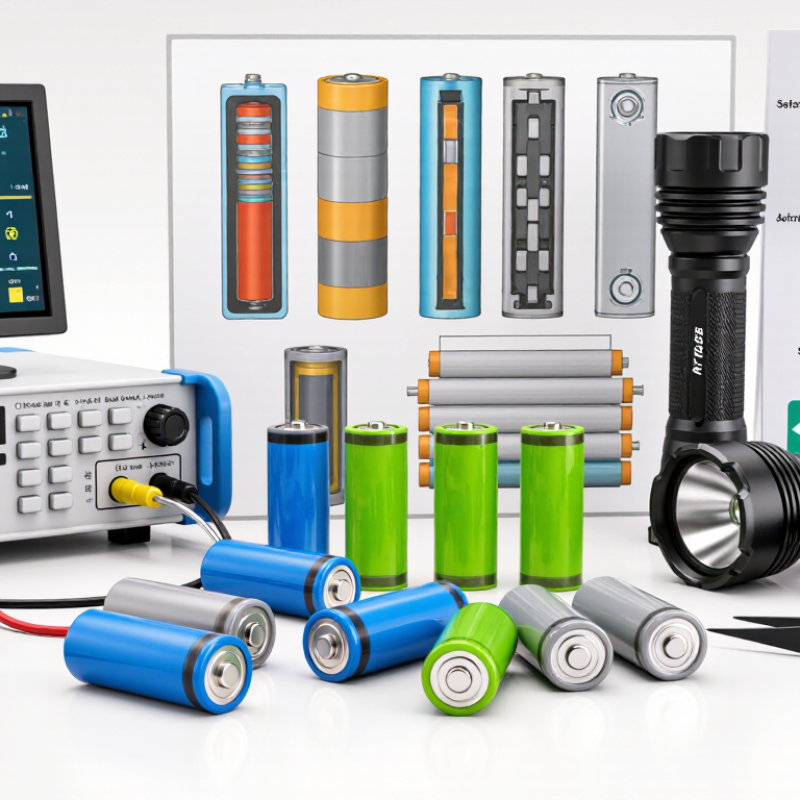
How to Choose the Best 18650 Battery for Your Needs?

Understand the Key Specifications of 18650 Batteries

How to Choose the Best 18650 Battery for Your Needs?

Understanding specifications matters more than choosing the highest advertised capacity. An 18650 cell usually has a nominal voltage of 3.6 or 3.7 volts. It reaches about 4.2 volts when fully charged. Capacity appears in milliamp-hours, or mAh, and indicates how long the cell may run a device. Higher capacity often means longer runtime, but not always stronger performance.

The continuous discharge rating is equally important. It shows how much current the cell can safely provide during regular use. Ignore impressive “pulse” numbers unless the manufacturer explains the test conditions. Internal resistance also matters. A cell with lower resistance usually produces less voltage drop and heat under load. Check the datasheet, verify the dimensions, and avoid cells with dents, torn wraps, or unusual heating.

Tips: Match the battery to your device’s voltage and current requirements. Use a charger designed for the cell type. Do not mix cells with different ages or capacities. Protected cells can be longer, so measure the available space carefully. Buy from a reliable supplier, and inspect the printed specifications for inconsistencies.

I would not choose capacity alone. That shortcut sounds practical, but it can fail in high-drain equipment. Real performance depends on temperature, age, charging habits, and the device itself. Testing with a suitable battery analyzer gives better evidence than packaging claims. Even then, measurements have limits. A safe choice is usually the balanced one, not the most powerful-looking cell.

Match Battery Capacity to Your Device’s Power Requirements

How to Choose the Best 18650 Battery for Your Needs?

Match Battery Capacity to Your Device’s Power Requirements

Capacity, measured in milliamp-hours (mAh), indicates how long an 18650 battery may operate a device. However, capacity alone does not determine suitability. A high-capacity cell can perform poorly when the device demands heavy current.

Check the device’s voltage, wattage, and operating current before buying. For a simple estimate, divide capacity by the device’s average current. A 3,000 mAh battery supplying 1,000 mA may last about three hours under ideal conditions. Real use is less predictable. Conversion losses, temperature, battery age, and changing workloads reduce runtime.

Power demand matters more in high-drain equipment. Current can be estimated by dividing watts by voltage, although the calculation changes with converters. Compare that result with the cell’s continuous discharge rating, not its short peak rating. Leave a safety margin. It is a practical habit.

I have found that runtime estimates often look too generous on paper. My first calculation ignored startup surges and charging losses. Check the manufacturer’s technical datasheet, and avoid cells with unclear specifications. Protected cells may add safety features, but they can also change the available space and current limits. Never mix cells with different ages or capacities in one pack. Use a compatible charger and inspect the battery for dents, torn wrapping, or unusual heat. If the device needs more capacity, verify that its enclosure and charging system support the larger cell safely.

How to Choose the Best 18650 Battery for Your Needs?

Match Battery Capacity to Your Device’s Power Requirements

The chart compares representative continuous power demands with commonly used 18650 capacity choices. An 18650 cell has a nominal voltage of approximately 3.6 V, while practical capacities generally range from about 2,000 to 3,500 mAh. Higher-power devices require both sufficient capacity for runtime and an appropriate continuous-discharge rating. Actual battery selection also depends on operating time, pack voltage, temperature, and device efficiency.

Choose the Correct Discharge Rating and Chemistry

Choosing an 18650 cell starts with its discharge rating and chemistry. Capacity alone can mislead. A 3,500 mAh cell may deliver less current than a 2,500 mAh high-drain cell. Check the continuous discharge current, not only the advertised pulse value. IEC 61960-3:2017 defines capacity testing under controlled conditions, including temperature and discharge procedures. Real devices rarely match those laboratory conditions.

Chemistry changes the practical choice. Nickel-manganese-cobalt and nickel-cobalt-aluminium cells usually offer higher energy density. Lithium iron phosphate cells provide stronger thermal stability, but their nominal voltage is lower, near 3.2 volts.

The International Energy Agency reported that LFP represented about 40% of the global electric-vehicle battery market in 2023. That figure shows its growing industry relevance, but it does not make every LFP cell suitable for an 18650 device. Verify voltage limits carefully.

I once focused too heavily on capacity and ignored the load’s startup current. That was a poor judgment.

Tips:

Match the cell’s continuous rating to the device’s maximum current, with practical headroom. Use the datasheet’s tested values. Avoid cells with vague ratings. Check temperature limits, cycle-life data, and protection requirements. A reliable charger must match the chemistry. Stop when specifications conflict. Safety should outrank a few extra minutes of runtime.

Check Size, Compatibility, and Protection Features

How to Choose the Best 18650 Battery for Your Needs?

Check Size, Compatibility, and Protection Features

An 18650 battery usually measures about 18 millimeters wide and 65 millimeters long. However, protected versions can be several millimeters longer. Measure the battery compartment, spring clearance, and contact spacing before purchasing. A tight fit can damage insulation or prevent proper electrical contact.

Check the device manual for its required voltage, current, and battery arrangement. Some devices need one cell, while others connect cells together. Never assume that every 18650 battery is interchangeable. The holder, charger, and protection circuit must support the same configuration. Flat-top and button-top cells may also fit differently.

Protection matters greatly. Look for safeguards against overcharging, deep discharge, excessive current, short circuits, and overheating. A protected cell may provide extra safety, but it cannot correct a faulty charger or damaged device. Inspect the wrapper for cuts, dents, swelling, or exposed metal. Do not use a damaged cell.

I once focused too much on capacity and overlooked length. It fitted poorly. That mistake changed my checking routine. Now I measure twice, confirm the manual, and test the compartment without forcing the cell. Capacity ratings can also be confusing, so compare verified specifications rather than attractive numbers. When information conflicts, choose the safer specification and seek qualified technical advice.

Evaluate Battery Quality, Safety, and Intended Use

How to Choose the Best 18650 Battery for Your Needs?

Battery quality starts with reliable specifications. Check the stated capacity, continuous discharge rating, chemistry, and production date. Capacity shows how long the cell may run, while discharge rating shows how much current it can deliver safely. These numbers should come from a technical datasheet, not only a marketplace listing. Look for consistent labeling and independent test evidence. A very cheap cell with impressive claims deserves caution. I have learned that attractive numbers can hide poor testing or misleading measurements.

Safety depends on compatibility and handling. Confirm whether your device requires a protected or unprotected cell. Never mix cells with different ages, capacities, or charge levels. Use a charger designed for the battery’s chemistry and inspect the wrapper for tears, dents, or corrosion. Stop using damaged cells. They can become dangerous during charging. Intended use also matters. A low-drain device may value capacity, while demanding equipment needs an appropriate continuous discharge rating. Do not choose by capacity alone.

Tips: Buy from a traceable seller. Record the purchase date. Store cells in a protective case, away from metal objects and heat. Avoid charging unattended. If the battery becomes unusually hot, swells, or smells strange, disconnect it safely and seek qualified recycling guidance. My checklist is not perfect, especially when test data is limited, so I compare several trustworthy sources before deciding.

How to Choose the Best 18650 Battery for Your Needs? - Evaluate Battery Quality, Safety, and Intended Use

Battery Type Typical Nominal Voltage Typical Full-Charge Voltage Common Capacity Range Typical Continuous-Discharge Range Main Strength Suitable Applications Important Safety and Compatibility Notes
Lithium Cobalt Oxide (LCO) 3.6–3.7 V 4.20 V 2,000–3,400 mAh Usually about 2–8 A, depending on cell design High energy density and relatively high capacity Compact electronics, cameras, and low-to-moderate power devices Lower thermal stability than several other lithium-ion chemistries. Use only a charger and device designed for a protected 4.20 V lithium-ion cell.
Nickel Manganese Cobalt (NMC/INR) 3.6–3.7 V 4.20 V 2,000–3,500 mAh Approximately 5–20 A; high-power versions may be higher Good balance of capacity, power, cost, and service life Power tools, flashlights, portable equipment, and battery packs The stated continuous-current rating must be verified from a reliable datasheet. Avoid exceeding the cell, holder, wiring, or device current limits.
Nickel Cobalt Aluminum (NCA) 3.6–3.7 V 4.20 V 2,500–3,500 mAh Approximately 5–15 A, depending on construction High specific energy with useful power capability Energy-focused battery packs and some portable equipment Requires accurate voltage control, protection against over-discharge, and adequate thermal management. Do not mix cells with different ages or specifications.
Lithium Iron Phosphate (LFP/ LiFePO4) 3.2–3.3 V 3.60–3.65 V 1,100–2,000 mAh Approximately 5–15 A, depending on cell design Excellent thermal stability and long cycle life Safety-focused packs, backup systems, and applications designed specifically for LFP voltage Not a drop-in replacement for a standard 3.6/3.7 V lithium-ion cell. It requires an LFP-compatible charger and battery-management system.
Protected 18650 Cell Usually 3.6–3.7 V Usually 4.20 V Often 1,800–3,400 mAh Often lower than the unprotected cell because of protection-circuit limits Added protection against overcharge, over-discharge, and short circuit Single-cell consumer devices that specifically accept protected cells The protection circuit adds length and diameter. Confirm physical fit and current capability; protected cells may not suit high-drain devices.
High-Drain 18650 Cell Usually 3.6–3.7 V 4.20 V Typically 1,500–3,000 mAh Commonly about 15–30 A, but only the manufacturer’s tested rating should be used Delivers higher current with less voltage sag Power tools, high-output lights, and other high-current equipment High current capability does not make a cell inherently safe. Use a suitable battery-management system, correct wiring, insulation, and a charger made for the chemistry.
Energy-Focused 18650 Cell Usually 3.6–3.7 V 4.20 V Typically 2,500–3,500 mAh Commonly about 2–10 A Longer runtime at moderate current loads Low-power electronics, measurement equipment, and long-runtime packs High capacity does not indicate high discharge capability. Do not use an energy-focused cell in a device that demands more current than its verified rating.

Selection reminder: Check the cell chemistry, verified capacity, continuous-discharge rating, dimensions, operating temperature, and protection requirements. Never use a damaged, swollen, leaking, counterfeit, or unverified cell, and never charge an 18650 cell with a charger intended for a different chemistry.