Industrial Machinery Company

Top 10 Gateway Transformer Types for Global Buyers

For global buyers, selecting a Gateway Transformer is not simply a matter of comparing price and rated power. The right design depends on the electrical system it connects, the load it serves, and the conditions at the installation site. Names can mislead. In some projects, “gateway” describes an interface role rather than one standardized transformer category, so buyers should confirm what each supplier means. Voltage ratio, frequency, insulation, cooling method, impedance, and duty cycle all affect suitability. A unit designed for a clean indoor room may not fit a humid, dusty, or coastal location. Small details matter.

This guide introduces ten transformer types that may serve gateway or grid-interface applications, including oil-immersed and dry-type designs, as well as specialized options for particular network needs. It explains their typical strengths, limitations, and selection considerations without treating any type as a universal winner. Buyers should compare technical data sheets, manufacturer test documentation, service support, and applicable regional requirements. They should also confirm installation, transport, and maintenance needs before placing an order. Some specifications look clear on paper but leave room for interpretation. That is worth questioning. A careful review with qualified electrical professionals can help turn a shortlist into a reliable project decision.
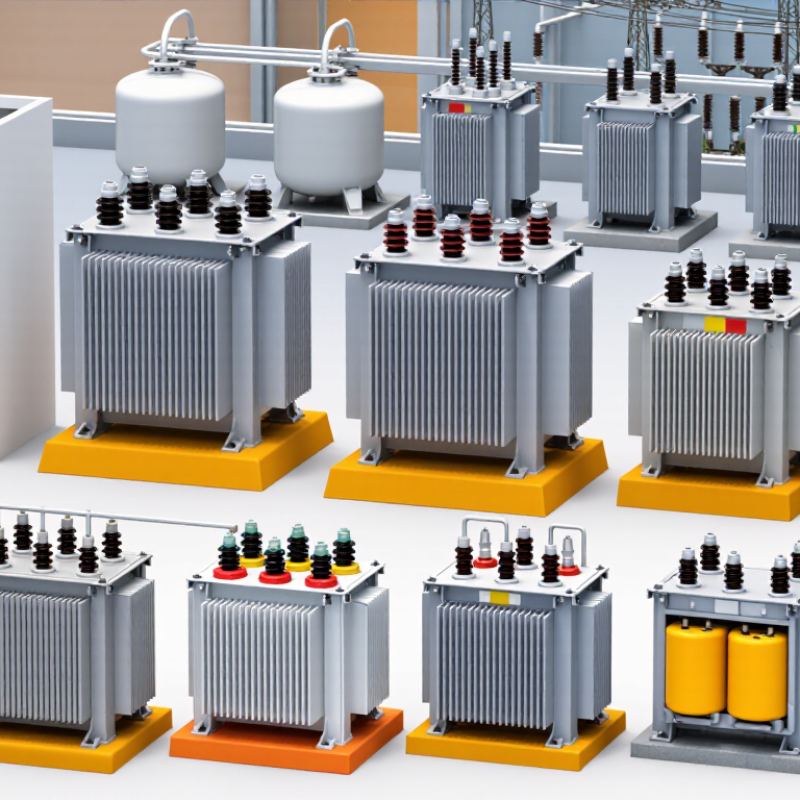
Top 10 Gateway Transformer Types for Global Buyers

What Gateway Transformers Are and How They Connect Power Systems

A gateway transformer is an interface between power systems operating at different voltage levels or under different grounding conditions. It can connect a transmission network to a regional grid, or link two substations with distinct operating requirements. The transformer changes voltage while providing electrical separation between circuits. The name can vary.

At a substation, high-voltage cables terminate at bushings on the transformer tank. Inside, windings transfer energy through a magnetic field; no direct conductive path joins the two sides. Tap changers adjust the voltage ratio as system conditions shift. Protective relays monitor current, temperature, and faults, helping operators isolate trouble before it spreads. Details matter.

Choosing a gateway transformer involves more than matching voltage ratings. Engineers assess expected load, short-circuit levels, insulation needs, cooling, and space for installation. A unit serving a coastal site may need protection against salt and moisture. Harmonics and future demand also deserve attention, though projections are not always right. The term itself is not perfectly consistent across projects, so buyers should confirm the intended function, connection scheme, and performance requirements in the specification.

Key Design Features Used to Classify Gateway Transformers

Gateway transformers are classified by the design choices that shape their job: voltage ratio, phase count, winding arrangement, cooling method, insulation, and installation. A step-up unit serving a renewable-energy connection differs from a compact indoor unit supplying a commercial building. Look beyond the nameplate. Check rated power, impedance, vector group, tap range, and whether cooling is oil-based or dry-type. These details affect fault performance, maintenance access, and site fit.

The IEA’s 2023 report, Electricity Grids and Secure Energy Transitions, estimates that more than 80 million kilometres of grids must be added or refurbished by 2040. That scale makes clear specifications important. Small mismatches matter. Buyers should compare thermal limits, sound levels, losses, enclosure protection, and ambient-temperature ratings against the actual site conditions. IEC 60076 provides a core reference for power-transformer requirements, but a standard does not replace project-specific checks. The categories can overlap, too: a unit may be both a dry-type transformer and a three-phase transformer. That is easy to miss in a short equipment list. Ask for certified test data and drawings, then confirm dimensions, terminal layout, and tap-changer access before purchase.

Ten Gateway Transformer Types Available to Global Buyers

When comparing gateway transformers, buyers usually begin with site conditions, voltage levels, and load behavior. Ten common types include pole-mounted, pad-mounted, and substation transformers, each suited to different installation settings. Dry-type units are often considered for indoor locations, while oil-immersed designs are commonly used outdoors and for higher-capacity applications. These categories can overlap.

Single-phase and three-phase transformers serve different supply arrangements and load requirements. Step-up transformers raise voltage; step-down transformers lower it for downstream equipment. Isolation transformers separate input and output circuits to help limit electrical noise transfer. A transformer may combine several features, such as a three-phase, oil-immersed step-down unit. The labels are useful, but they do not tell the whole story.

Before requesting quotations, buyers should check primary and secondary voltage, frequency, rated capacity, tap range, cooling method, enclosure, and expected losses. Confirm that the specifications match the local grid and installation environment. Ask for test documentation and clear operating limits. A compact unit may fit the room, yet still run too hot under continuous load. That detail is easy to miss. I would also compare service access and replacement lead times; these practical points are sometimes treated as an afterthought.

Typical Applications and Operating Conditions by Transformer Type

At grid interconnections, large power transformers raise or lower voltage between transmission networks and substations. They often operate continuously, so cooling capacity, insulation condition, and load cycles deserve close attention. Distribution transformers serve neighborhoods, factories, and commercial buildings at lower voltages. Pole-mounted units suit overhead lines; pad-mounted units fit underground networks and sites where protected enclosures matter.

Dry-type transformers are common inside buildings, data rooms, and workshops, where avoiding liquid insulation simplifies spill management. They need clear airflow and protection from dust or moisture. Oil-immersed designs suit outdoor substations and heavier loads, but their tanks, seals, and cooling surfaces need inspection. Isolation transformers support sensitive equipment and electrical separation. Autotransformers can be compact for certain voltage changes, though they do not provide the same separation. Rectifier and furnace transformers handle converter loads and demanding industrial processes. Conditions matter.

Ambient temperature, altitude, humidity, harmonics, and daily load swings can all affect selection. A unit rated for one site may need derating at high elevation or in a hot enclosure. Buyers should share actual load profiles and installation details, not just nominal voltage. A neat catalog comparison can still mislead. Even with careful specifications, future expansion is easy to underestimate.

Factors Buyers Consider When Comparing Gateway Transformers

When comparing gateway transformers, buyers should start with actual network conditions, not the catalog headline. Check primary and secondary voltage, frequency, phase arrangement, and expected load. A 1,000 kVA unit may look adequate on paper, yet repeated motor starts can create brief overloads. Ask for the load profile, including peaks, harmonics, and planned expansion. Small details matter.

Insulation class, cooling method, temperature rise, and short-circuit withstand all affect reliability. For outdoor installations, review enclosure protection, corrosion resistance, altitude limits, and ambient temperature range. Compare guaranteed losses at stated loading, rather than efficiency claims without test conditions. Request routine test records, dimensional drawings, and clear delivery terms. These documents help engineers confirm fit before the transformer reaches the site.

Price is only one line in total cost. Include transport, lifting, commissioning, spare parts, and expected energy losses over the service life. Comparisons can stall when cable-entry positions or foundation dimensions are checked too late. There is no perfect comparison sheet; early project data is often incomplete. A neat spreadsheet can still hide a bad assumption. Record uncertainties and ask suppliers to flag deviations in writing.

Top 10 Gateway Transformer Types for Global Buyers - Factors Buyers Consider When Comparing Gateway Transformers

No. Transformer type Defining design Typical gateway application Factors buyers compare Main advantages and considerations
1 Oil-immersed power transformer The core and windings are immersed in insulating liquid, which provides insulation and carries heat to the cooling system. Substations and grid interconnections where high capacity and outdoor installation are required. Rated power and voltages, cooling method, losses, sound level, liquid type, containment, monitoring, and service access. Commonly suited to high-power outdoor service. Buyers should assess fire protection, spill containment, liquid handling, and maintenance requirements.
2 Ventilated dry-type transformer Uses air as the cooling medium, with windings insulated by solid materials and cooled through natural or forced ventilation. Indoor substations, commercial facilities, and installations where liquid-filled equipment is unsuitable. Indoor temperature, ventilation, dust and moisture protection, noise, fire requirements, losses, and enclosure rating. Avoids insulating-liquid containment, but performance depends on adequate airflow and a suitable environment. Confirm the specified enclosure and installation conditions.
3 Cast-resin dry-type transformer One or more windings are encapsulated in resin; cooling is generally by air, with forced air available on some designs. Indoor grid interfaces and facilities where reduced liquid-related fire and spill concerns are priorities. Moisture and contamination conditions, thermal performance, partial-discharge requirements, noise, losses, and access for inspection. Encapsulated windings can help resist environmental contamination, but resin construction does not by itself make a unit suitable for every outdoor environment.
4 Hermetically sealed liquid-filled transformer A sealed tank accommodates liquid expansion through tank design rather than routine exchange of air with an external conservator. Outdoor distribution and substation installations where limiting exposure of the insulating liquid to ambient air is desirable. Tank design and pressure limits, liquid volume, cooling, expected temperature range, inspection provisions, and protection devices. The sealed design can reduce atmospheric moisture and oxygen exchange. Buyers should check pressure-management provisions and the manufacturer's maintenance guidance.
5 Conservator-type liquid-filled transformer A conservator vessel provides space for insulating-liquid expansion and contraction; a breather or bladder arrangement may manage air exposure. Utility substations and larger outdoor installations requiring established inspection and monitoring arrangements. Conservator and breather design, liquid-level monitoring, protection devices, maintenance access, site climate, and transport dimensions. Provides an expansion volume and familiar service features. Breathers and associated components may require periodic inspection or maintenance.
6 Autotransformer Uses a winding shared between the high- and low-voltage circuits, rather than fully separate primary and secondary windings. Interconnection between transmission voltage levels when the system design does not require galvanic isolation. Voltage ratio, short-circuit levels, grounding, insulation coordination, system fault behavior, and whether electrical isolation is required. Can use less winding material and offer high efficiency for suitable voltage ratios. The circuits are electrically connected, so it does not provide galvanic isolation.
7 Two-winding power transformer Has separate primary and secondary windings, providing magnetic coupling without a direct electrical connection between the circuits. Grid connections that require voltage transformation and electrical separation between network sections. Voltage ratio, vector group, impedance, tap range, insulation levels, losses, grounding arrangement, and short-circuit withstand. Offers electrical separation between circuits. Buyers should coordinate winding connections, grounding, and protection with the network design.
8 Three-winding transformer Includes three windings, which may provide two main voltage interfaces and a tertiary winding for a defined system function. Substations connecting multiple voltage levels or supporting auxiliary loads, reactive equipment, or other specified functions. Rating of each winding, impedance between winding pairs, tertiary connection, fault duties, protection, and operating scenarios. Can combine multiple interfaces in one unit. The tertiary winding's purpose and rating must be defined in the project specification.
9 Phase-shifting transformer Adjusts the phase angle between input and output voltages to influence active-power flow through a network path. Transmission gateways where controlled power-flow distribution between parallel paths is needed. Required phase-angle range, power-flow studies, operating modes, tap-changing arrangement, system protection, and control integration. Provides a means of influencing power flow, but requires careful network studies and coordination with system controls and protection.
10 Converter-duty transformer Designed for service with power-electronic converters, where harmonic currents, voltage waveform distortion, or commutation effects may be relevant. HVDC converter stations, large variable-speed drives, and other converter-connected grid interfaces. Converter topology, harmonic spectrum, winding connections, insulation stress, thermal loading, leakage reactance, and applicable project standards. Addresses converter-specific electrical and thermal stresses. The design should be based on the actual converter data and operating duty.

Note: These types describe different design characteristics and can overlap. Final selection depends on the project voltage, capacity, network studies, installation environment, applicable standards, and maintenance requirements.