2025 How to Choose the Right Metal Forming Machine for Your Needs
Selecting the appropriate metal forming machine for your specific needs is a critical decision that can significantly impact the efficiency and quality of your production processes. As industry expert Dr. Emily Harper, a renowned consultant in advanced manufacturing technologies, emphasizes, "The right metal forming machine not only enhances production capabilities but also ensures the precision required for high-quality output." In today’s rapidly evolving manufacturing landscape, understanding the various types of metal forming machines available and their unique capabilities is essential for achieving optimal performance.
With advancements in technology, the options for metal forming machines have expanded, each designed to address different materials, thicknesses, and production requirements. Therefore, it is imperative to consider factors such as the complexity of the parts being produced, production volume, and material characteristics. Moreover, selecting a machine that aligns with your operational goals can lead to significant improvements in productivity and cost-efficiency. As the industry progresses, making an informed decision about your metal forming machine will pave the way for enhanced manufacturing processes and ultimately drive business success.

Understanding the Different Types of Metal Forming Machines Available
When it comes to selecting the right metal forming machine, it’s essential to understand the diverse types available, as each machine serves distinct purposes in the manufacturing process. Generally, metal forming machines can be categorized into several groups, including presses, roll forming machines, and bending machines. According to a report by the Global Metal Forming Machinery Market, the industry is projected to grow at a CAGR of 6.7% from 2020 to 2025, highlighting the increasing demand for efficient and precise metal forming solutions.
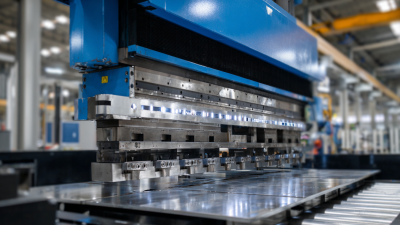
Press machines, which include hydraulic and mechanical presses, are widely used for operations such as stamping and punching. These machines excel in producing high-volume components with a consistent quality, making them ideal for automotive and aerospace applications. Meanwhile, roll forming machines are designed for continuous bending operations; they shape metal into specific profiles that are used in construction and framing. Additionally, bending machines, including press brakes, are essential for creating angled or curved forms, allowing for versatility in design and fabrication.
In choosing the right machine, it is crucial to consider factors such as material type, thickness, and the complexity of the desired part. Recent industry studies indicate that over 30% of manufacturers cite the adaptability of machinery to different materials as a primary decision-making factor. Understanding the capabilities and limitations of various metal forming machines will ultimately lead to better production efficiency and cost-effectiveness.
2025 How to Choose the Right Metal Forming Machine for Your Needs - Understanding the Different Types of Metal Forming Machines Available
| Machine Type |
Main Features |
Best For |
Cost Range |
| Press Brake |
Precise bending of metal sheets; programmable controls |
Architectural and structural metalwork |
$30,000 - $250,000 |
| Shear Machine |
Straight cutting of metal sheets; high-speed operation |
General fabrication and sheet metal processing |
$20,000 - $150,000 |
| Roll Forming Machine |
Continuous bending of metal strips; creates profiles |
Roofing panels, tracks, and other building components |
$50,000 - $300,000 |
| Stamping Press |
Involves high-pressure stamping; produces parts |
Automotive parts and electronic housings |
$25,000 - $200,000 |
| Hydraulic Press |
Uses hydraulic force; multipurpose capabilities |
Metal forming, crushing, and molding applications |
$15,000 - $100,000 |
Key Factors to Consider When Selecting a Metal Forming Machine
When selecting a metal forming machine, several key factors should be taken into account to ensure the right fit for your production needs. First and foremost, consider the type of metal you will be working with, as different materials require specific machines for optimal results. For instance, aluminum may need a different approach compared to steel or copper. Additionally, the thickness and dimensions of the materials should inform your choice, as machines have varying capabilities related to the size and complexity of the components they can produce.
Another crucial aspect is the machine's operational efficiency and speed. Understanding your production demands will help determine whether a high-speed machine or a more versatile, slower option is appropriate. It’s also important to evaluate the technology and automation features available with the machine; advanced controls and automation can lead to increased precision and reduced labor costs. Finally, consider the machine's maintenance requirements and support services available. A machine that is easy to maintain and comes with reliable support can significantly enhance operational uptime and efficiency.
Analyzing Production Capacity Needs: Output Rates and Material Types
When selecting a metal forming machine, understanding your production capacity needs is pivotal. Output rates and the types of materials you work with directly influence the efficiency and effectiveness of the machine you choose. Industry reports indicate that machines equipped to handle various materials, such as aluminum, steel, and copper, are trending due to their versatility and ability to adapt to different production environments. For instance, a report by the International Association of Metal Forming predicts that demand for machines capable of processing advanced materials is expected to increase by 20% by 2025.
To accurately analyze your output rates, consider the specific requirements of your projects. If your production demands quick turnaround times, selecting a high-speed forming machine that minimizes downtime will be essential. Furthermore, machines with adaptive features that allow for easy adjustment to material types can maximize productivity.
**Tips:** Focus on the average cycle time per unit and the total expected volume when evaluating machines. Additionally, ensure that the machine has the capability to handle multiple material types if you foresee diversification in your projects. This approach not only enhances production efficiency but also provides greater flexibility as market demands evolve.
Evaluating Machine Technology and Features: CNC vs. Manual Operation
When selecting the right metal forming machine for your operation, evaluating the type of machine technology available—CNC versus manual operation—is crucial. According to a report by the International Federation of Robotics, the use of CNC machines has revolutionized the manufacturing sector. In fact, CNC operations can increase productivity by up to 50% compared to manual systems, offering enhanced precision and reduced cycle times. Given the intricacies of modern metal forming, CNC machines excel in multi-axis operations, which are essential for creating complex parts with minimal human intervention.
Moreover, the efficiency of CNC machines can lead to significant cost savings in the long run. A study by the National Institute of Standards and Technology found that automated systems can decrease error rates by up to 90%, resulting in less waste and lower rework costs. While manual machines may have lower upfront costs, their slower operation and higher variability in output can negate those savings, particularly in high-volume production scenarios.
Businesses need to consider their specific applications and production demands when deciding between CNC and manual machines, as modern production environments increasingly favor the reliability and scalability that CNC technology offers.
Assessing Budget and Cost Efficiency for Metal Forming Equipment
When considering the acquisition of a metal forming machine, determining your budget is a vital first step. It is essential to evaluate not only the initial cost of the equipment but also the long-term expenses associated with its maintenance, operation, and potential upgrades. This comprehensive financial assessment will help ensure that the chosen machine meets your production needs without compromising your financial stability. An effective budget plan should factor in both direct and indirect costs, such as labor, energy consumption, and the availability of replacement parts.
Cost efficiency is also a crucial aspect when selecting metal forming equipment. A well-chosen machine can lead to reduced scrap rates, increased production speeds, and improved product quality, directly impacting your bottom line. It's important to compare different machines based on their operational efficiency and throughput capabilities. Additionally, consider the long-term return on investment (ROI) by calculating the expected lifespan of the machine and its depreciation. By thoroughly analyzing these financial components, you can make an informed decision that balances performance and cost, ultimately supporting your operational goals.
2025 Metal Forming Machine Cost Efficiency Analysis
This chart displays the cost efficiency of different metal forming machines based on their initial purchase price and maintenance costs over a five-year period. The data helps assess which machines provide the best return on investment (ROI).