How to Choose the Best Battery Laser Welder?
Choosing the right Battery Laser Welder starts with the joint, not the machine’s headline power. Battery tabs, busbars, and cell connections can differ in material, thickness, and geometry. A setting that produces a clean seam on one sample may cause burn-through or weak bonding on another. Small details matter.
Before comparing models, define the parts you need to weld and the production pace you expect. Check the laser’s power range, pulse control, positioning accuracy, and compatibility with your materials. Ask suppliers for documented specifications and sample welds made on parts similar to yours. Inspect those samples closely: look for consistent seams, limited spatter, and signs of excessive heat. Then confirm that the machine includes suitable guarding, extraction options, and clear operating instructions. Safety features are part of performance, not an optional extra.
There is no single best system for every workshop. A compact unit may suit a low-volume line, while automated handling could make sense for repetitive production. But automation adds cost and setup complexity. It is easy to overlook service access, training, or the time needed to validate a process. This guide explains how to weigh those practical factors, compare supplier claims, and test a Battery Laser Welder against your actual requirements. Some choices will still involve compromise. That deserves a closer look.
Understanding Battery Laser Welders and Their Applications
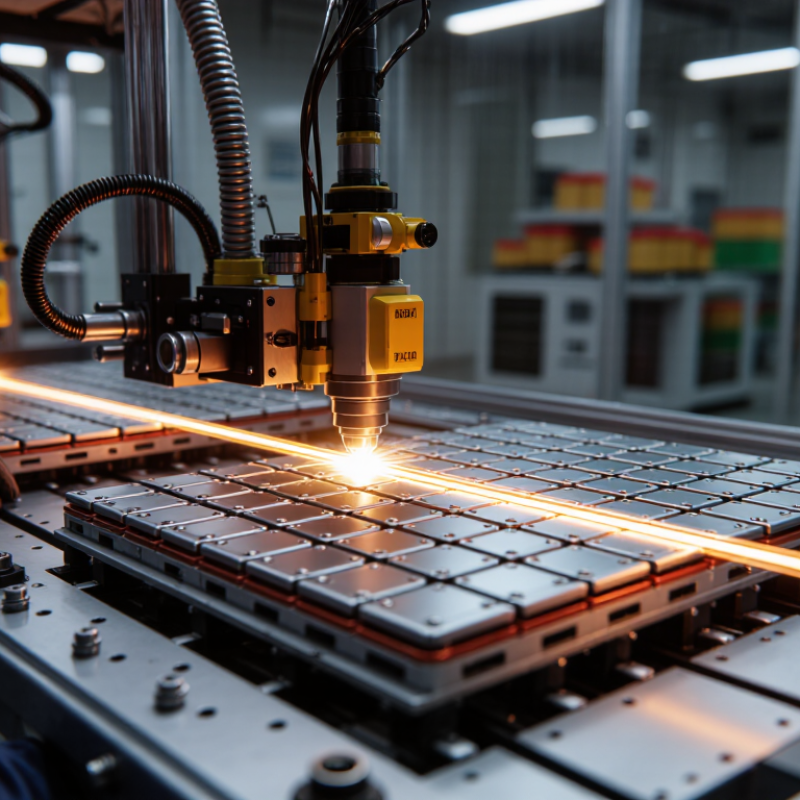
Battery laser welders join conductive parts with a concentrated beam and limited contact force. In battery production, they commonly weld cell tabs, busbars, and module connections. These joints must carry current while tolerating vibration and repeated heating. A narrow weld can help control heat near sensitive cells, but results depend on material, thickness, fit, and process settings. Small gaps matter.
The market context is significant. The International Energy Agency’s Global EV Outlook 2024 reports that electric-vehicle battery demand reached about 750 GWh in 2023, roughly 40% higher than in 2022. That growth increases the need for repeatable joining processes across cells and packs. Yet a larger battery market does not make every laser weld better. Poor alignment or unsuitable parameters can still produce weak joints or damage nearby material.
Application should guide equipment choice. Thin foil tabs may need carefully controlled energy, while thicker busbars can require greater penetration and stable clamping. Check whether the system supports the actual metals, joint geometry, and production rate—not just its maximum power rating. Ask for sample welds using your own parts, then inspect strength, appearance, and electrical resistance. Fit matters. In practice, monitoring and fixture design can be as important as the laser source. That detail is easy to underestimate.
How to Choose the Best Battery Laser Welder?
Understanding the materials in your battery assembly is an important first step when selecting a laser welder.
Battery assemblies commonly use aluminum and copper conductors, as well as nickel or steel components. Their approximate melting points help illustrate material differences, but do not determine welding settings by themselves. Reflectivity, part thickness, joint design, and fit-up also affect weld quality. Values shown are approximate melting points of pure metals; steel alloys vary.
Identifying Battery Materials, Joint Types, and Production Needs
Choosing a battery laser welder starts with the materials in your cell assembly. Copper, aluminum, nickel, and plated metals absorb laser energy differently. Surface coatings and oxidation can also change how a joint forms. Check the actual alloy, thickness, and surface condition rather than relying on a material label alone. Small differences matter.
Joint geometry is equally important. A flat lap joint behaves differently from a narrow tab or a busbar connection. Note the gap between parts, their alignment, and how much heat nearby components can tolerate. A tight, repeatable fit usually makes process development easier. Test the real stack, not just a convenient coupon. A neat sample can still mislead.
Production needs shape the equipment choice. Consider weld speed, fixture access, part variation, and how operators will inspect each joint. For a low-volume line, flexible settings may be more useful than maximum speed. Higher-volume production may require stable motion, repeatable clamping, and routine weld monitoring. Ask for trials using your materials and joint design, then inspect strength and consistency across multiple samples. Results can vary, and one successful weld is not enough. It is easy to focus on cycle time and overlook setup changes; that deserves a second look.
Comparing Laser Sources, Power, and Process Controls
Laser sources should be matched to the metals and joint geometry in the battery assembly. Copper reflects much of the light from common infrared sources, so a green laser may improve energy absorption in some applications. Aluminum and nickel behave differently. Test the actual material stack, including coatings, rather than choosing by a catalog description alone.
Fiber lasers are widely used for precise, fast seams, while pulsed sources can limit heat input on small tabs. That distinction matters. Power ratings need context: a higher maximum output does not guarantee a stronger weld. Too much energy can create spatter, distortion, or damage near a cell; too little can leave incomplete fusion. Check the usable power range and stability at the settings your process requires.
Process controls help keep results repeatable. Look for adjustable focus, pulse shape, travel speed, and beam movement, plus monitoring for changes in reflected light or weld energy. Small details matter. A useful trial includes several samples at varied settings, followed by cross-section inspection and pull testing. Record the settings with each result. A bright, tidy seam can still conceal a weak bond, and inspection takes time. That tradeoff is easy to underestimate.
Evaluating Safety, Automation, and Equipment Compatibility
How to Choose the Best Battery Laser Welder?
Evaluating Safety, Automation, and Equipment Compatibility
Choosing a battery laser welder starts with the workcell, not a headline power rating. Inspect the enclosure, door interlocks, fume extraction, and emergency stop. Can an operator reach the stop without leaning across the fixture? A blocked view or awkward control can undermine an otherwise capable system. Small details matter. Ask how the machine responds when a door opens, a part shifts, or a sensor detects an abnormal condition. Request a demonstration using representative materials and realistic production settings.
Automation should fit the actual workflow. A system may support robotic loading, recipe selection, and process monitoring, but extra automation can add setup time and maintenance. Watch a full cycle, including part loading and changeover. Check whether operators can identify a fault quickly and recover without bypassing safety steps. A smooth demo is useful, but it may not reveal routine delays. Ask for documented cycle times and clarify what conditions were used to measure them.
Compatibility deserves equal attention. Compare the welder’s fixtures and control interfaces with cell dimensions, existing handling equipment, and battery component tolerances. Confirm that the intended materials, joint geometry, and production volume have been evaluated by qualified personnel. Even a small fit mismatch can affect repeatability. No checklist catches every awkward installation, so leave space for a site review and trial run. That extra step can feel slow, but it is easier than discovering a clearance problem after delivery.
Assessing Weld Quality, Total Cost, and Supplier Support
A battery laser welder should be judged on repeatable welds, not one attractive sample. Run trials on the actual battery materials, joint shapes, and thicknesses you plan to process. Check bead consistency, penetration, spatter, and heat effects under steady production conditions. Small details matter. Record settings and inspect several welds, including pieces made after the machine has warmed up. A clean first pass can hide variation later. If results shift, review fixturing, surface preparation, and operator technique before blaming the equipment.
Compare total cost over the expected service life, not just the purchase price. Include installation, training, protective equipment, maintenance, consumables, and likely downtime. Ask how quickly common parts can be supplied and whether routine servicing requires a specialist visit. Test real parts. Supplier support deserves practical questions: Who responds to technical issues, what information is needed, and how are repairs handled? Request clear guidance on commissioning and operator training. Then assess whether the response is specific and timely. A low quote may still make sense, but only if support and operating costs fit your production needs. I would not treat a polished demonstration as proof; insist on documented trial results and a realistic service plan before deciding.