Industrial Machinery Company

How to Choose Swagelok Stainless Steel Tubing in 2026?

Choosing Swagelok Stainless Steel Tubing in 2026 is not just a matter of selecting a stainless grade. The right choice depends on pressure, temperature, fluid compatibility, installation conditions, and the fittings used. A tube that looks suitable on a workbench may perform poorly once exposed to vibration, corrosive media, or repeated pressure changes. Small details matter.

Swagelok technical guidance offers a useful selection principle: “Match the tubing to the system conditions, not just the fitting size.” Treat this as a practical rule, not a substitute for checking current product specifications. Start with the tube’s outside diameter and wall thickness. Then verify material grade, hardness, surface condition, and pressure ratings against the intended application. For demanding service, confirm compatibility with the fluid and operating temperature. Check that the tubing and fittings are designed to work together.

This guide will help you compare those factors, review documentation, and avoid common selection mistakes. For example, a slightly different wall thickness can affect fitting performance, while an unverified material grade can undermine corrosion resistance. Product details and availability can change, so confirm requirements with current Swagelok documentation or a qualified fluid-system specialist before purchase. There is no universal “best” tube. The best choice is the one supported by the application data—and sometimes that means revisiting an assumption you thought was settled.
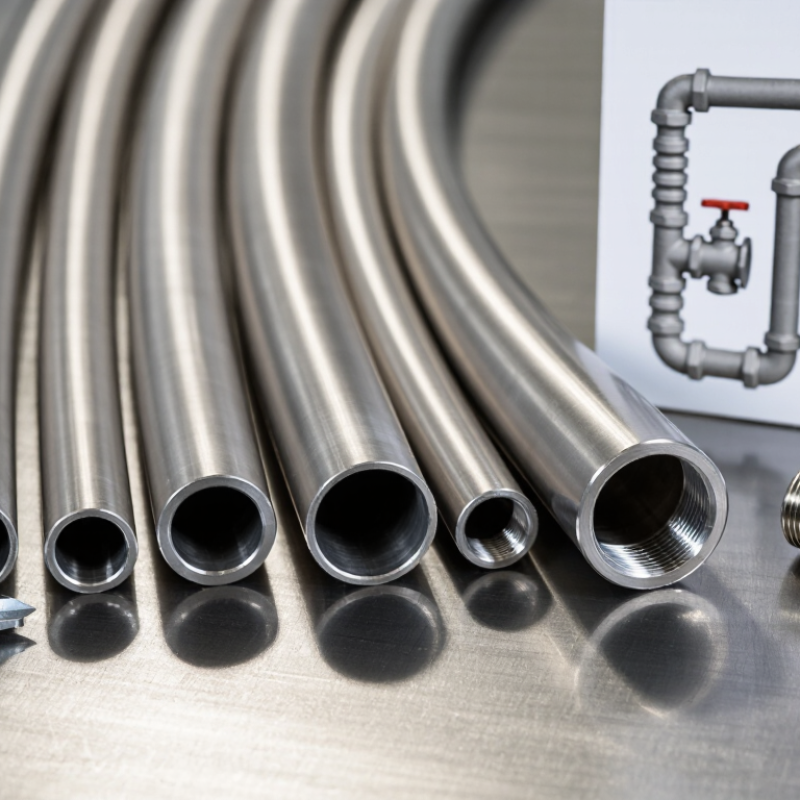
How to Choose Swagelok Stainless Steel Tubing in 2026?

Define the Tubing Application and Operating Requirements

Before selecting stainless steel tubing, define what it will carry and where it will operate. Record the fluid or gas, normal and peak pressure, temperature range, and any pressure surges. Is the line exposed to salt spray, cleaning chemicals, or moisture? Those details affect material compatibility and corrosion risk. Small details matter.

Measure the route, including bends, supports, and connection points. Tight spaces may require smaller outside diameters, but reducing size can increase pressure drop. Check the required flow rate and confirm that the selected diameter and wall thickness meet the system’s needs. Vibration deserves attention, too. A line beside a pump may need closer support than a quiet instrument run.

Specify cleanliness requirements and whether the tubing must be protected from contamination during storage and installation. Then compare operating conditions with current pressure-rating data for the exact material, size, and wall thickness. Do not rely on a familiar size from an older project; temperature and configuration can change the allowable rating. I have seen planning miss the awkward bend near a panel. It is easy to overlook, and worth checking on site.

Match Stainless Steel Grade to Fluid and Environment

How to Choose Stainless Steel Tubing in 2026

Match Stainless Steel Grade to Fluid and Environment

Start with the fluid, not the catalog description. Water with low chloride levels may suit 304 tubing, while salt spray, brine, or chloride-bearing process fluids often favor 316. ASTM A240/A240M lists 304 with 18–20% chromium and 8–10.5% nickel; 316 contains 16–18% chromium, 10–14% nickel, and 2–3% molybdenum. That molybdenum improves resistance to chloride pitting, but does not make 316 immune. Small details matter.

Check concentration, temperature, flow, and whether liquid can stagnate in fittings or dead legs. A warm chloride solution may attack tubing more aggressively than a cooler, dilute one. Also consider the outside environment: coastal air, cleaning chemicals, and wet insulation can affect exposed surfaces. ASTM A269/A269M provides requirements for stainless steel tubing, but a material standard alone cannot confirm compatibility with a specific service.

For welded systems, 316L’s lower carbon content can help reduce sensitization concerns near welds. Still, grade selection is not a substitute for reviewing actual chemistry and operating conditions. I would not treat “316 is safer” as a universal rule; acids, mixed contaminants, and changing temperatures can shift the risk. Verify the fluid data with a corrosion specialist when conditions are uncertain, and inspect the finished tubing and welds for contamination or surface damage.

Choose Tube Outside Diameter, Wall Thickness, and Tolerance

Choosing stainless steel tubing starts with the outside diameter, because it must match the fitting and support the required flow. Measure the actual run and check the fitting’s specified tube range; a small mismatch can cause poor engagement or leakage. Measure the real run. Do not select a larger diameter by instinct alone. Consider flow demand, available space, and how bends affect installation.

Wall thickness influences pressure capacity, stiffness, weight, and the usable inside diameter. Check the system’s operating pressure and temperature, then confirm the tube material and dimensions against a current engineering specification. Include pressure surges and support spacing in the review. Thin walls may be easier to bend, but can be more vulnerable to damage. Thicker walls reduce internal flow area. Small gaps matter.

Specify dimensional tolerances clearly, including outside diameter and wall thickness, rather than relying on a supplier’s general description. Tight tolerances can improve fit and repeatability, especially in assemblies with many connections. But tighter is not always better. It may raise cost without improving performance. Compare the tolerance range with the fitting requirements and the application’s actual needs. One detail is easy to miss: verify dimensions on the delivered tubing, not only on the purchase document.

Check Pressure Ratings, Standards, and System Compatibility

When choosing stainless steel tubing, treat the pressure rating as a system limit, not a number printed on a tube chart. It depends on outside diameter, wall thickness, material grade, operating temperature, and connection method. Check the rating at the highest expected temperature, not only at room conditions. Then confirm that fittings, valves, and tubing share compatible dimensions and pressure limits. One weak connection can set the limit for the whole assembly. Small details matter.

Review the project specification and the tubing’s material certificate. Standards such as ASTM A269 may apply to certain stainless steel tubing, but requirements vary by service and design code. Confirm the exact standard, grade, manufacturing condition, and dimensional tolerances before ordering. For corrosive fluids, compare the alloy’s resistance with the actual chemistry, concentration, and temperature; “stainless” is not a complete compatibility check. Also consider cleanliness, surface finish, and whether the tubing will be bent or exposed to vibration. A neat pressure table can still leave questions. Ask the supplier to verify the proposed tube-and-fitting combination against documented ratings, and record the operating conditions used. It is easy to overlook a temperature change or a substituted fitting, so review the selection again before installation.

How to Choose Stainless Steel Tubing in 2026: Check Pressure Ratings, Standards, and System Compatibility

Selection factor What to check Practical guidance
Pressure rating The tubing supplier’s pressure table for the exact outside diameter, wall thickness, material, temperature, and manufacturing condition. There is no single pressure rating for “stainless tubing.” Do not infer a rating from material grade alone. Confirm the design pressure at operating temperature and apply the governing code and required design margin.
Temperature and design conditions Maximum and minimum operating temperatures, pressure cycles, vibration, and external loads. Allowable stress and pressure capacity can change with temperature. Check the applicable design code and the supplier’s temperature-dependent rating data rather than using a room-temperature value.
Material grade Grade designation, chemical composition, heat treatment, and material test documentation. 304L is a low-carbon general-purpose stainless grade. 316L contains molybdenum and is often considered for improved resistance to many chloride-containing environments; it is not immune to chloride corrosion or stress-corrosion cracking. Confirm suitability for the actual fluid, concentration, temperature, and cleaning conditions.
Tubing specification Applicable product standard, seamless or welded construction, dimensions, tolerances, and inspection requirements. ASTM A269 covers seamless and welded austenitic stainless steel tubing for general service. ASTM A213 covers seamless ferritic and austenitic alloy-steel boiler, superheater, and heat-exchanger tubes. Match the specification to the service and procurement requirements.
System design code The code and jurisdiction governing the complete piping system. ASME B31.3 is commonly used for process piping. Confirm which code applies to the installation; tubing selection alone does not establish system compliance.
Outside diameter and wall thickness Actual outside diameter (OD), wall thickness, dimensional tolerance, and required flow capacity. Common nominal examples include 1/4 in × 0.035 in, 3/8 in × 0.035 in, and 1/2 in × 0.049 in (OD × nominal wall). Availability and tolerances vary. Verify exact dimensions before checking pressure capacity or ordering fittings.
Fitting and connection compatibility Fitting type, tubing OD, wall range, material, end preparation, and assembly instructions. A fitting must be qualified for the tube’s exact dimensions and material. Do not assume that components with similar nominal sizes from different connection systems are interchangeable.
Fluid and cleanliness compatibility Fluid chemistry, contamination limits, surface finish, cleaning method, and required passivation or certification. Specify cleanliness and surface-finish requirements for pharmaceutical, food, semiconductor, or high-purity service. Compatibility depends on the full operating environment, not just the stainless grade.
Traceability and documentation Material test reports, heat or lot identification, dimensional inspection, and required certificates. State documentation and marking requirements in the purchase specification. Check that delivered tubing can be traced to the specified material and product standard.

Note: Treat example dimensions as common sizes, not as a pressure-rating chart. Before installation, confirm the tubing, fittings, design code, and operating limits as a complete system.

Verify Product Traceability, Inspection, and Installation Needs

How to Choose Swagelok Stainless Steel Tubing in 2026?

When selecting stainless steel tubing, begin with its paper trail, not its polished surface. Request a material test report and confirm its heat or lot number matches the tube and packing label. Check the stated alloy, outside diameter, wall thickness, and condition against the design. Keep the records. A complete certificate is useful, but mismatched identifiers leave a gap.

Inspection should reflect service conditions. Look for dents, scratches, flattened ends, rust-colored residue, and damaged protective caps. Verify dimensions with suitable measuring tools, especially where fittings or tight clearances matter. Ask how the tubing was stored and handled. Looks can mislead. Write down acceptance criteria before inspection rather than improvising beside the workbench.

Before installation, confirm pressure, temperature, fluid compatibility, and the required bend radius using approved engineering documents. Cut the tube squarely, remove burrs, and keep open ends capped until assembly. Support long runs to limit vibration, and follow current fitting instructions. Check that tools are suitable and in good condition. Small shortcuts happen; a final review of the route and connection points can catch an overlooked bend or unsupported section.