How to Choose the Right Silicon Nitride Supplier?
Choosing the right Silicon Nitride supplier requires more than comparing prices or reading polished product pages. The material’s performance depends on powder purity, forming pressure, sintering atmosphere, and inspection discipline. A supplier may offer impressive strength figures, yet those figures can change with sample geometry, test temperature, or surface finish.
David W. Richerson, a respected ceramics engineer and author, wrote, “The properties of ceramics are determined by their processing history.” That statement remains highly practical for procurement teams. Ask how the supplier controls oxygen content, grain size, density, and residual porosity. Request batch-level certificates, inspection records, and clear test methods. Check whether the reported values represent production parts or laboratory samples.
Experience also matters. A reliable supplier should explain how it handles warpage, machining damage, thermal shock, and dimensional tolerances. Visit the facility when possible. Look at powder storage, furnace maintenance, and labeling on finished components. Small details often reveal process maturity. Traceability should reach the original powder lot.
Price still matters, but a low quotation can hide unstable yields, long rework cycles, or inconsistent delivery. Some buyers overlook communication quality. That is a mistake. Technical questions should receive precise answers, not vague promises.
No supplier is perfect. Even strong manufacturers may struggle with unusual geometries or rushed schedules. A careful evaluation should acknowledge those limits. Compare verified data, sample results, corrective-action records, and production capacity before signing a long-term agreement. The best choice is rarely the cheapest one. It is the supplier that can repeatedly deliver the required Silicon Nitride performance, with evidence.
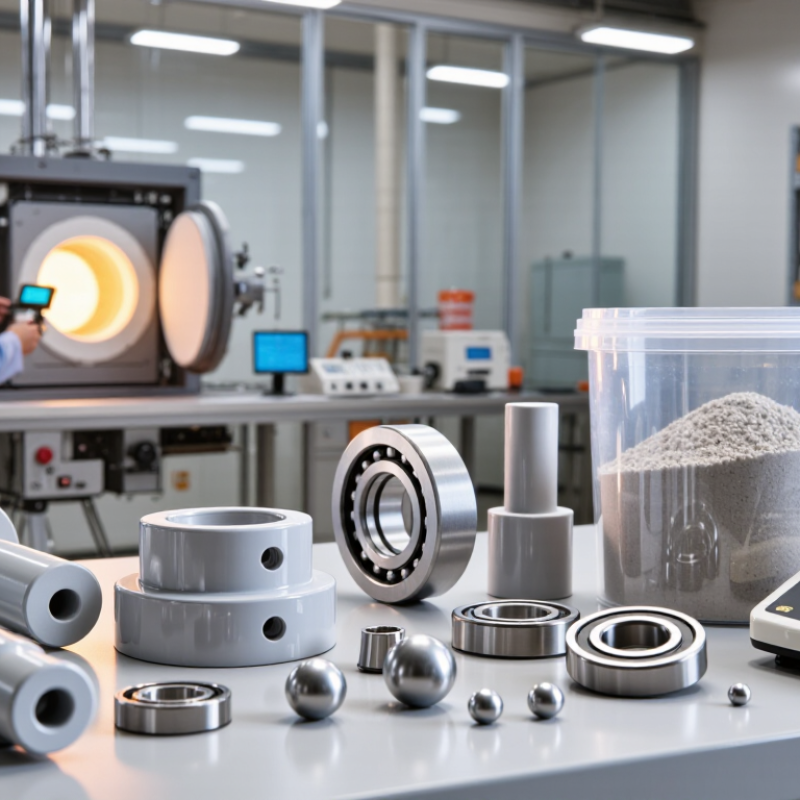
Define Your Silicon Nitride Requirements and Application Conditions
Before selecting a silicon nitride supplier, define the part’s real working conditions. Record temperature, load, speed, atmosphere, lubrication, electrical exposure, and expected service life. A bearing ball may face repeated Hertzian contact, while a kiln component may experience thermal shock and oxidation. These are different purchasing problems.
Material grade matters. Ask for density, hardness, fracture toughness, flexural strength, thermal conductivity, and Weibull statistics. According to the 2024 Fortune Business Insights market assessment, the global silicon nitride ceramics market was valued at about USD 1.1 billion in 2023. The report also forecasts continued growth through 2030, driven partly by semiconductor and engineering applications. Growth does not guarantee consistent quality. Request lot-specific test data, not only catalogue averages. ISO 26602 provides a useful reference for silicon nitride ceramic bearing balls, including dimensional and quality requirements. Your application may still demand tighter controls.
Test the supplier’s assumptions against your process. If the component runs near 800°C, check thermal cycling rather than relying on room-temperature strength. If coolant is present, review chemical compatibility and edge chipping. Small defects matter. A 2023 technical review in the Journal of the European Ceramic Society linked reliability strongly with flaw populations and processing control. That finding is easy to overlook. I would also request machining records, inspection methods, sample retention rules, and a change-notification procedure. A perfect specification rarely exists. Revise it after prototype testing, because the first design often exposes conditions nobody measured.
Assess Supplier Materials, Grades, and Manufacturing Capabilities
Choosing a silicon nitride supplier starts with material control, not a polished website. Ask whether the supplier produces reaction-bonded, pressureless-sintered, or hot-isostatically pressed grades. These routes create different densities, strengths, and machining responses.
Request the exact formulation. Important details include alpha-to-beta phase ratio, sintering additives, purity, porosity, density, and grain structure. ISO 26602:2009 provides requirements for silicon nitride ceramic balls, including dimensional and material expectations. For broader market context, Fortune Business Insights reported that the advanced ceramics market reached about USD 103.47 billion in 2023. That growth increases supplier choice, but it can also increase specification confusion. A grade called “high performance” is not a technical definition.
Manufacturing capability matters just as much. Check powder preparation, forming, sintering, HIP treatment, diamond grinding, inspection, and batch traceability. Ask for statistical process-control data, not only one attractive test result. ASTM C1161 is commonly used for flexural strength testing of advanced ceramics, but test size and surface finish can change results. That detail is easy to miss. I would also question suppliers that promise tight tolerances without explaining their grinding method. In reality, early supplier screens can look stronger than they are.
Tips: Compare three recent certificates from separate batches. Confirm density and strength using the same test standard. Request a small trial lot with your actual geometry. Inspect warpage, edge chipping, surface finish, and dimensional drift. Keep one sample for independent testing.
How to Choose the Right Silicon Nitride Supplier?
Compare representative silicon nitride performance ranges by manufacturing route. Density and flexural strength are useful first checks when assessing supplier materials, grades, and production capabilities.
Values are typical industry ranges for silicon nitride ceramics and can vary with formulation, porosity, test standard, and component geometry. Request grade-specific datasheets, process details, and lot-level certificates of analysis before approval.
Verify Quality Standards, Testing Methods, and Product Consistency
How to Choose the Right Silicon Nitride Supplier?
Verify Quality Standards, Testing Methods, and Product Consistency
A dependable silicon nitride supplier should provide clear quality standards, not vague claims. Ask which international specifications guide composition, density, strength, and dimensional tolerance. Request current certificates and inspection records for each production batch. A certificate alone is not enough.
Review the testing methods in practical detail. Confirm whether laboratories measure flexural strength, fracture toughness, thermal conductivity, porosity, and surface finish. Ask about sample preparation, equipment calibration, and test frequency. Results should be traceable to identified batches. Independent laboratory verification adds useful confidence, especially for critical components. Still, outside testing can miss process changes between shipments.
Product consistency deserves close attention. Compare several samples from different production dates, not only one carefully selected piece. Check color, weight, dimensions, machining marks, and measured performance. Small variations may reveal unstable powder preparation, sintering, or finishing controls. Request process-control data when possible, including statistical trends and acceptable limits.
Experience matters here. I have seen suppliers present excellent samples while later deliveries showed wider tolerances. That gap deserves direct questions. Ask how they handle nonconforming parts, corrective actions, and customer complaints. A reliable supplier explains problems without hiding them. No supplier is flawless. Transparent records are often more valuable than polished promises. Before approval, test the material in your actual operating conditions and document every result.
Compare Technical Support, Lead Times, Pricing, and Supply Reliability
Choosing the right silicon nitride supplier requires more than comparing a price sheet. Technical support often reveals a supplier’s real expertise. Ask whether engineers can explain grade selection, density, fracture toughness, thermal shock resistance, and machining tolerances. Useful support includes material data sheets, inspection reports, sample evaluation, and practical feedback on your operating conditions. Vague answers are a warning sign.
Lead times deserve equal attention. Request a written schedule covering material preparation, machining, inspection, and shipment. A supplier promising seven days may exclude testing or surface finishing. Clarify that detail. Pricing should include tooling, packaging, quality documents, freight, and possible rework. The lowest quotation can become expensive when hidden charges appear.
Supply reliability depends on more than inventory. Check production capacity, backup processes, lot traceability, and how shortages are communicated. Ask for recent on-time delivery records, not only general assurances. A stable supplier should explain its response to damaged shipments, failed inspections, or sudden demand changes. One weakness remains easy to overlook: buyers sometimes compare suppliers using different specifications. That makes pricing comparisons unreliable. Use the same drawing, tolerance, quantity, inspection level, and delivery terms for every quotation. Then review a small trial order before committing to regular production. Errors still happen, but transparent correction matters.
Evaluate Supplier Performance Through Samples, Audits, and References
How to Choose the Right Silicon Nitride Supplier?
A polished sample is only the beginning. Ask for test pieces matching your actual geometry, density, surface finish, and operating temperature. Measure warpage, fracture strength, thermal conductivity, and dielectric performance in an independent laboratory. Keep the test method identical for every supplier. Otherwise, comparisons become unreliable.
A supplier audit should follow the material’s full path, from powder handling to final inspection. Check batch records, furnace calibration, contamination controls, and nonconformance procedures. ISO’s Survey 2022 recorded 1,265,216 ISO 9001 certificates worldwide, but certification alone cannot prove ceramic consistency. Look for traceable data, not framed certificates. Request at least three customer references with similar tolerances and service conditions. Ask how often deliveries failed, how quickly corrective actions closed, and whether performance changed after scale-up. References may be carefully selected. That is a weakness worth admitting.
Tips: Send a written acceptance sheet before sampling. Include density limits, dimensional tolerances, test standards, packaging rules, and change-notification requirements. Visit the production site if failure would stop your line. During the visit, compare live records with reported results. A missing timestamp can matter. Repeat critical tests after storage and thermal cycling, because a strong first sample may not represent long-term behavior. The 2023 World Quality Report highlights growing pressure for stronger data visibility across supply chains, which supports requiring digital batch traceability. Choose evidence over confident promises.