Industrial Machinery Company

China Top 10 Mount Motor Manufacturers for Global Buyers

China is a major base for automotive and motor-related manufacturing. OICA’s 2023 production statistics report that China built about 30.2 million motor vehicles, roughly one-third of global output. The International Energy Agency’s Global EV Outlook 2024 also notes that China accounted for around 60% of electric car sales worldwide in 2023. These figures show the scale of the supply chain, but they do not prove that every supplier offers consistent quality.

Scale matters. This guide to China’s top 10 Mount Motor manufacturers is intended to help global buyers compare potential suppliers, not present an independently certified ranking. Product names and specifications can vary between catalogs. Buyers should confirm whether a supplier makes complete motor assemblies, mounting components, or both. That distinction affects fit, testing, and installation.

Useful comparisons go beyond price. Check drawings, dimensions, materials, load ratings, vibration performance, and documented quality procedures. Ask for sample inspection records and clarify how changes to a design are approved. Export experience, communication, production capacity, and realistic lead times also matter. A polished product page is not enough. Some supplier information may be incomplete or difficult to verify; that limitation deserves attention. Treat the shortlist as a starting point, then validate technical claims directly with each manufacturer. This approach can reduce avoidable sourcing surprises while keeping product requirements specific.
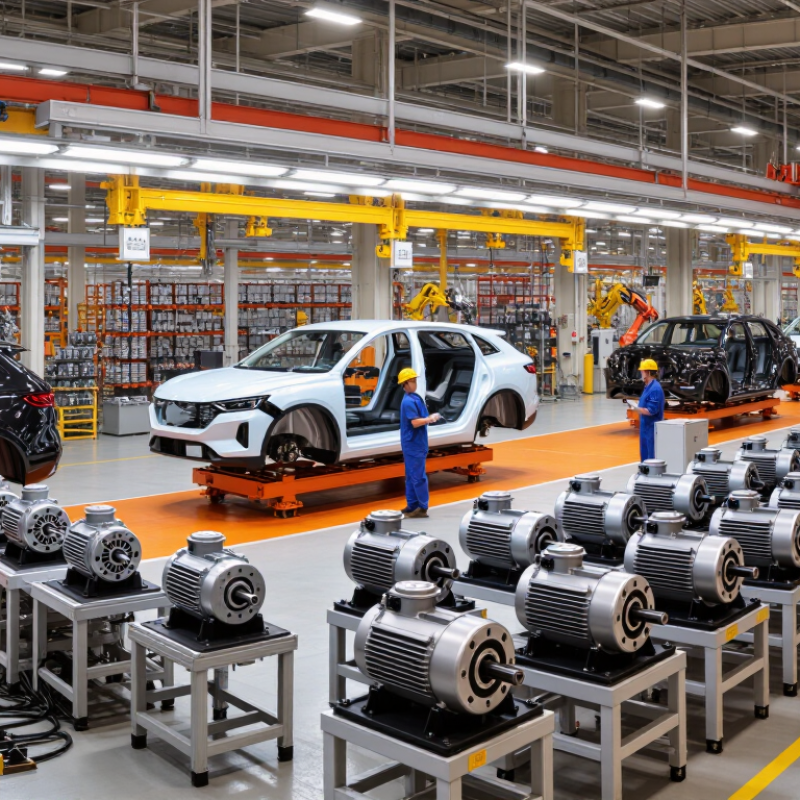
China Top 10 Mount Motor Manufacturers for Global Buyers

China’s 2023 Vehicle Output: 30.16 Million Units, According to CAAM

China Top 10 Mount Motor Manufacturers for Global Buyers

CAAM reported that China produced 30.16 million vehicles in 2023. That figure signals the scale of the country’s automotive supply base. For global buyers sourcing mount motors, high output can mean broader manufacturing capacity and more supplier options. But volume alone does not prove consistent quality. A busy factory still needs reliable process controls.

Mount motors must handle vibration, heat, repeated loading, and tight installation spaces. Buyers should review material specifications, dimensional tolerances, test procedures, and production traceability. Ask how suppliers control rubber bonding and inspect finished parts. Request sample results that match the intended vehicle application. These details matter more than an impressive capacity figure. I would be cautious about treating national output as a direct measure of any supplier’s performance. It is a useful market signal, not a substitute for verification.

Tips: Compare samples against drawings and operating conditions. Check how test data is recorded, and clarify how design changes are communicated. One missed detail can delay a fitting.

China Vehicle Production, 2019–2023

Annual vehicle output in millions of units, based on data from the China Association of Automobile Manufacturers (CAAM).

China produced 30.16 million vehicles in 2023, up 11.6% from 2022. This industry-wide production figure provides market context for global buyers; it is not mount-motor-specific output.

Motor Mount Basics: Rubber, Hydraulic, and Active Designs

Motor mounts do more than hold an assembly in place; they shape the vibration reaching the chassis. A rubber mount is simple, compact, and effective across many everyday operating conditions. But its stiffness can pass unwanted vibration into the frame. Hydraulic mounts add fluid chambers and a tuned passage, helping control low-frequency shake while softening idle vibration. The trade-off is real: fluid temperature, aging, and installation angle can change performance.

Engine speed gives buyers a useful reference point. A four-cylinder, four-stroke engine at 750 rpm produces firing pulses at about 25 Hz, calculated as rpm × cylinders ÷ 120. The mount must support the engine while limiting vibration near that frequency. ISO 10846-2:2008 describes laboratory measurement of dynamic stiffness in resilient supports, a useful basis for comparing test data. Active mounts go further, using sensors and actuators to counter selected vibration frequencies. They offer more control, but add wiring, calibration, and failure points. Real roads disagree with clean laboratory results. Check load, temperature, frequency range, and durability conditions before comparing supplier figures.

Supplier Quality Benchmarks: IATF 16949 and ISO 16750

For global buyers comparing mount motor manufacturers in China, IATF 16949 and ISO 16750 offer useful—but different—quality checks. IATF 16949 focuses on automotive quality management, including process control, traceability, supplier monitoring, and corrective action. Ask for a current certificate and confirm that its scope covers the actual production site and relevant activities. A certificate alone cannot prove that every batch is consistent.

Look closer. Request production records for a specific motor: inspection results, material identification, and documented responses to defects. ISO 16750 describes environmental conditions and testing for vehicle electrical and electronic equipment. Depending on the application, relevant checks may include temperature cycling, vibration, or electrical loads. Ask which test methods and acceptance limits were used; the standard does not automatically mean every motor has passed every test.

Good evidence is specific. A report should identify the sample, test conditions, and outcome, rather than simply state “compliant.” Compare those conditions with the motor’s installation location and expected duty cycle. Factory audits can also reveal practical details, such as how operators separate approved parts from items awaiting inspection. Paperwork can look tidy. Production is messier. IATF 16949 and ISO 16750 are valuable benchmarks, but buyers still need to judge whether the evidence matches their own use case.

10 Chinese Motor Mount Manufacturers: Products and Capabilities

Chinese motor-mount manufacturers offer a broad mix of rubber-metal mounts, hydraulic mounts, torque rods, and powertrain brackets. Their capabilities often span rubber compounding, metal stamping, bonding, tooling, and assembly. Some suppliers also develop mounts for electric vehicles, where battery mass and motor vibration can change load requirements. Details matter. Buyers should compare drawings, operating temperatures, stiffness targets, and test methods—not just catalog dimensions.

Demand is substantial: OICA reported 93.5 million vehicles produced worldwide in 2023. The IEA’s Global EV Outlook 2024 reported nearly 14 million electric-car sales that year, with further growth expected. These figures make production capacity relevant, but they do not prove a supplier can meet a particular program’s needs.

Ask for fatigue-test results, dynamic-stiffness data, aging tests, and batch traceability. A factory visit can reveal practical details, such as bonding controls and inspection routines.

No supplier is perfect. Test reports may not match a vehicle’s real duty cycle, so validation with representative loads remains essential.

Global Buyer Checklist: Testing, MOQ, Lead Times, and Warranty

For mount motor sourcing, request test evidence tied to your vehicle application, not a generic certificate. Check vibration, fatigue, temperature, and corrosion results, including sample size, test duration, failure criteria, and fixture photos. Ask whether the tested part matches the quoted material and design. Paper is not proof. The World Bank’s 2023 Logistics Performance Index assessed 139 economies and includes shipment timeliness among its measures, a reminder that delivery reliability depends on the supply route as well as factory capacity.

Tips: Compare MOQ against forecast demand and the supplier’s stated production batch size. Separate sample approval time from mass-production lead time. Ask for a written schedule covering tooling, material sourcing, inspection, and shipping. Small details matter. A low MOQ can still mean a long wait if a special rubber compound or metal insert is unavailable.

Before placing an order, agree on warranty duration, coverage, evidence required for a claim, and response time. Clarify whether failures from installation, overload, or normal wear are excluded. Keep a signed specification and approved sample for comparison. One point buyers sometimes miss: a neat audit sheet cannot predict every road condition. Revisit the test plan when the vehicle, mounting position, or operating climate changes.

China Top 10 Mount Motor Manufacturers for Global Buyers - Global Buyer Checklist: Testing, MOQ, Lead Times, and Warranty
No. Buyer Checklist Area What to Confirm Practical Benchmark or Reference Evidence to Request
1 Mounting configuration Confirm the required mounting arrangement, shaft orientation, terminal-box position, and installation clearances before requesting a quotation. Use the applicable IEC 60034-7 mounting-arrangement classification as a reference; confirm the exact configuration on the drawing. Dimensioned outline drawing, mounting code, and written confirmation of terminal-box position.
2 Electrical ratings Specify rated output, voltage, frequency, phase, current, duty, insulation class, and any starting or speed-control requirements. Ratings and performance should be stated clearly on the datasheet and nameplate. Confirm compatibility with the destination-country supply. Technical datasheet, nameplate sample, wiring diagram, and any required efficiency declaration.
3 Routine testing Ask which routine tests are performed on each motor and whether test results are traceable to the motor serial number. IEC 60034-1 covers rating and performance requirements; IEC 60034-2-1 describes methods for determining losses and efficiency. Sample routine-test report showing the tested parameters, acceptance criteria, and serial-number traceability.
4 Ingress protection Match the enclosure protection to the actual environment, including dust, water exposure, cleaning practices, and outdoor installation. IP classification is covered by IEC 60034-5. The required IP rating depends on the application and should be specified in the purchase contract. Declared IP rating, product documentation, and relevant verification or test records.
5 MOQ and sample orders Ask whether the minimum order quantity differs for standard products, customized mounting, special voltage, or non-standard materials. There is no universal MOQ for mount motors. Request separate quantities and pricing for samples, pilot orders, and repeat production. Written quotation stating MOQ by configuration, sample charge, tooling charge, and any mixed-model order conditions.
6 Production lead time Confirm the production schedule, material availability, inspection time, and the point at which the delivery clock starts. Lead times are supplier- and order-specific; distinguish production time from shipping and customs transit time. Order schedule with estimated production completion, inspection date, dispatch date, and delay-notification terms.
7 Warranty coverage Define the warranty start date, coverage period, covered failures, exclusions, remedy, and responsibility for return freight. Warranty terms vary by supplier and contract. Avoid relying on a verbal promise; make the agreed terms part of the purchase order. Written warranty document covering claims procedure, repair or replacement options, and required supporting evidence.
8 Quality control and traceability Check how incoming materials, production stages, final inspection, and non-conforming products are controlled. Request the supplier’s current quality-system documentation and clarify whether inspection records are retained by serial number or batch. Quality certificate where applicable, inspection checklist, sample records, and corrective-action process.
9 Packaging and export readiness Confirm protection against moisture, impact, corrosion, and movement during transport, as well as destination marking requirements. Packaging should suit the transport mode, route, storage conditions, and destination regulations; specify these requirements before production. Packaging specification, carton or crate dimensions, gross weight, shipping marks, and packing-list sample.
10 Commercial and delivery terms Compare quotation validity, payment milestones, currency, delivery terms, spare parts, and responsibility for export documents. State the agreed Incoterms® rule and named place in the contract. Confirm that the quotation identifies what is included and excluded. Formal quotation, pro forma invoice, agreed Incoterms® rule and place, and list of export documents supplied.
Buyer note: This is an anonymized procurement checklist, not a verified ranking or a set of manufacturer-specific claims. MOQ, lead time, test scope, and warranty must be confirmed in writing for each product and order.

Article Source: