Industrial Machinery Company

China Top 10 Cylinder Piston Rod Manufacturers

Choosing among China’s top 10 Cylinder Piston Rod manufacturers takes more than comparing prices or polished catalogs. A rod may look flawless in a photograph, yet perform poorly if its coating, straightness, or dimensions do not suit the cylinder. Small details matter. Think of a chrome-plated surface moving through a seal thousands of times, exposed to pressure, dust, and changing temperatures.

Dr. John Watton, known for his work on fluid power control, offers a useful engineering perspective. The following line is an editorial summary, not a verbatim quotation: “Reliable motion begins with parts designed for the real operating conditions.” That principle guides this overview. It looks at manufacturers through practical factors, including material options, machining capability, surface treatment, inspection practices, and communication about custom requirements. A supplier’s ability to explain tolerances can be as revealing as its equipment list.

No ranking is perfect. A factory that suits a high-volume order may not fit a small, specialized project. Buyers should verify current specifications, request relevant inspection records, and clarify packaging and delivery expectations before making a decision. These checks take time. They can prevent costly surprises. This guide introduces ten Chinese manufacturers and the details worth comparing, while recognizing that supplier information and production capabilities can change. Use it as a starting point, then confirm each claim directly with the manufacturer.
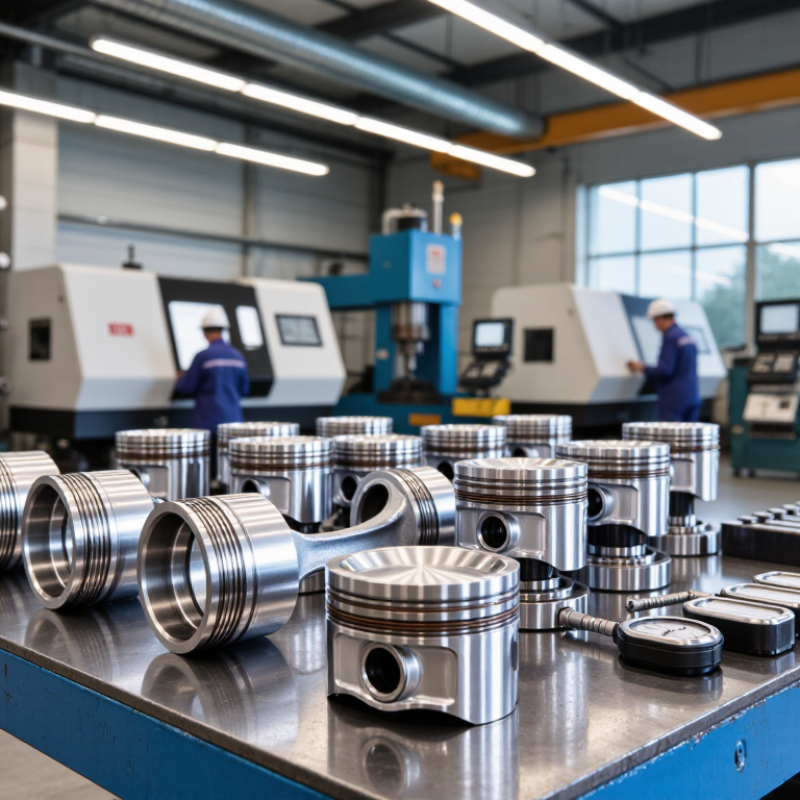
China Top 10 Cylinder Piston Rod Manufacturers

Hydraulic Cylinder Piston Rods: Materials, Functions, and Core Applications

A hydraulic cylinder piston rod transfers force from the piston to the machine attachment. It must resist tension, compression, bending, and repeated surface contact. Medium-carbon steel is common because it balances strength, machinability, and cost. Alloy steels can suit higher loads or demanding duty cycles. Stainless steel may help in wet or corrosive environments, though material choice still depends on load, sealing, and maintenance conditions.

The rod surface matters just as much as its core. Induction hardening improves resistance to wear, while chrome plating provides a smooth sliding surface and added corrosion protection. Neither is a cure-all. Damaged seals can let grit reach the rod, where even a small scratch may accelerate leakage and wear. Fit, straightness, surface finish, and seal compatibility deserve attention during design and inspection.

Demand reflects the wide use of hydraulic equipment. Global Market Insights estimated the hydraulic cylinder market at about USD 14.5 billion in 2023, with projected growth through 2032. That figure signals broad industrial use, not a guarantee of performance for any single rod. In construction machinery, agricultural equipment, and material-handling systems, rods convert hydraulic pressure into controlled movement. A practical selection weighs force, stroke, speed, corrosion exposure, and service access. Sometimes, the overlooked factor is simply how easily the rod can be inspected.

Industry Benchmarks: ISO 6158 Coatings, 800–1,100 HV Hardness, and Ra ≤0.2 μm

When comparing cylinder piston rod manufacturers, look beyond a polished catalogue image. ISO 6158 provides a reference for electrodeposited chromium coatings used in engineering applications. Ask whether the coating specification identifies thickness, preparation, and inspection methods. A certificate without those details leaves room for interpretation.

A surface hardness target of 800–1,100 HV can indicate resistance to wear, but hardness alone does not prove coating quality. Confirm the test method and where measurements were taken. Ra ≤0.2 μm is another useful benchmark: a profilometer should measure the finished rod, not an earlier stage. The distinction matters.

Small details count. A smooth rod can help protect seals and support consistent movement, yet excessive polishing or uneven coating may create problems. Request inspection records for hardness, roughness, coating thickness, and adhesion. If possible, compare several points along a sample rod; one reading may miss local variation. Numbers help. They do not tell everything. Production batches can differ, and a clean report cannot replace careful review of the actual part. Manufacturers should be able to explain how their process controls these values, and what they do when results fall outside specification.

China Top 10 Cylinder Piston Rod Manufacturers — Industry Benchmarks: ISO 6158 Coatings, 800–1,100 HV Hardness, and Ra ≤0.2 μm

An anonymized technical benchmark table for comparing piston-rod manufacturing capabilities; entries are industry reference points, not company-specific ratings.

Interpretation: Values below are typical engineering targets or commonly used reference ranges, not universal requirements. Final specifications depend on the cylinder design, operating environment, drawing, and purchaser acceptance criteria.

Benchmark dimension Reference benchmark Relevant standard or method Application and qualification notes
1. Chromium coating system Engineering hard-chromium plating; coating specification defined by the component drawing ISO 6158, electrodeposited chromium coatings for engineering purposes ISO 6158 provides requirements and guidance for engineering chromium coatings; it does not establish one coating thickness suitable for every piston rod.
2. Coating microhardness 800–1,100 HV is a commonly cited target range for hard-chromium coatings Vickers testing: ISO 6507-1 Report the test load, indentation location, coating thickness, and test method. Results can vary with plating chemistry and process conditions.
3. Surface roughness Ra ≤0.2 μm as a common finish target for seal-running surfaces Profile surface-texture specification and measurement: ISO 21920 series Specify the evaluation length, filtering, measurement direction, and sampling plan alongside Ra. A drawing may require a different finish for a particular seal system.
4. Coating thickness Application-specific; 20–50 μm is a commonly encountered engineering range, not a universal limit ISO 6158 and the component drawing Thickness selection depends on corrosion exposure, wear allowance, dimensional tolerance, and whether the rod is new or refurbished.
5. Coating adhesion No lifting, peeling, or flaking under the agreed inspection and acceptance procedure ISO 2819 describes adhesion tests for electrodeposited and chemically deposited metallic coatings Select a suitable test method and acceptance criteria for the coating, substrate, and part geometry; record the method used.
6. Substrate material Steel grade selected for strength, hardenability, machinability, and service conditions; 42CrMo4 / 4140 are examples used in engineering applications Material grade and heat-treatment condition specified on the drawing or purchase specification These are examples, not mandatory grades. Verify the applicable material standard, delivery condition, and material certificate for each order.
7. Corrosion resistance qualification Test method, exposure duration, and acceptance criteria agreed for the intended environment ISO 9227 provides neutral salt-spray, acetic acid salt-spray, and copper-accelerated acetic acid salt-spray test methods ISO 9227 defines test procedures, not a universal service-life prediction or a single pass duration for all piston rods.
8. Diameter and dimensional tolerance Tolerance stated on the part drawing and coordinated with the seal and guide design ISO 286 series for limits and fits, where applicable A general fit class should not replace the specified rod diameter tolerance, coating allowance, or post-plating finishing requirement.
9. Straightness and runout Limits defined by rod diameter, unsupported length, assembly design, and purchaser drawing Drawing-defined geometric tolerances and an agreed inspection method There is no single straightness value suitable for every rod length and diameter. State the measurement span, support condition, and acceptance limit.
10. Traceability and inspection records Lot-level identification with material, heat-treatment, coating, dimensional, and surface-finish records as required by the order Purchaser quality plan and documented inspection requirements Request certificates and inspection reports appropriate to the application; the required record set should be agreed before production.

How to Assess Chinese Manufacturers: Capacity, Precision, Quality, and Export Experience

Choosing among Chinese cylinder piston rod manufacturers takes more than comparing catalogues. Ask how monthly capacity changes during peak demand, and whether key machining steps happen in-house. A factory tour or live video can reveal actual production flow, machine condition, and work-in-process inventory. Ask for evidence. Capacity figures alone do not show whether urgent orders disrupt normal quality checks.

Precision should be discussed in measurable terms: rod diameter, straightness, surface roughness, and coating thickness. Request inspection reports from recent batches, not only a sample certificate. Compare the reported values with your drawing tolerances, and confirm how measuring instruments are calibrated. Small details matter. A sample may fit perfectly, while later batches drift if process controls are weak. That risk deserves a direct conversation.

Quality assessment should include material traceability, coating adhesion tests, and documented corrective actions for defects. Export experience is also practical: check examples of export packaging, delivery records, and the supplier’s ability to prepare clear shipping documents. Speak with a recent overseas customer when possible. Still, references can be selective, and polished paperwork is not the whole story. An independent audit may miss daily problems, too, so combine records, sample testing, and regular communication before committing to volume.

China’s Top 10 Cylinder Piston Rod Manufacturers: Profiles and Product Strengths

China’s leading cylinder piston rod manufacturers differ more in process control than in appearance. Some focus on high-volume, standard-diameter rods; others handle custom lengths, threads, and end fittings. Their product strengths often include straightness control, consistent machining, and hard chrome surfaces designed to resist wear. A polished finish looks reassuring, but it cannot replace measured tolerances.

Profiles of ten suppliers should be compared through practical details: steel grades, heat treatment options, coating thickness, inspection methods, and documented test results. Ask how each supplier checks surface defects and rod runout, and whether sample reports match your drawing requirements. Small details matter. A manufacturer with flexible production may suit low-volume custom orders, while a larger facility may offer steadier lead times for repeat batches. Export experience can help with packaging and communication, though it does not guarantee product quality. One limitation of any top-ten overview is that supplier capabilities change, and public specifications may not reveal shop-floor consistency. Verify the current process with samples and clear acceptance criteria.

Common nominal piston rod diameters found across hydraulic-cylinder product ranges. These are dimensional examples, not a ranking or a company-specific catalog; actual availability depends on cylinder design, load, stroke, and buckling requirements.

Comparing Suppliers by Rod Diameter, Chrome-Plating Options, and Application Fit

When comparing China’s top 10 cylinder piston rod manufacturers, start with dimensions rather than catalog claims. Rod diameter affects buckling resistance, seal selection, and cylinder space. A 40 mm rod may fit a compact press, while a machine facing heavier side loads may require a larger diameter. Check the drawing, stroke, mounting style, and load direction together. Small mismatches matter.

Chrome-plating options deserve equal attention. Ask each supplier for coating thickness, hardness range, surface finish, and corrosion-test details. Then compare these specifications with the working environment. A rod exposed to water, dust, or frequent washdown may need different protection from one operating indoors. Request inspection records and sample measurements, not just the words “hard chrome.” The label alone proves little.

Application fit also depends on material consistency, straightness, and quality checks across production batches. Ask how the supplier controls these factors and whether it can provide dimensional reports for the required rod diameter. A sample can help reveal finish defects or fit problems before larger orders. Still, one sample cannot guarantee every batch will match. That limitation is easy to overlook. Share operating pressure, expected cycle frequency, and exposure conditions when requesting quotations; otherwise, even a technically capable supplier may recommend a rod that misses the real duty.