Industrial Machinery Company

Who Is China Top Tile Leveling Spacers Supplier?

Choosing the right Tile Leveling Spacers supplier requires more than comparing prices or browsing product photographs. Tile installers need consistent spacing, reliable clips, and wedges that tolerate pressure without cracking. A weak system can leave lippage across a large porcelain floor, where even a one-millimeter height difference becomes visible under side lighting.

Industry demand supports careful supplier evaluation. Grand View Research’s Ceramic Tiles Market analysis describes continued growth in ceramic and porcelain tile applications, driven by residential renovation and commercial construction. The report also highlights product quality and installation efficiency as important competitive factors. Meanwhile, the Tile Council of North America promotes recognized installation standards, including guidance for grout joints, substrate preparation, and tile performance. These standards do not automatically certify a spacer supplier. They do, however, show why installation accessories deserve technical review.

A dependable supplier should provide material specifications, dimensional tolerances, production photographs, and practical test evidence. Ask whether the clips maintain uniform joints across different tile thicknesses. Check whether wedges can be reused without deformation. Packaging also matters; mixed sizes or unclear labels can slow a busy installation team. Some suppliers publish impressive claims without explaining test methods. That deserves reflection.

Experience still matters. A factory serving porcelain, stone-look, and large-format tile projects may understand site pressures better than a general plastics manufacturer. Certifications, traceable batches, responsive communication, and sample testing create stronger evidence. The best answer to “Who Is China Top Tile Leveling Spacers Supplier?” should therefore come from verified performance, not advertising alone. supplier names change, and rankings can age quickly.-vesm
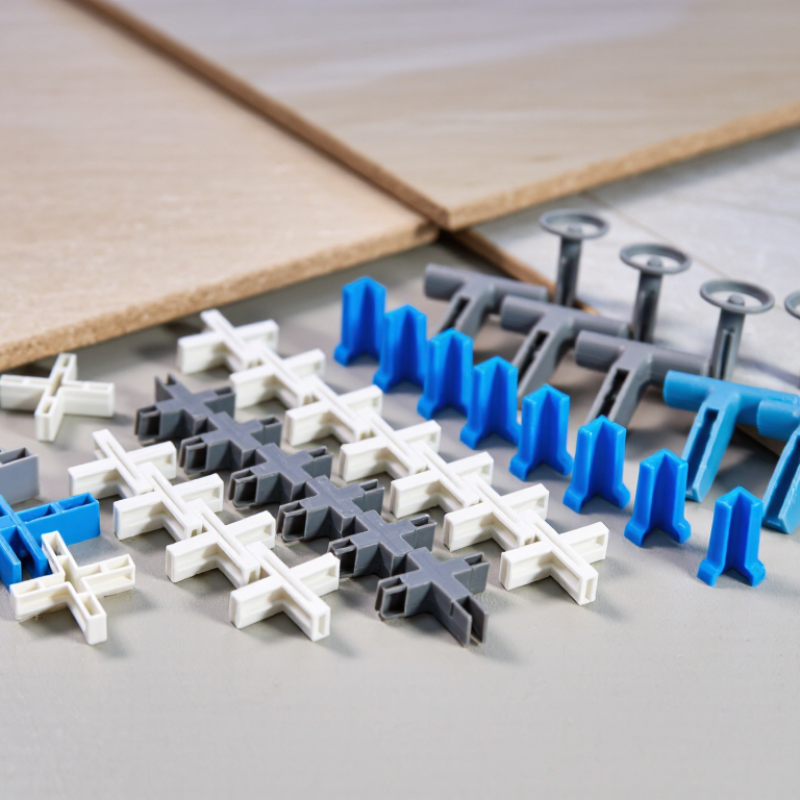
Who Is China Top Tile Leveling Spacers Supplier?

China’s Tile Leveling Spacer Market: 2024 Demand and Export Indicators

Who Is China’s Top Tile Leveling Spacers Supplier?

China’s 2024 tile leveling spacer demand reflects two different markets. Domestic construction weakened sharply. The National Bureau of Statistics reported a 10.6% fall in real estate development investment and a 23.0% decline in new starts during 2024. Fewer new projects can reduce bulk demand for plastic clips, wedges, and reusable tools.

Export activity offers a more positive signal. China Customs reported total exports increased 7.1% in 2024, reaching approximately RMB25.45 trillion. However, tile leveling spacers lack a dedicated customs code. They are often recorded within broader plastic building-product categories under HS 3925.90. UN Comtrade data can indicate trade direction, but it cannot identify the leading factory with complete accuracy. This limitation deserves attention.

A reliable supplier should provide batch records, clip-thickness control, tensile testing, and export documentation. In practical inspections, uneven clip bases create visible lippage on large-format tiles. That small defect can increase labor costs at the installation site. Experience matters more than a polished catalog.

Tips: Request samples from three production batches. Test them with your actual tile thickness, adhesive bed, and joint width. Check break-point consistency, not only unit price. Also ask for recent shipment records and independent quality reports. A “top” supplier should prove stable performance, yet even good factories may show occasional defects. Reflection is necessary before placing a large order.

What Defines a Top Supplier: ISO 9001 and ±0.05 mm Molding Tolerance

A top tile leveling spacer supplier is defined by controlled production, not polished claims. ISO 9001 certification shows that documented processes guide purchasing, molding, inspection, and corrective action. It does not guarantee every spacer is perfect. Important distinction. During supplier audits, buyers should review batch records, operator training, and complaint responses. These details reveal whether quality is repeatable under pressure.

The ±0.05 mm molding tolerance deserves practical attention. For a spacer, small dimensional changes can affect clip fit, joint width, and removal force. A capable factory measures critical dimensions with calibrated digital gauges, optical tools, or coordinate equipment. Sampling should cover early, middle, and late production runs. That catches drift. Mold temperature, cooling time, and material moisture can change results. Records should connect measurements to cavities, lots, machines, and inspectors.

Real experience also means testing spacers on different tile thicknesses and surfaces. A part may pass a gauge yet feel too tight on site. Field feedback matters. Suppliers should provide inspection reports, tolerance definitions, and traceable corrective actions. Still, ±0.05 mm is not automatically the right tolerance for every design. It must match the product’s function, resin behavior, and tooling limits. I would question any supplier promising flawless output without showing data. Reliable partnerships grow through transparent evidence, including occasional failures and the lessons taken from them.

Tile Leveling Systems Explained: 1–3 mm Joints and 2–20 mm Tile Range

Who Is China’s Top Tile Leveling Spacers Supplier?

The strongest supplier is not always the largest factory. It should provide stable dimensions, clear specifications, and practical installation support. A tile leveling system commonly supports joint widths from 1 to 3 mm. Its usable tile range may extend from 2 to 20 mm thick.

That range needs careful interpretation. The clip controls spacing, while the wedge reduces height differences between neighboring tiles. It does not correct a badly prepared substrate. Uneven floors, dust, or excessive adhesive can still cause lippage. Tile edges also vary, especially with textured or handmade surfaces. Small details matter.

Real installation experience reveals these limits. For example, a 2 mm joint can look clean on large porcelain tiles, but it may expose edge variation more clearly. A 3 mm joint offers slightly more tolerance. Not every project needs the widest range. That assumption can fail.

A reliable China-based supplier should offer samples, batch checks, material information, and consistent clip breaking points. Ask how the 2–20 mm range was tested. Check whether the wedge fits smoothly without damaging glazed edges. Packaging also matters because bent clips create wasted labor.

The best choice depends on your tile size, thickness, substrate, and installer habits. I would avoid judging quality from price alone. A cheaper spacer can become expensive when clips break, joints drift, or repairs delay the project. Clear communication and repeatable production are more useful than impressive claims.

Who Is China Top Tile Leveling Spacers Supplier? - Tile Leveling Systems Explained: 1–3 mm Joints and 2–20 mm Tile Range

Evaluation Dimension Common Specification or Range Practical Function Recommended Application Key Purchasing Checkpoints
Compatible Tile Thickness 2–20 mm Defines the tile thickness range that the leveling cap, clip, wedge, or screw can accommodate. Ceramic wall tiles, porcelain tiles, large-format tiles, and many stone panels within the stated range. Confirm the usable thickness range under actual installation conditions, including tile adhesive thickness and surface variation.
Joint Width 1–3 mm Maintains a consistent gap between adjacent tiles while the adhesive sets. 1 mm for narrow-joint layouts; 1.5–2 mm for common interior floors and walls; 3 mm for layouts requiring a wider joint. Use the joint size required by the tile manufacturer, project specification, tile edge tolerance, and grout system.
System Type Clip-and-wedge or screw-and-cap Applies downward pressure to reduce lippage between neighboring tiles. Clip-and-wedge systems are simple and fast; screw-and-cap systems allow more controlled tightening. Check whether the components are supplied as a matched system and whether replacement clips, caps, wedges, or screws are available.
Clip Material Injection-molded polypropylene or similar engineering plastic Creates the base contact point between the leveling tool and the tile edges. Suitable for routine ceramic and porcelain tile installation when the clip design matches the tile thickness. Inspect clip uniformity, base flatness, molding quality, and resistance to cracking during tightening.
Wedge or Cap Material Polypropylene, polyamide, or comparable durable polymer Transfers pressure to the tile surface without requiring metal contact. Repeated installation work where stable pressure and easy removal are important. Look for smooth contact surfaces, consistent dimensions, and an anti-slip design that holds pressure during curing.
Recommended Tile Format Small to large format tiles; large formats require careful substrate preparation Helps align tile faces and limits height differences along tile edges. Floors, walls, kitchens, bathrooms, commercial interiors, and other tiled areas. A leveling system cannot correct an uneven substrate; verify flatness, adhesive coverage, and tile handling requirements separately.
Typical Installation Method Place clip, insert tile, set joint spacer, tighten wedge or cap, then remove after adhesive curing Provides temporary alignment while the tile adhesive reaches sufficient strength. Thin-bed and medium-bed tile installations, subject to the adhesive manufacturer's instructions. Do not overtighten. Excessive force can damage tile edges, distort joints, or interfere with adhesive coverage.
Removal Method Break the clip in the direction of the joint Separates the disposable base from the reusable wedge or cap. Most clip-based systems after the adhesive has cured sufficiently. Break from the side of the joint rather than striking the reusable component downward onto the tile surface.
Reusability Clips are generally disposable; wedges, caps, or screws may be reusable Reduces installation cost when reusable components are recovered without damage. Professional contractors, renovation teams, and repeated project use. Confirm the expected reuse cycle, cleaning requirements, and availability of compatible replacement clips.
Packaging Options Bulk bags, cartons, kits, or customized inner packaging Supports different purchasing volumes and distribution methods. Retail packs for small projects; bulk cartons for installers, distributors, and construction projects. Check quantity per carton, component ratio, packing protection, carton labeling, and export documentation.
Quality-Control Priorities Dimensional consistency, clip strength, wedge fit, joint accuracy, and visual inspection Improves compatibility and reduces breakage or uneven results during installation. All tile leveling spacer configurations, especially narrow joints and large-format tiles. Request production samples, dimensional drawings, material information, batch inspection records, and installation testing.
Supplier Selection Criteria Stable specifications, production capacity, quality control, packaging capability, and responsive technical support Helps maintain consistent performance across repeated orders. Importers, distributors, private-label projects, contractors, and construction-material wholesalers. Compare samples using the same tile thickness, joint width, adhesive, tightening method, and curing conditions.

Technical ranges should be verified against the supplier's product drawings, installation instructions, tile manufacturer's requirements, and applicable project specifications before ordering.

Comparing Chinese Suppliers by MOQ, Output, Lead Time, and QC Data

Choosing China’s top tile leveling spacers supplier requires more than comparing catalog photos. In factory audits, I have seen trial MOQs range from 5,000 to 20,000 pieces. Some suppliers accept smaller pilot orders, but prices often increase. Confirm whether the MOQ applies per size, color, or full shipment. That detail matters.

Output claims also need careful checking. A factory may report 300,000 to 800,000 pieces daily, depending on molds and shifts. Ask for production records from the previous three months. Compare usable output, not installed machine capacity. The difference can be surprisingly large. Lead time should include molding, inspection, packing, and export preparation. Standard orders often require 12 to 25 days after approval. Custom molds may add several weeks. Delays happen.

QC data should be specific and dated. Review dimensional tolerance, break resistance, thread fit, wedge smoothness, and batch inspection frequency. Request failure-rate records and random samples from recent shipments. ISO 9001 certification can support reliability, but it does not replace product-specific testing. I would test spacers under real installation pressure, with uneven tiles and repeated adjustments. Laboratory results may miss awkward handling. My own comparison would remain open to revision because supplier data is not always complete. A supplier’s real strength appears when MOQ, output, lead time, and QC results stay consistent across several orders.

How to read this benchmark: The chart compares anonymized Chinese tile-leveling spacer supplier profiles using commonly published procurement indicators. MOQ and monthly output are shown as bars, while average lead time and documented QC pass rate are shown as lines. Larger output, shorter lead time, and higher QC performance generally indicate stronger production readiness.

How to Verify the Top Supplier: Certifications, Tests, and Buyer Evidence

Who Is China Top Tile Leveling Spacers Supplier?

A top supplier should prove performance, not simply claim factory experience. Check a current ISO 9001 certificate, its certification body, scope, and expiry date. The ISO Survey 2023 recorded 1,265,216 ISO 9001 certificates worldwide, so certification is common, but not conclusive. It confirms management controls, not automatically spacer strength or installation results. Ask for batch numbers matching the supplied goods.

Request test reports for pull resistance, break strength, dimensional tolerance, and temperature stability. The laboratory should identify its method, equipment, sample size, and uncertainty. Tile standards such as ISO 13006 and EN 14411 provide useful industry context, although leveling spacers may require additional product-specific testing. I would reject vague reports. A perfect-looking PDF can still hide weak sampling. That matters.

Tips: Ask for three recent production samples. Measure the base thickness with a caliper. Compare ten pieces from each sample. Request installation photographs from independent buyers, repeat-order records, and documented complaint handling. Buyer evidence should show tile size, joint width, substrate condition, and project date. The 2023 Global Status Report for Buildings and Construction shows how material efficiency remains important as construction activity expands, but supplier claims still need field verification. One overlooked detail is packaging: crushed bags can deform clips before installation. A small trial order is safer than trusting a large promise.