Industrial Machinery Company

China Top 10 90° Long Radius Elbow Manufacturers

A reliable comparison of China’s top 10 manufacturers of 90° Long Radius Elbow products should look beyond polished catalogs. Buyers need clear evidence of material grade, dimensional control, welding quality, and inspection procedures. A well-made elbow guides flow through a gradual turn; its radius can help reduce turbulence and pressure loss compared with a short-radius fitting. The difference matters in a real plant, where an elbow sits among pumps, valves, supports, and crowded pipe runs.

The list should therefore compare more than price. Look for traceable material records, consistent wall thickness, accurate end preparation, and practical documentation. Ask how each supplier handles custom dimensions, third-party inspection, and delivery schedules. Small details count. A clean bevel and readable heat-number marking can make receiving checks easier. Still, a product page cannot prove factory performance, and this guide should not treat marketing claims as verified results.

A useful technical reminder would be: “Choose the fitting by its operating conditions and documented quality, not by price alone.” However, no verified industry expert or source quotation was provided, so attributing that sentence to a named person would risk misrepresenting them. This introduction keeps the comparison grounded in checkable criteria. Some manufacturer information may change, and buyers should confirm current specifications directly before ordering.
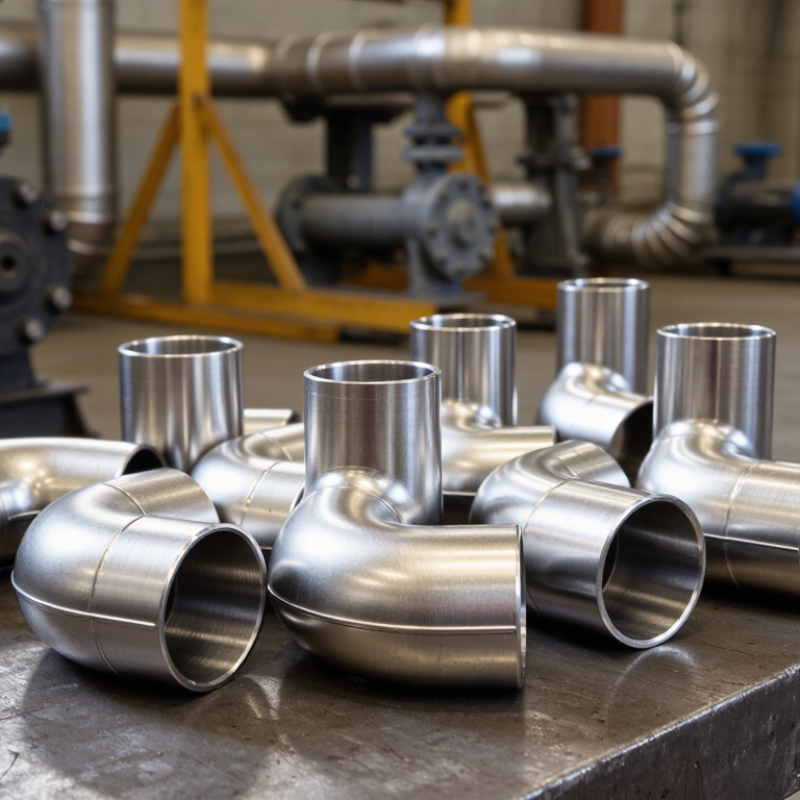
China Top 10 90° Long Radius Elbow Manufacturers

Types and Standards for 90° Long Radius Elbows

A 90° long radius elbow changes pipe direction over a gradual curve. Its centerline radius is commonly 1.5 times the nominal pipe size, though the specified standard and dimensions should always be checked. These elbows are often supplied as seamless or welded butt-weld fittings. Forged socket-weld or threaded versions may also be available for smaller piping, depending on the design.

ASME B16.9 is widely used for factory-made wrought butt-welding fittings, while EN 10253 covers several types of butt-welding fittings. These standards address dimensions and other requirements, but material grade is specified separately. Carbon steel, stainless steel, and alloy steel options serve different temperature, pressure, and corrosion conditions. Check the project specification for wall thickness, end preparation, and material requirements. One detail is easy to overlook: a catalog’s “long radius” label does not replace confirmation of its center-to-end dimensions.

Tips: Compare the fitting drawing with the piping layout before ordering. Check the bevel, wall thickness, and marking on delivery. A small mismatch can complicate alignment at the joint. If documents are unclear, ask for clarification rather than assuming two standards are interchangeable.

Manufacturing and Quality Testing in China

China Top 10 90° Long Radius Elbow Manufacturers

Manufacturing and Quality Testing in China

China’s scale in steel production supports a broad pipe-fittings supply chain, but output alone does not prove fitting quality. World Steel Association’s World Steel in Figures 2025 reports that China produced about 1,005 million tonnes of crude steel in 2024. For buyers, the practical question is how each 90° Long-Radius Elbow is formed, inspected, and traced to its material heat.

Manufacturers may use hot forming or other controlled processes, followed by checks for wall thickness, ovality, and center-to-end dimensions. ASME B16.9 provides dimensional and tolerance requirements for factory-made wrought butt-welding fittings; project specifications may add further criteria. Inspectors can review material test certificates and use positive material identification or ultrasonic testing when specified. A neat surface is not enough.

Small details matter. A shallow dent near the weld bevel can complicate fit-up, while uneven heating may affect wall thickness around the bend. Hydrostatic or other pressure testing should follow the purchase specification and design requirements, rather than being assumed for every fitting. I would still ask for inspection records tied to the actual production lot; paperwork can be complete, yet traceability is sometimes harder to verify than expected.

Top 10 90° Long Radius Elbow Manufacturers in China

China’s Top 10 90° Long Radius Elbow Manufacturers are best compared by production control, not catalogue size alone. The World Steel Association reported that China produced 1,005.1 million tonnes of crude steel in 2024. This shows the scale of the country’s steel supply, but it does not prove that any individual fitting plant can deliver consistent quality. Buyers should check material traceability, forming methods, heat treatment, and documented inspection.

For a 90° long-radius elbow, verify that dimensions follow the project’s specified standard. ASME B16.9 covers factory-made wrought butt-welding fittings; a typical long-radius elbow has a centerline radius of 1.5 times nominal pipe size. Ask suppliers for material test certificates, dimensional inspection records, and pressure-test requirements. Look closely at wall thickness around the bend. Small variations matter.

A useful Top 10 comparison also considers order flexibility, lead time, export packaging, and the ability to supply different materials and sizes. Request sample records, not just polished product photos. Capacity figures can be difficult to compare. One caveat: a high output claim says little about repeatability across batches, and that is easy to overlook.

How to Evaluate and Select a Manufacturer

When evaluating China-based 90° long radius elbow manufacturers, look beyond quoted price and production photos. Ask for material certificates, dimensional inspection records, and clear details about manufacturing processes. Check that the elbow’s outside diameter, wall thickness, and centerline radius match your drawings. Small deviations can complicate fit-up on site.

A capable supplier should explain how it controls forming, heat treatment, and final inspection. Request sample reports and confirm how product markings connect each elbow to its material batch. Review whether the manufacturer can handle your required sizes, quantities, and delivery schedule. A polished brochure is not proof. It is easy to overvalue a quick reply, so verify answers against documents and, when practical, a sample inspection.

Tips: Compare the same specification across quotations. Ask who performs inspection, what is recorded, and how nonconforming items are handled. Keep communication in writing; a vague answer may deserve another question.

China Top 10 90° Long Radius Elbow Manufacturers — How to Evaluate and Select a Manufacturer

Suggested procurement evaluation weights for comparing manufacturers. These are selection guidelines, not company scores or market-survey results.

How to use: Score each supplier against the same evidence-based criteria, such as applicable ASME B16.9 compliance, material test certificates, inspection records, and documented pressure-test procedures. Adjust the weights to match your project requirements.

FAQS

What does a 90° long-radius elbow do?

It redirects a pipe through a gradual 90-degree curve. Its centerline radius is commonly 1.5 times the nominal pipe size. Check the drawing.

Which dimensions should I confirm before ordering?

Verify outside diameter, wall thickness, center-to-end length, bevel, and radius against the project drawings. A “long-radius” label is not enough.

What materials are commonly available?

Carbon steel, stainless steel, and alloy steel are common options. Match the material grade to temperature, pressure, and corrosion conditions.

Are all long-radius elbows made the same way?

No. They may be seamless or welded butt-weld fittings. Smaller piping may use forged socket-weld or threaded forms, depending on the design.

What inspections can help verify quality?

Review checks for wall thickness, ovality, and center-to-end dimensions. Material certificates and additional testing may be required. A smooth surface proves little.

Should every elbow be pressure-tested?

Not automatically. Hydrostatic or other pressure testing should follow the purchase specification and design requirements. Confirm this in writing.

How can I check material traceability?

Ask how each fitting’s marking links it to the material batch. Request records for the actual production lot. Paperwork can still be hard to verify.

What should I ask a supplier before buying?

Request process details, inspection reports, size and delivery capabilities, and procedures for nonconforming items. Compare matching specifications across quotations. I might ask twice if answers stay vague.