Why Choose Cable Lug for Reliable Electrical Connections?
When an electrical connection must carry current safely, small details become important. A Cable Lug creates a firm interface between a conductor and a terminal, busbar, or equipment stud. Unlike a loosely tightened wire, it offers a shaped contact area for controlled fastening. In practical installations, this can mean steadier conductivity, less strand damage, and easier inspection. The benefit is simple. Reliability starts at the joint.
Choosing the right lug requires more than matching hole size. Experienced electricians consider conductor material, cross-sectional area, temperature, corrosion exposure, and installation space. Copper lugs suit many copper conductors, while aluminum systems require compatible designs and careful preparation. Crimping must follow the manufacturer’s specified die and force. A beautiful-looking crimp can still be unsafe if the tool is wrong. That mistake is easy to miss. Torque matters too. An under-tightened connection may heat during operation, while excessive torque can damage threads or distort contact surfaces. Appropriate pull checks and resistance measurements can strengthen confidence.
This article examines why Cable Lug connections remain widely used in power distribution, industrial control panels, batteries, and renewable energy equipment. It considers mechanical stability, electrical performance, installation quality, and long-term maintenance. Real sites are rarely perfect; dust, vibration, moisture, and rushed work can expose weak choices. Even experienced teams should question routine habits. A lug is not a guarantee by itself. Correct selection, preparation, crimping, tightening, and inspection complete the connection. That is where dependable engineering begins.
What Is a Cable Lug and How Does It Work?
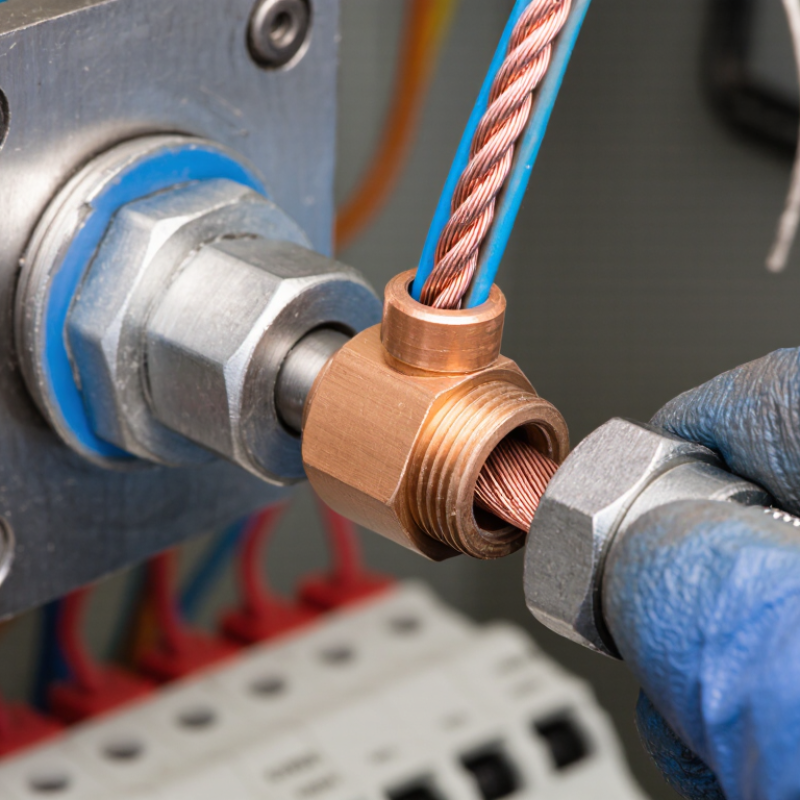
A cable lug is a metal connector fitted to the end of a cable. It creates a firm interface between the conductor and equipment terminal. The lug usually has a barrel for the cable and a palm with a hole for bolting. During installation, the stripped conductor enters the barrel. A calibrated crimping tool then compresses the barrel around the strands. This pressure reduces movement and supports stable current transfer. Some lugs use solder, but compression is widely preferred for power installations.
Performance depends on details. The correct lug must match the conductor material, cross-sectional area, and terminal size. A loose crimp can increase resistance, heat, and voltage loss. IEC 61238-1-1:2018 evaluates electrical and mechanical performance through resistance, temperature-cycle, and tensile tests. These tests show why installation quality matters. It is not only a metal part. NFPA’s Fire Loss in the United States During 2022 reported about 26,100 home fires involving electrical distribution and lighting equipment. A cable lug does not prevent every electrical fault, but a secure connection removes one avoidable weakness. Field experience also reveals an uncomfortable truth: a perfect-looking crimp may still be wrong. Inspectors should check the die setting, insertion depth, conductor strands, torque, and signs of overheating. Small marks matter. Better records make later maintenance safer and more reliable.
Why Choose Cable Lug for Reliable Electrical Connections? - What Is a Cable Lug and How Does It Work?
| Data Dimension | Typical Information | Why It Matters for Reliable Connections |
|---|---|---|
| What Is a Cable Lug? | A cable lug is a metal connector fitted to the end of an electrical cable. It provides a prepared interface for attaching the conductor to a terminal, busbar, switchgear, circuit breaker, motor, battery, or grounding point. | It creates a defined mechanical and electrical connection instead of relying on a loose or unevenly clamped wire end. |
| How It Works | The stripped conductor is inserted into the lug barrel. The barrel is then compressed with a suitable crimping tool, while the palm or eye of the lug is fastened to the equipment terminal with a bolt or stud. | Proper compression reduces contact resistance, improves pull-out strength, and helps prevent conductor movement under vibration or thermal cycling. |
| Common Conductor Materials | Copper conductors are commonly paired with copper or tinned-copper lugs. Aluminum conductors require lugs specifically designed and rated for aluminum or aluminum-to-copper connections. | Matching the lug to the conductor helps reduce galvanic corrosion, overheating, and incompatibility at the contact interface. |
| Common Lug Materials | Typical materials include electrolytic copper, tinned copper, aluminum, and plated copper alloys. Tin plating is often used on copper lugs to improve surface protection and storage resistance. | Material selection affects conductivity, corrosion resistance, mechanical strength, weight, and compatibility with the conductor and installation environment. |
| Connection Methods | Compression crimping is widely used for power cables. Other designs may use mechanical set screws, shear-bolt technology, soldering, or bolted cable termination systems. | The connection method determines installation tooling, inspection requirements, vibration resistance, and the possibility of future removal. |
| Typical Cable Size Range | Lugs are manufactured for many conductor sizes, from small control-wire cross-sections to large power-cable cross-sections. The correct lug must match the conductor cross-sectional area, such as 16 mm², 35 mm², 70 mm², or 120 mm². | A lug that is too small may not accept the conductor, while an oversized barrel may produce an inadequate crimp and excessive electrical resistance. |
| Terminal Interface | Common formats include ring terminals, fork terminals, pin terminals, blade terminals, and palms with drilled holes. Hole diameter and palm dimensions must match the terminal hardware. | A correct fit provides full contact area and helps prevent loose bolts, uneven loading, and localized hot spots. |
| Electrical Performance | A correctly installed lug should provide low and stable contact resistance. Performance depends on conductor preparation, crimp profile, contact area, fastening torque, and environmental conditions. | Low contact resistance reduces I²R heating and supports reliable current transfer during continuous and short-duration electrical loads. |
| Mechanical Performance | Crimped lugs are designed to resist conductor pull-out and withstand normal vibration and cable movement when correctly selected and installed. | Mechanical stability prevents the conductor from loosening at the terminal, which can otherwise lead to arcing, heat generation, or service interruption. |
| Crimping Requirements | Use a crimping die and tool suitable for the lug type, conductor size, and specified crimp profile. Follow the lug manufacturer’s positioning and number-of-crimps instructions. | Incorrect tooling, insufficient compression, or misplaced crimps can create hidden defects that are not always visible during a basic visual inspection. |
| Installation Sequence | Disconnect power, verify the cable size and lug type, strip insulation without damaging strands, insert the conductor fully, crimp the lug, inspect the crimp, and fasten the terminal using the specified hardware and torque. | A controlled sequence reduces the risk of damaged strands, incomplete insertion, loose hardware, and accidental energization. |
| Environmental Protection | For outdoor, humid, saline, or chemically exposed locations, consider tinned or corrosion-resistant materials, sealed interfaces, insulating boots, and suitable cable glands or enclosures. | Moisture and contaminants can increase resistance and accelerate corrosion, especially where dissimilar metals are joined. |
| Temperature Considerations | The lug, conductor, insulation, and terminal assembly should be suitable for the expected continuous operating temperature and short-circuit conditions. | Excessive temperature can accelerate insulation aging, reduce joint reliability, and increase the risk of thermal damage. |
| Inspection Points | Check for complete conductor insertion, correct crimp location, uniform compression, absence of cracked material, secure bolting, clean contact surfaces, and adequate insulation clearance. | Inspection helps identify installation errors before they develop into overheating, arcing, or intermittent faults. |
| Testing and Verification | Depending on the application, verification may include visual inspection, torque verification, pull testing, continuity testing, insulation testing, or thermal inspection under load. | Testing provides evidence that the connection meets the required mechanical, electrical, and operational conditions. |
| Relevant Technical References | Selection and testing may refer to applicable electrical installation rules and connector standards, including requirements for compression and mechanical connectors where relevant. | Using recognized technical requirements helps establish consistent installation practices and acceptance criteria. The applicable requirements depend on the voltage level, installation type, and local regulations. |
| Main Advantages | Reliable current transfer, strong mechanical retention, repeatable installation, easy visual identification, compatibility with bolted terminals, and suitability for maintenance and power-distribution systems. | These characteristics make cable lugs practical for panels, switchgear, control equipment, motors, batteries, grounding systems, and industrial power connections. |
| Common Limitations | A lug can fail if the wrong size, material, crimp profile, tool, terminal hardware, or tightening torque is used. Corrosion, vibration, and damaged conductor strands can also reduce reliability. | Understanding the limitations emphasizes that a cable lug is only as reliable as its selection, installation, and maintenance. |
| Selection Checklist | Confirm conductor material and size, lug material, terminal-hole diameter, palm dimensions, insulation requirements, installation method, operating environment, current rating, temperature rating, and applicable regulations. | A complete selection check prevents mismatched components and supports long-term electrical and mechanical performance. |
Note: Ratings and installation requirements vary by lug design, conductor type, equipment, and applicable electrical regulations. Always verify the technical data and installation instructions for the specific cable lug being used.