Industrial Machinery Company

How to Buy a Semi Truck in 2026?

Buying a Semi Truck in 2026 will require more than comparing sticker prices. Buyers must examine total ownership costs, financing terms, maintenance history, fuel efficiency, and expected resale value. The American Transportation Research Institute reported that average operating costs reached $2.27 per mile in its latest cost study. That figure makes a cheap truck look less attractive when repairs begin.

Market conditions also deserve attention. ACT Research continues to track freight cycles, replacement demand, and used-truck values across North America. Its industry outlook suggests that demand and equipment pricing may remain uneven. A buyer should therefore compare several dealers, request independent inspections, and review service records line by line. One missed oil leak can become an expensive lesson.

Bob Costello, Chief Economist of the American Trucking Associations, has described trucking as “a capital-intensive business.” That short observation matters here. A Semi Truck is not only a vehicle; it is a working asset with financing risk, downtime exposure, and operating responsibilities. The right choice depends on the intended routes, annual mileage, cargo weight, and available repair support.

NACFE research also highlights how duty cycle affects equipment performance. A truck built for regional work may struggle on long-haul routes. Engine size, transmission type, sleeper configuration, and aerodynamic design should match real operating conditions. Not assumptions.

A practical buyer should calculate monthly payments, insurance, tires, fuel, maintenance reserves, and taxes before signing. A dealer’s warranty sounds reassuring, but its exclusions may matter more. Even careful research has limits. Freight volumes can change, and forecasts can miss. That uncertainty is precisely why a disciplined inspection and conservative budget remain essential in 2026.
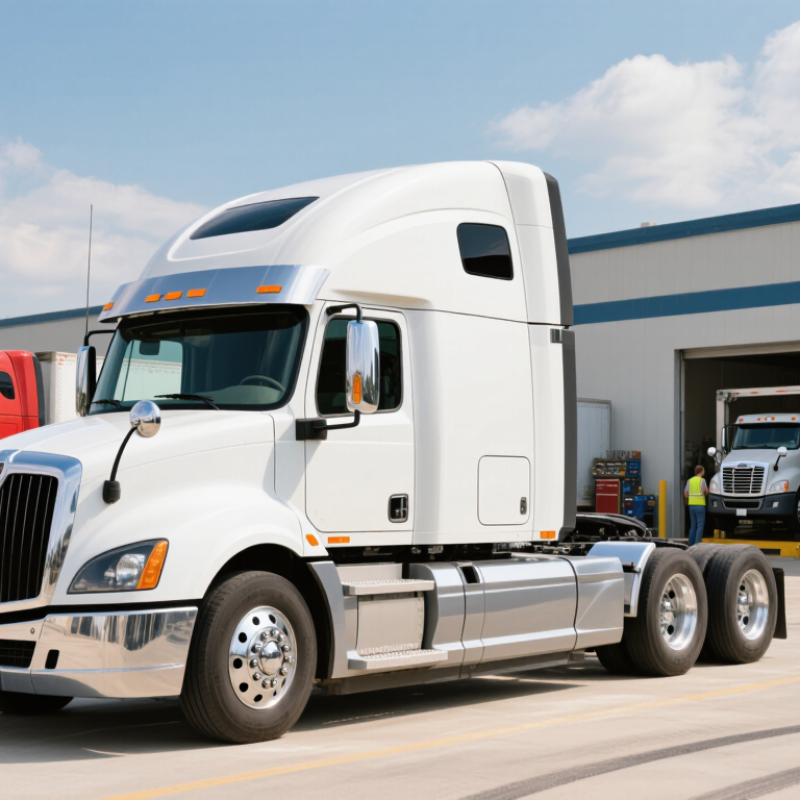
How to Buy a Semi Truck in 2026?

Define Your Semi Truck Needs and Operating Requirements

Before shopping for a semi truck in 2026, define the work it must perform. Record average payload, cargo dimensions, weekly mileage, route grades, and delivery frequency. A regional hauler may need a day cab, while overnight routes require sleeper space and storage. Measure the fifth-wheel height, parking area, and loading-site clearance. Small details matter.

Match the powertrain to the workload, not personal preference. Heavy loads and steep terrain can demand different gearing than flat, short routes. Check axle ratings, gross vehicle weight limits, braking systems, tire condition, and service intervals. Verify published specifications against the truck’s identification plate. Ask an experienced technician to inspect the frame, engine, transmission, and electrical systems. Request maintenance records and compare the odometer with documented service history. Do not guess.

Calculate the real operating cost before signing anything. Include fuel, tires, preventive maintenance, insurance, permits, financing, and expected downtime. A cheaper truck can become expensive after repeated repairs. I once underestimated waiting time between loads; the payment was manageable, but lost working hours were not. That mistake changed my planning. Build a repair reserve, yet accept that forecasts remain imperfect. Recheck your assumptions against actual route data, seasonal weather, and the driver’s comfort needs.

Set a Realistic Budget and Explore Financing Options

Buying a semi truck in 2026 starts with a budget that survives slow weeks, not just a lender’s approval. I would calculate the truck payment, insurance, permits, maintenance, fuel, taxes, and parking before visiting a seller. Keep a repair reserve for tires, brakes, sensors, and unexpected downtime. It feels excessive. It may prevent panic.

The American Trucking Research Institute reported average trucking costs near $2.27 per mile in its 2024 operational cost update. Use that figure as a warning, not a personal forecast. Your route, load type, mileage, and driver arrangement can change the result quickly. A truck earning $7,000 monthly may still lose money after fuel and fixed expenses. Build a 10–15% contingency into your monthly estimate. I would also test the budget against two weak months, although many buyers skip this uncomfortable exercise.

Compare bank loans, equipment-finance contracts, and dealer-arranged funding using total repayment and effective interest rate. The Equipment Leasing and Finance Association’s industry outlook shows transportation equipment remains closely tied to economic and freight conditions. Lenders may also examine credit history, business records, down payment, and projected cash flow. Request written terms before negotiating the truck price. Ask about balloon payments, early payoff fees, maintenance requirements, and variable rates. Never choose a lower monthly payment without checking the final cost. A used truck with a smaller payment can become expensive when repair invoices arrive together.

Compare New, Used, and Custom Semi Truck Choices

Buying a semi truck in 2026 starts with choosing the right condition, not the brightest paint. New trucks offer current safety systems, warranty coverage, and predictable maintenance. However, they often require larger down payments and higher monthly costs. ATRI’s 2024 Operational Costs of Trucking report measured average operating expenses at about $2.26 per mile in 2023. A costly payment can quickly pressure cash flow.

Used trucks can reduce the purchase price, especially when maintenance records are complete. Inspect the engine, transmission, frame, tires, brakes, and emissions equipment before signing. A professional inspection may reveal problems hidden beneath a clean cab. J.D. Power’s commercial vehicle market data shows that used truck values can shift sharply with freight demand, mileage, and age. The bargain may not stay cheap.

Custom semi trucks fit specialized routes, heavy loads, sleeper needs, or unusual trailer configurations. Specify only what improves revenue or driver comfort. Every extra feature adds weight, cost, or repair complexity. The North American Council for Freight Efficiency reports that fuel efficiency depends heavily on speed, aerodynamics, and operating conditions. I would not trust a simple fuel-savings promise. My first cost estimate can be wrong. Compare five-year ownership costs, including insurance, maintenance, downtime, financing, and resale value. A practical choice may look less impressive but perform better.

How to Buy a Semi Truck in 2026? - Compare New, Used, and Custom Semi Truck Choices

Comparison Dimension New Semi Truck Used Semi Truck Custom-Spec Semi Truck
Typical purchase price in 2026 $160,000–$250,000 before taxes, registration, and optional equipment. $45,000–$150,000, depending mainly on age, mileage, service history, and configuration. $190,000–$300,000+, depending on the selected engine, axle layout, sleeper, technology, and vocational equipment.
Typical vehicle age Current model year or one model year prior. Usually 3–10 years old; older trucks may cost less but require more inspection. Usually newly built, with specifications selected before production.
Typical odometer reading Normally below 10,000 miles at delivery, although dealer inventory may vary. Approximately 300,000–900,000 miles is common in the market. Normally below 10,000 miles at delivery.
Availability and delivery time In-stock units may be available within days or weeks; factory orders may take several months. Often available immediately after inspection, financing, and documentation. Commonly requires several months; complex vocational specifications can take longer.
Warranty coverage Usually includes factory coverage for major vehicle systems, subject to time, mileage, and maintenance conditions. Coverage varies widely; many units are sold with limited protection or an optional service contract. Generally includes new-vehicle coverage, but individual components may have separate coverage terms.
Fuel economy expectation About 6–8 miles per gallon for a highway tractor, depending on weight, speed, aerodynamics, terrain, and weather. About 5.5–7.5 miles per gallon is common, although condition and previous specifications have a major effect. About 5.5–8 miles per gallon; the result depends on whether the custom build prioritizes efficiency, heavy haulage, or specialized work.
Routine maintenance outlook Lower initial repair risk, but scheduled maintenance and emissions-system servicing remain necessary. Maintenance costs can be higher and less predictable, especially after high mileage or incomplete service records. Similar to a new truck, but specialized equipment may add extra inspection, service, and parts requirements.
Repair and downtime risk Generally lower during the early ownership period, assuming proper maintenance and correct operation. Moderate to high; risk increases with mileage, deferred maintenance, corrosion, accident history, and aftermarket modifications. Usually moderate, with additional risk if the specification uses uncommon components or specialized systems.
Financing considerations Often offers the longest available repayment terms and the strongest financing profile for qualified buyers. May require a larger down payment, shorter term, higher interest rate, or additional documentation as truck age increases. May require detailed build specifications, progress payments, and stronger credit or cash-flow documentation.
Depreciation profile Highest depreciation usually occurs during the first several years of ownership. Lower immediate depreciation is possible, but resale value depends heavily on mileage, maintenance, and market demand. Custom equipment may not recover its full cost at resale if the next buyer does not need the same configuration.
Inspection priorities Review the build sheet, warranty terms, emissions equipment, axle ratings, and final pre-delivery inspection. Obtain maintenance records and inspect the engine, transmission, frame, suspension, brakes, tires, fifth wheel, electronics, and signs of accident or water damage. Verify that every requested specification is included, including weight ratings, dimensions, PTO or hydraulic systems, electrical capacity, and compatibility with the trailer.
Best suited for Operators seeking predictable early ownership, current safety systems, and lower short-term repair uncertainty. Buyers prioritizing lower acquisition cost, immediate availability, and the ability to evaluate an established service history. Fleets or owner-operators whose routes require precise equipment, unusual dimensions, heavy-duty capability, or specialized working systems.
Main advantage Latest equipment, full configuration choice from available inventory, and stronger early-life reliability expectations. Lower upfront cost and potentially lower depreciation after the initial new-vehicle period. A configuration tailored to the actual load, route, climate, trailer, and operating environment.
Main drawback Highest upfront cost and fastest early depreciation. Greater uncertainty regarding repairs, component life, and total ownership cost. Higher purchase price, longer lead time, and potentially lower resale appeal outside the original use case.

Indicative North American market ranges for 2026 planning purposes. Actual prices and operating results vary by configuration, mileage, financing, taxes, delivery location, maintenance history, load, terrain, and annual mileage.

Inspect, Verify, and Evaluate the Truck’s Condition

Buying a semi truck in 2026 begins with a careful inspection, not a promising advertisement. I prefer to see the truck cold, before the engine warms. A cold start can reveal slow cranking, smoke, or uneven idle. Check the frame for fresh paint, bends, cracked welds, and oil-soaked areas. Use a flashlight. Look beneath the cab, fuel system, and suspension. Uneven tire wear may point to alignment or worn steering parts.

Verify the truck’s identity and maintenance history against its physical condition. Match the identification number on the cab, frame, and registration records. Ask for service invoices, inspection reports, repair dates, and mileage entries. Missing records do not prove a bad truck, but they increase uncertainty.

Have an independent heavy-vehicle technician scan fault codes and inspect brakes, wheel ends, steering, cooling, and emissions equipment. A clean dashboard is not enough. Warning lights can be cleared before a viewing.

Evaluate how the truck fits your actual work. Record oil pressure, coolant temperature, air pressure build time, and transmission response during a road test. Listen for drivetrain knocks, vibration, and delayed gear changes. Test the sleeper, lights, gauges, and safety equipment.

I once trusted a quiet engine and overlooked a weak air compressor. That mistake changed my inspection routine. Now I compare cold and warm behavior, then price repairs before negotiating. Some findings remain uncertain until a load test. Get that evidence before committing.

Complete the Purchase, Registration, and Insurance Process

Buying a semi truck in 2026 requires more than choosing a clean cab. Confirm the vehicle identification number, title status, mileage, maintenance records, and lien release before paying. Hire an independent mechanic to inspect the engine, transmission, brakes, tires, and emissions equipment. A polished exterior can hide expensive repairs.

Budget beyond the purchase price. The American Trucking Research Institute reported an average trucking operating cost of about $2.26 per mile in its 2024 update, based on 2023 industry data. That figure includes fuel, repairs, insurance, and other expenses. Your truck may cost more. Especially during its first year. Request written repair estimates and keep a cash reserve for downtime.

After purchase, register the truck through your state authority and obtain apportioned registration if it will cross state lines. You may also need an International Fuel Tax Agreement account, a Unified Carrier Registration filing, and federal heavy-vehicle use tax for qualifying weights. Requirements vary by operation and jurisdiction. Verify them directly with official agencies.

Insurance should be arranged before the truck begins commercial service. Federal Motor Carrier Safety Administration rules commonly require at least $750,000 in public liability coverage for general freight carriers, though contracts and lenders may demand higher limits. Ask about cargo, physical damage, uninsured motorist, and downtime coverage. One overlooked exclusion can hurt badly. Get the certificate of insurance, policy limits, deductibles, and effective date in writing. Then match every detail with the registration application and financing documents.

How to Buy a Semi Truck in 2026?

Typical U.S. planning benchmarks for purchasing, registering, and insuring a used Class 8 semi truck. Actual costs vary by vehicle condition, state, driver record, coverage limits, and lender requirements.

Planning note: The purchase price and down payment are alternative financing benchmarks, not separate costs. Registration, insurance, inspections, permits, and a maintenance reserve should be confirmed before completing the purchase.

Article Source: