What Are the Best Types of Rod Heaters in 2026?
Choosing the best Rod Heaters in 2026 starts with understanding where and how the heat will be used. A compact cartridge heater can fit inside a machined metal block, while a tubular element can heat air, surfaces, or process equipment. Immersion-style elements are designed for heating compatible liquids. Each format suits different conditions. Not always.
This guide compares common rod heater designs by their practical strengths, limitations, and typical applications. It also explains details that can change performance: element diameter, heated length, voltage, wattage, sheath material, and operating temperature. For example, a heater that fits a metal block loosely may transfer heat less effectively than one matched to the bore. A small workshop press and a continuously operated industrial tank also place very different demands on an element. Small details matter.
There is no single best heater for every job. The right choice depends on the equipment, surrounding materials, heat loss, installation space, and control method. Product specifications should be checked against the manufacturer’s guidance, especially for temperature limits and permitted operating conditions. A higher wattage rating may sound attractive, but it is not automatically the safer or more efficient option. This comparison offers a clear starting point, while recognizing that real installations can behave differently from a catalog description. That uncertainty deserves attention, not guesswork.
What Are Rod Heaters and How Do They Work?
What Are the Best Types of Rod Heaters in 2026?
What Are Rod Heaters and How Do They Work?
Rod heaters, often called tubular heating elements, convert electrical energy into heat. Inside a metal sheath, a resistance wire warms when current passes through it. Compacted magnesium oxide usually separates the wire from the sheath while conducting heat outward. The sheath then transfers heat to nearby air, liquid, or equipment. Simple idea. Careful design matters.
Different rod heaters suit different jobs. Straight elements can warm tanks or machinery, while bent shapes fit around pipes and compact spaces. Sheath material, wattage, dimensions, and operating temperature all affect performance. A heater chosen for air may not be suitable for immersion in liquid. I have seen sizing treated as an afterthought; it shouldn’t be. Matching the element to the medium and installation conditions helps reduce uneven heating and premature failure.
Tips: Check the manufacturer’s guidance for immersion depth, mounting, and temperature limits. Use a compatible thermostat or temperature controller, and avoid running an element without the required heat transfer medium. A cool-looking surface can still be dangerously hot. If the application is unusual, confirm the specifications with a qualified heating professional before installation.
What Are the Best Types of Rod Heaters in 2026?
What Are Rod Heaters and How Do They Work?
Rod heaters use electrical resistance to generate heat: current passing through a resistive element converts electrical energy into thermal energy. This chart shows the calculated power for an ideal, constant 10 Ω element using P = I²R. Actual heater resistance and output can vary with temperature, design, and supply conditions.
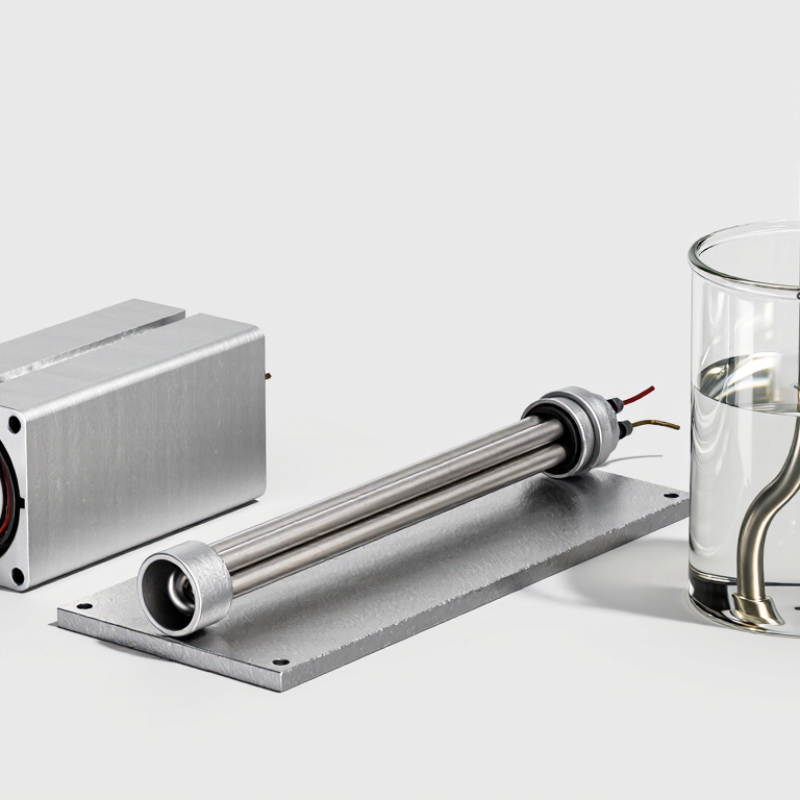
Common formats include cartridge heaters for close-fitting bores, tubular elements for adaptable installations, and immersion heaters for heating liquids. The right choice depends on the material being heated, mounting method, required temperature, and watt density.
What Are the Best Types of Rod Heaters in 2026?
In 2026, the best rod heater depends on the material, space, and heat-transfer method. Cartridge heaters fit drilled metal blocks and dies, where close contact helps deliver concentrated heat. Tubular elements suit ovens, air ducts, and equipment surfaces because they can be shaped for the installation. Immersion and screw-plug heaters transfer heat directly into liquids inside tanks. Simple distinction. Match the heater to the job, not just its wattage.
The U.S. Department of Energy’s 2015 Improving Process Heating System Performance: A Sourcebook for Industry estimates that process heating accounts for about 29% of manufacturing energy use. That makes heater selection and control worth careful attention. The DOE’s Energy Saver guidance also notes that electric resistance heating converts nearly all incoming electricity into heat at the point of use; actual system performance still depends on insulation, controls, and operating conditions. Check the element’s watt density, sheath material, voltage, and temperature limits against the application. For a cartridge heater, poor fit can create hot spots. For an immersion unit, low liquid levels may expose the element. I would not treat these types as interchangeable: installation details can matter as much as the heater itself.
Which Rod Heater Type Fits Each Application?
Choosing a rod heater starts with the material being heated, available space, and heat-transfer path. The U.S. Department of Energy’s 2022 Industrial Decarbonization Roadmap identifies process heating as roughly half of U.S. manufacturing energy use, so a poor fit can have a meaningful operating cost.
Cartridge heaters suit close-fitting drilled bores in molds, dies, and platens. Their concentrated heat is useful, but a loose bore can create hot spots and shorten element life. Fit matters more.
Tubular heaters bend around equipment and work well in ovens, ducts, and tanks where heat must spread over a larger area. For liquids, immersion rod heaters transfer heat directly into the fluid; select sheath material and watt density for the fluid’s chemistry, circulation, and temperature.
Band-style elements clamp around barrels or pipes, making them practical for keeping viscous materials warm without opening the process. A common design trap is choosing by wattage alone.
Check the element’s length, mounting, control method, and expected cycling, then confirm operating limits against the heater specification and process conditions. That check can feel tedious. It is still worth doing.
What Safety and Installation Factors Should Buyers Consider?
Rod heaters may use cartridge, tubular, or finned elements, but safe installation depends on the application, not just the heater type. Check the equipment manual for voltage, wattage, temperature limits, and required clearances. A heater that fits the opening may still transfer too much heat to nearby wiring or plastic parts. Measure the mounting space carefully.
Before installation, isolate power and verify the circuit is de-energized with a suitable tester. The heater must be firmly supported, with its active section positioned as specified by the manufacturer. Allow for thermal expansion; a tight fit can create stress as the metal heats. Keep leads away from hot surfaces, and use suitable grounding and overcurrent protection. Small details matter.
In damp or dusty locations, confirm the enclosure and heater are rated for those conditions. Do not assume a sealed-looking housing is protected. After installation, inspect connections, check that ventilation paths remain open, and monitor the first heating cycle for unusual odors, noise, or hot spots. Stop if anything seems wrong. Some installations look simple but are not; when wiring, controls, or clearances are uncertain, have a qualified electrician review the setup. Even a careful check can miss something.