Industrial Machinery Company

What Is the Best Frame Hydraulic Press from China?

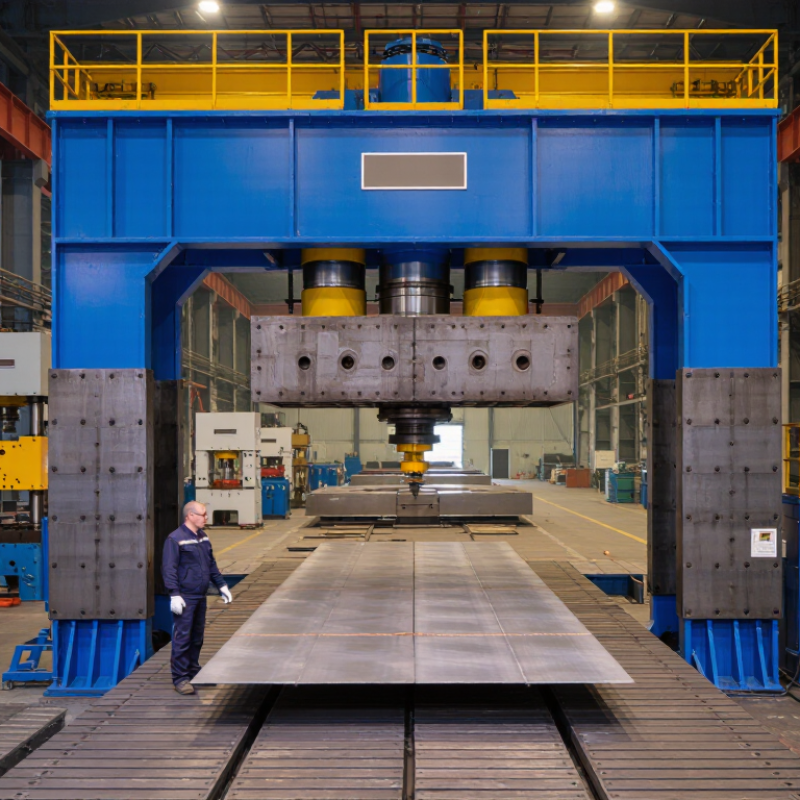
Choosing the best frame hydraulic press from China is not a brand-name exercise. It is a fit between the machine, the workpiece, and the production floor. A press that looks impressive in a catalog may still disappoint if its throat depth is too small, its daylight is awkward, or its frame flexes under repeated loads.

Compare more than rated tonnage. Ask suppliers for the working pressure, stroke, opening height, table dimensions, and control options. Look closely at the frame design and weld quality. Request drawings, inspection records, and a clear description of factory testing. A useful specification sheet should answer practical questions, not hide them in polished photos.

Small details matter. Can the operator load a wide plate without reaching around guards? Does the ram return smoothly? Is the electrical cabinet easy to inspect? These points can shape daily output. They are easy to overlook.

There is no universal winner. A workshop forming small brackets needs different capacity and tooling from a factory handling large components. Even experienced buyers can misjudge a machine from specifications alone; an in-person inspection or independent acceptance test may reveal issues that paperwork misses.

A verified quotation from a named frame hydraulic press specialist would strengthen this introduction, but no source was supplied. Rather than invent an expert or attribute words falsely, this guide focuses on checkable selection criteria. Compare suppliers on evidence, service support, and how clearly they explain the machine’s limits. That is a better starting point than choosing the lowest price.
What Is the Best Frame Hydraulic Press from China?

What Is a Frame Hydraulic Press?

What Is a Frame Hydraulic Press?

A frame hydraulic press uses hydraulic pressure to move a ram and apply force to a workpiece. Its frame supports the cylinder, bed, and tooling while resisting the load created during pressing. Common designs include C-frame and H-frame layouts, each offering different levels of access and support. The exact setup varies by machine.

An operator positions material between the ram and bed for tasks such as forming, straightening, or assembly. A stiff frame helps keep the pressing surfaces aligned under load. That matters. But a larger frame is not automatically the better choice; its shape can limit access to awkward parts, and its rated capacity alone does not tell you how it performs across the stroke. Check the working opening, daylight, stroke, and pressure controls against the actual job. Equipment specifications should be confirmed with the supplier or a qualified technician.

Tips: Measure your largest workpiece before comparing presses. Check that the tooling is suitable and securely fitted, and follow the machine’s operating instructions. Keep hands clear during operation. Not always obvious: uneven loading can place extra stress on the frame, so center the work whenever the setup allows.

How Frame Design Influences Press Performance

What Is the Best Frame Hydraulic Press from China?
How Frame Design Influences Press Performance

Frame design affects how evenly a press applies force. A rigid frame helps keep the ram and bed aligned under load. That matters when pressing a wide component or holding tight tolerances. Look closely at the uprights, crossbeam, welds, and bed thickness. Uneven deflection can leave one side of a workpiece more heavily loaded. Small details matter.

The American Institute of Steel Construction’s Steel Construction Manual gives steel’s elastic modulus as about 200 GPa. This helps explain why frame geometry and material quality both matter: stiff steel can still flex when members are undersized or poorly arranged. Ask for load-deflection data and drawings showing the press under rated force. A clear test method matters. A single maximum-tonnage figure does not show how the frame behaves across the bed.

Frame stiffness is only part of performance. The U.S. Department of Energy’s Improving Pumping System Performance: A Sourcebook for Industry reports that pumping systems use nearly 20% of global electricity demand, with shares of 25–50% in some industrial facilities. These are broad pumping-system figures, not press-specific benchmarks. Still, they make hydraulic efficiency worth checking alongside frame rigidity. Compare leakage control, cycle behavior, and maintenance access. I would not assume a heavier frame is automatically better; verify the measurements, and note where the supplier’s evidence is incomplete.

What Is the Best Frame Hydraulic Press from China? — How Frame Design Influences Press Performance

Estimated crossbeam deflection as beam depth increases

Deeper crossbeams resist bending more effectively. This illustrative estimate uses a simply supported rectangular steel beam under a 100 kN center load, with a 1.0 m span, 200 mm width, and an assumed elastic modulus of 200 GPa. Deflection is calculated using the elastic beam formula; these are not hydraulic press specifications. A real press’s stiffness also depends on its complete frame, joints, columns, materials, and manufacturing.

Which Specifications Matter When Comparing Presses?

What Is the Best Frame Hydraulic Press from China?

Which Specifications Matter When Comparing Presses?

Compare rated force, working envelope, speed, and frame stiffness—not tonnage alone. A 1,000 kN rating equals roughly 102 metric tons-force, but only if the press maintains that force across the required stroke. Check the pressure curve, daylight, stroke length, and bed dimensions against your actual part. A die that fits on paper may still leave too little room for loading or tool changes. Short test. Ask for a witnessed load test and measured deflection at the working load, not just an unloaded machine video.

Hydraulic performance deserves equal attention. Request approach, pressing, and return speeds, plus oil flow, motor power, tank capacity, and temperature data during a repeated duty cycle. ISO 4413:2010 sets general requirements for hydraulic fluid-power systems; ISO 16092-3:2017 covers safety requirements for hydraulic presses. These are useful checks, not proof that a particular machine meets them. Ask for documented test records and clarify how the seller measures accuracy and repeatability. A small detail, often missed: confirm the press holds pressure without excessive drift during a timed test. Catalog figures can look tidy. Real production is less tidy.

How to Assess Chinese Press Manufacturers and Quality

Choosing the best frame hydraulic press from China starts with a clear production requirement. Define the material, working area, stroke, pressing force, and expected cycle rate. A supplier should explain how these requirements shape the frame and hydraulic system, not simply quote a maximum tonnage. Brochures prove little.

Assess the manufacturer’s process, not just the finished paintwork. Ask how frame welds are inspected and whether machining tolerances are documented. Request test records for pressure holding, platen parallelism, and operation under load. A live factory inspection can reveal details photos miss, such as uneven welds, leaking fittings, or loose electrical connections. Independent inspection is worth considering for a high-value order.

Quality also depends on controls and support after delivery. Check emergency stops, guarding, manuals, spare-parts availability, and the response process for technical questions. Ask for a machine acceptance test using your material or a comparable sample. Confirm that quoted performance applies to your actual operating conditions. One awkward point: a test at the factory may not reproduce your shop’s power supply, temperature, or operator habits. Keep a written list of open questions, and do not treat confident sales language as technical evidence.

How to Match a Press to Your Production Requirements

What Is the Best Frame Hydraulic Press from China?
How to Match a Press to Your Production Requirements

Start with the part, not the press tonnage. Record material type, thickness, projected forming area, and the force required at each stage. A press that reaches peak force only near the end of its stroke may not suit your process. Check stroke length, daylight, bed dimensions, and ram speed against the actual die and part. Small details matter.

Cycle time includes approach, forming, dwell, return, and loading. Estimate each step using your real production method, then compare the result with the supplier’s rated cycle data. The U.S. Department of Energy’s 2014 Improving Motor and Drive System Performance sourcebook estimates motor-driven systems use about 68% of U.S. manufacturing electricity. That makes idle time and motor operation worth checking when comparing press configurations. Not just tonnage.

For a Chinese-built frame press, request drawings, hydraulic schematics, rated-force details, and a factory acceptance test plan. Confirm the stated force applies across the working stroke, not only at one position. Ask how the supplier verifies frame deflection under load; it affects die alignment and part consistency. Even a careful first sizing estimate can miss a constraint, so validate it with sample parts and the intended tooling before finalizing the specification.

What Is the Best Frame Hydraulic Press from China? - How to Match a Press to Your Production Requirements

Production Requirement Suitable Frame Type Indicative Capacity Range Workspace and Access Typical Applications Key Selection Checks
Compact work, frequent tooling changes, and access from several sides C-frame (gap-frame) About 10–200 metric tonnes, depending on the design Open-front and open-side access; generally compact, but frame deflection can limit suitability for demanding precision work. Press fitting, assembly, light forming, straightening, and small-scale punching Confirm allowable off-center loading, frame stiffness, throat depth, and whether the work requires a guarded operating area.
General forming jobs with a need for a relatively simple, adaptable layout H-frame (two-column or four-column design) About 50–1,000 metric tonnes; larger custom designs are available Often provides a larger working area than a compact C-frame. Access depends on the number and placement of columns. Forming, bending, straightening, maintenance work, and production with varied tooling Check bed dimensions, daylight, stroke, approach and pressing speeds, and column arrangement against the part and die envelope.
Uniform loading and repeatable production with guided tooling Four-column press About 100–2,000 metric tonnes, with substantial variation by configuration Four-column layout can provide convenient die access and a broad working area; usable space depends on column spacing. Compression molding, powder compacting, deep drawing, and general production forming Review slide guidance, parallelism, column spacing, bolster size, and the tooling supplier’s alignment requirements.
High-force stamping or forming where frame rigidity and reduced deflection are priorities Straight-side (closed-frame) press Commonly hundreds to several thousand metric tonnes, depending on design Rigid closed structure; typically larger and less open for side access than a C-frame. Heavy stamping, large-die work, and production processes sensitive to frame deflection Ask for rated capacity at the relevant working position, deflection data, bolster specifications, and foundation requirements.
Long or bulky parts that need broad access or a custom working envelope Custom H-frame or multi-column press Selected from the calculated process force; capacity is project-specific Can be configured for a wider bed, greater daylight, or special loading arrangements. Large-part forming, long components, and specialized production cells Provide part drawings and tooling dimensions; verify loading method, usable daylight, stroke, guarding, and floor-space limits.
Short-cycle, repeatable production with controlled press motion Servo-hydraulic press in a suitable frame Capacity depends on the selected frame and hydraulic system Frame geometry is chosen to suit the die and workpiece; programmable motion can support repeatable cycles. Controlled forming, assembly, and processes that benefit from adjustable speed or dwell Specify the force-versus-stroke profile, cycle rate, dwell time, position repeatability, and required data or controls interface.

Selection note: Capacity ranges are indicative examples, not universal specifications. Determine press capacity from the process force and its position in the stroke, then verify the required stroke, daylight, bed area, operating speed, accuracy, duty cycle, safety provisions, and foundation with the press designer.