Industrial Machinery Company

Who Are the Best Door Tensioner Suppliers in 2026?

A Door Tensioner may look like a small component, but its performance can affect door movement, alignment, and long-term reliability. Choosing a supplier in 2026 takes more than comparing prices. Buyers should examine product specifications, material consistency, manufacturing controls, and the supplier’s ability to meet required order volumes. Clear load ratings matter. So do accurate drawings and practical installation guidance.

This guide explores how to assess potential Door Tensioner suppliers, from product range and customization options to quality checks and customer support. Look for evidence, not broad promises: request current specifications, ask how batches are inspected, and confirm that samples match the parts intended for production. A supplier’s response to technical questions can reveal as much as its catalog. Small details count.

There is no universal best choice. A supplier suited to a high-volume factory may not fit a small maintenance order, and the lowest quote can leave important questions unanswered. That is worth remembering. We also cannot treat a polished website as proof of dependable manufacturing. Use this overview as a starting point, then verify claims directly and compare suppliers against your own application, delivery needs, and acceptance criteria.
Who Are the Best Door Tensioner Suppliers in 2026?

What Door Tensioners Do: Control Door Movement, Holding Force, and Safety

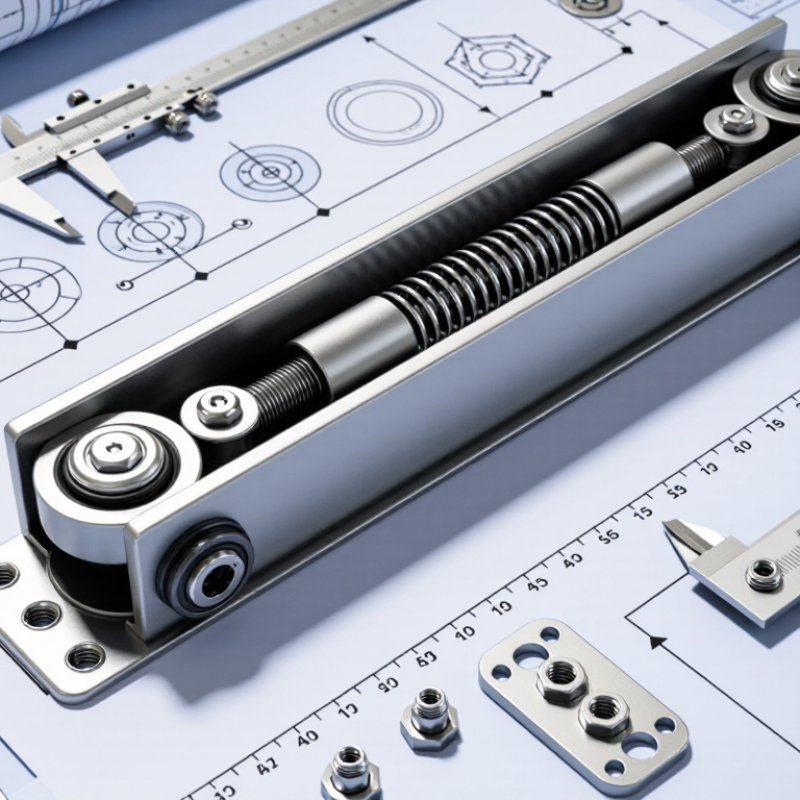
A door tensioner manages how a door moves, rather than simply keeping it shut. It can slow closing, provide resistance, or hold a door in a chosen position, depending on its design and adjustment. That control matters on a heavy entry door, a cabinet panel, or a frequently used interior door. Small changes are noticeable.

The holding force must suit the door’s weight, width, hinges, and expected use. Too little resistance may let the door swing freely; too much can make it hard to open or strain its hardware. Check the movement through the full swing, not just near the latch. A door may feel controlled in a showroom and behave differently after installation, especially if its frame is uneven.

Safety depends on proper fit and regular inspection. Watch for loose fasteners, unusual noise, or a door that no longer stays where intended. These can signal wear or incorrect adjustment. Keep fingers clear of closing edges, and do not treat a tensioner as a replacement for sound hinges or suitable stops. It is easy to focus on holding force alone. The motion matters just as much.

How to Vet 2026 Suppliers: IATF 16949, ISO 9001, and Traceability

When evaluating door tensioner suppliers in 2026, treat certificates as evidence, not a quality verdict. IATF 16949 is designed for automotive supply chains; check that certification is current and covers the actual production site and relevant processes. ISO 9001 can indicate a controlled quality system, but it does not prove a tensioner meets your load, cycle-life, or noise requirements. Details matter.

Ask how incoming wire, springs, housings, and finished assemblies are identified. A useful traceability record links a shipped lot to material batches, machine settings, inspection results, and shift records. Request an anonymized lot report, then compare its dates and part numbers with a shipment. If records are difficult to retrieve, investigate before approval. Paper can look tidy.

For technical review, request capability data for critical dimensions and force, plus the endurance-test method, sample size, and failure criteria. During a site visit, observe calibration labels, separated nonconforming parts, and how rework is logged. Ask who owns corrective actions and how their effectiveness is checked. A certificate may be genuine yet too broad. Small gaps happen. Verify the audit scope with the certification body, and review supplier performance after launch; no checklist catches everything.

Market Context: 93.5 Million Vehicles Produced Worldwide in 2023 (OICA)

OICA reported 93.5 million motor vehicles produced worldwide in 2023. That figure signals a substantial manufacturing base for door components, including tensioners that help control door movement. Yet vehicle output alone cannot predict demand. Models differ in door design, component count, and service life.

For buyers comparing suppliers in 2026, production scale is only one useful measure. Ask for documented load testing, cycle-life results, corrosion resistance data, and dimensional tolerances. A tensioner should move smoothly without excessive noise or abrupt stopping. Sample parts can reveal fit issues that a specification sheet may miss. Small details matter.

The 2023 production figure is a reference point, not a forecast. It does not show how many vehicles use a particular tensioner design, or how often replacement is needed. That estimate is useful, but incomplete. Regional vehicle mix, repair activity, and model changes also shape demand. Suppliers with traceable quality records and consistent batch control may offer a more dependable basis for evaluation than volume claims alone.

How to Compare Suppliers: Load Capacity, Cycle Life, Materials, and Cost

Who Are the Best Door Tensioner Suppliers in 2026?
How to Compare Suppliers: Load Capacity, Cycle Life, Materials, and Cost

A useful supplier comparison starts with the door itself. Record its weight, width, opening angle, and how often it moves each day. Ask suppliers for rated load capacity and the conditions behind that rating. A tensioner sized only for a light test door may struggle on a wider, heavier panel. Leave a practical safety margin, but avoid oversizing without a reason. Test the door.

Cycle-life claims need context. Ask how many opening-and-closing cycles the product completed, at what load, and under what test conditions. A high number is less useful if the test differs sharply from your application. Check whether the supplier can provide a sample for repeated operation. Listen for scraping, feel for uneven resistance, and inspect the mounting points after testing. Real use is rarely as tidy as a laboratory setup.

Materials affect wear, corrosion resistance, and price. Request details about the spring, housing, fasteners, and protective finish, then match them to indoor or damp environments. Compare costs across the expected service life, including replacement parts and installation time. The cheapest unit may need adjustment sooner; a premium unit may not earn back its cost. Ask for written specifications and clear warranty terms, and keep in mind that supplier data still needs practical verification.

How to Verify Quality: ISO 9227 Corrosion Tests and Published Cycle-Life Data

A credible door tensioner supplier should show more than a corrosion-resistant finish. Ask for the laboratory report, not just a product-page claim. ISO 9227:2022 specifies salt-spray test methods; for neutral salt spray, the solution contains 50 ± 5 g/L sodium chloride, and the chamber operates at 35 ± 2°C. The standard defines test conditions, not a universal pass time. That distinction matters. A result of 240 hours means little without the tested coating, sample condition, and rust-rating method.

Published cycle-life data deserves the same scrutiny. Request the tested load, travel angle, operating speed, sample count, and failure definition. A report stating “100,000 cycles” is hard to compare if one test used a light load and another simulated a heavy door. Look for dated results from an identifiable laboratory, plus photos of tested parts and any failures. Check whether corrosion exposure happened before cycling; that sequence can change the outcome. Ask for repeat-test results, too. Real data can be uneven.

For a practical comparison, record salt-spray hours beside cycle count and test conditions. Do not treat either number as a guarantee of service life. Real installations bring dust, cleaning fluids, temperature swings, and uneven mounting. Supplier reports should explain those limits plainly. If details are missing, pause and ask.