7 Best Nickel Alloy Tube Suppliers for Global Buyers?
Buying Nickel Alloy Tube across borders is not a simple supplier search. The wrong mill can create costly delays, uneven wall thickness, or incomplete traceability. This guide examines seven suppliers serving global buyers and compares them through practical purchasing criteria.
The evaluation considers alloy range, tube dimensions, manufacturing methods, and documented quality systems. It also reviews ASTM, ASME, and EN compliance where applicable. Material test certificates, heat numbers, PMI reports, and inspection records deserve close attention. A supplier may advertise Alloy 625 or Alloy 800, yet still lack the right annealing controls or testing capacity. That gap matters.
John C. Lippold, a recognized welding and nickel-alloy specialist, has emphasized that “weldability is a relative term, not an absolute property.” His point applies beyond welding. Nickel Alloy Tube performance depends on the service temperature, corrosion medium, forming method, and joining process. Buyers should share real operating conditions, not only a product code.
The comparison also considers production lead times, minimum order quantities, export experience, packaging, and technical support. A polished website proves little. Factory evidence matters more. Some suppliers appear strong on price but provide weaker documentation. Others offer excellent engineering support but require higher volumes. No ranking is perfect.
This overview is designed for procurement teams, engineers, distributors, and project contractors. It highlights where each supplier may fit best, from heat exchangers and chemical processing to marine systems and demanding energy projects. Readers should still verify current certificates, capacity, and contractual terms before placing an order.
What Nickel Alloy Tubes Are and Where They Are Used
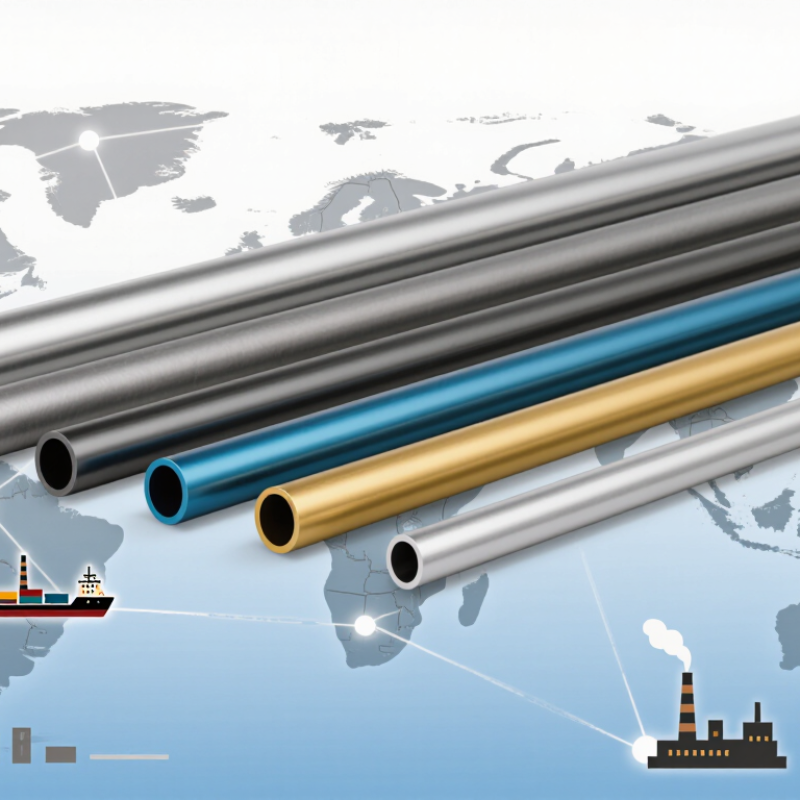
Nickel alloy tubes are hollow metal components made from nickel-rich alloys, often combined with chromium, molybdenum, iron, or copper. This chemistry gives them strong resistance to heat, oxidation, pressure, and corrosive fluids. A tube can look flawless and still fail without the correct alloy grade.
The U.S. Geological Survey’s Mineral Commodity Summaries 2025 reports global nickel mine production of about 3.7 million metric tons in 2024. This figure reflects the wider nickel supply chain, not tube production. Still, it shows the scale of a critical engineering material. The International Energy Agency’s Global Critical Minerals Outlook 2024 also identifies nickel as important for stainless steel and clean-energy technologies.
Where are these tubes used? Chemical plants use them for heat exchangers, reactors, and transfer lines exposed to acids or chlorides. Power stations install them in boilers, condensers, and high-temperature piping. Offshore equipment faces saltwater, vibration, and difficult maintenance, making nickel alloys useful for selected tubular parts. Aerospace systems may use smaller tubes around fuel, hydraulic, or engine assemblies.
Material selection remains the difficult part. Alloy 625 may suit high-strength, corrosive service, while nickel-copper alloys can perform well in seawater. Temperature, weld design, fluid concentration, and flow speed all matter. A mistake here is expensive. Inspectors should review chemical certificates, dimensional tolerances, weld procedures, and pressure-test records. ASTM and ASME requirements can support verification, but paperwork alone cannot replace practical inspection.
How to Evaluate Nickel Alloy Tube Suppliers Worldwide
Choosing nickel alloy tube suppliers requires evidence, not polished catalogs. Ask for recent mill certificates tied to the exact production lot. Check alloy chemistry, tensile results, hardness, and heat-treatment records. Traceability matters. Each bundle should carry a heat number, size, grade, and inspection status. Request sample reports before placing a large order. A certificate alone is not proof.
Experienced buyers compare manufacturing controls before comparing prices. Ask whether tubes are seamless or welded, and how weld quality is tested. Confirm dimensional tolerances, surface finish, straightness, and tube-length limits. For demanding service, require non-destructive testing and documented inspection procedures. An independent inspector can witness testing before shipment. However, inspection adds time and cost. That trade-off is easy to underestimate.
Global reliability also depends on communication. Measure response quality with technical questions, not friendly promises. Review packaging details, moisture protection, labeling, and loading photographs. Clarify delivery terms, export documents, payment stages, and claims procedures in writing. Do not accept vague promises about capacity or delivery dates. I still recheck apparently simple details, because small errors can delay an entire installation. A limited trial order can reveal packaging weaknesses, slow replies, or inconsistent dimensions before a larger commitment.
7 Best Nickel Alloy Tube Suppliers for Global Buyers: How to Evaluate Suppliers Worldwide
This neutral evaluation model uses practical procurement criteria for comparing nickel alloy tube suppliers worldwide. The weighting emphasizes material and standard compliance, traceability, documentation, technical capability, delivery performance, and export support. Buyers should adjust the percentages according to project risk, industry requirements, and applicable standards such as ASTM, ASME, EN, or ISO.
Seven Leading Nickel Alloy Tube Suppliers for Global Buyers
Seven Leading Nickel Alloy Tube Suppliers for Global Buyers
Global buyers need more than a low quotation when sourcing nickel alloy tubes. The seven leading supplier groups usually include integrated mills, seamless tube specialists, welded tube producers, precision fabricators, aerospace-qualified manufacturers, heat-exchanger specialists, and regional stockholders. Each group serves a different purchasing risk. Integrated mills offer stronger traceability, while stockholders often provide faster delivery. However, availability may hide limited alloy choices.
The U.S. Geological Survey reported global nickel mine production above 3 million metric tons in 2023. The International Energy Agency also identifies nickel as an important material for energy technologies and highlights supply concentration risks. These figures matter to tube buyers because raw material volatility can affect lead times, surcharges, and contract stability. Ask suppliers for heat numbers, mechanical results, corrosion data, and inspection records. Request them before placing a large order.
Look for ASTM and ASME compliance where pressure service applies. Confirm solution annealing, tube straightness, wall-thickness tolerance, and hydrostatic testing. Small details matter. A supplier may quote Alloy 625, but the delivered condition could still affect welding or forming. Experience helps here, yet experience is not proof. Buyers should compare recent test certificates, audit findings, and customer references. I would also challenge unusually short delivery promises. They may be genuine, but they deserve verification.
Comparing Product Quality, Certifications, Prices, and Delivery
Choosing among the seven best nickel alloy tube suppliers requires more than comparing catalog prices. The USGS Mineral Commodity Summaries 2025 estimated global nickel mine production at about 3.7 million metric tons in 2024. This volatile input market affects tube quotations. The World Bank reported an average nickel price near US$16,800 per metric ton in 2024. Buyers should request a price validity period, alloy surcharge method, and complete landed-cost estimate.
Product quality starts with traceability. Ask for heat numbers, chemical analysis, mechanical test results, and hydrostatic or eddy-current inspection records. ASTM and ASME specifications should match the drawing, pressure class, and service temperature. ISO 9001 supports process control, while EN 10204 3.1 certificates provide useful batch evidence. Certification alone is not enough. I would still check sample reports carefully.
Delivery deserves equal attention. A supplier holding standard sizes may ship in days, while custom cold-worked tubes can require several weeks. Confirm production capacity, inspection queues, packaging, Incoterms, and customs documentation before ordering. The World Bank’s logistics indicators show how transport reliability can vary across trading routes, yet supplier quotes rarely reveal this risk. My own shortlist sometimes changes after one unanswered technical question. That is not ideal, but responsiveness often predicts project support better than a polished brochure.
How to Choose the Right Supplier for Your Project Needs
Choosing a nickel alloy tube supplier starts with your service conditions, not a sales catalog. Define alloy grade, outside diameter, wall thickness, length, tolerance, and forming method. Add temperature, pressure, corrosion media, and expected operating cycles. A supplier who asks about these details shows technical discipline. A quick quote is not always a good quote. Sometimes, it hides missing assumptions.
Request mill test certificates, heat numbers, dimensional reports, and test methods before placing a large order. Check whether certificates match the actual tube bundle, not a generic template. For welded tube, ask about weld inspection and heat treatment records. For seamless tube, verify process capability and size range. Independent inspection can add confidence for critical applications. It also adds cost, so include it early. Samples matter. A short trial can expose ovality, surface marks, or difficult machining.
Assess delivery reliability through realistic evidence: recent lead times, production capacity, packaging photos, and responses to technical questions. Confirm how the supplier handles nonconforming material, replacement schedules, and traceability after shipment. Price should include testing, freight, duties, inspection, and possible scrap. Cheap tubing may become expensive during installation. Communication deserves a score. Clear drawings, controlled revisions, and written approvals reduce mistakes. Still, no checklist is perfect; specifications can change after testing. Leave room for review, and record every decision before production begins.