Industrial Machinery Company

Why Choose a 48V Electric Scooter for Your Fleet?

Fleet operators need vehicles that can handle repeated trips, short charging windows, and daily wear. NACTO’s 2023 Shared Micromobility in the U.S. and Canada report recorded 133 million shared micromobility trips across the United States and Canada that year. That figure signals substantial use, but it does not prove every fleet needs the same scooter—or battery voltage. Demand varies by route, weather, rider weight, and service area. Local conditions matter.

A 48v Electric Scooter can be a practical option for fleets seeking a balance of usable torque, speed, and battery-system compatibility. Higher voltage can reduce current for a given power level, which may ease electrical load in some configurations. Yet voltage alone does not determine range or performance. Battery capacity in watt-hours, motor and controller ratings, tire choice, payload, and charging practices all affect real-world results. Small details count: a steep block, a heavy delivery bag, or a battery left charging between shifts.

For procurement teams, compare tested range under realistic loads, charge time, parts availability, warranty terms, and service requirements. Ask suppliers how their figures were measured. NACTO’s trip data describes market activity, not the performance of any specific scooter model. That distinction is easy to miss. A fleet pilot can reveal what a brochure cannot: whether the scooter finishes its route, returns reliably, and stays economical after months of use. Voltage is a starting point, not a verdict.
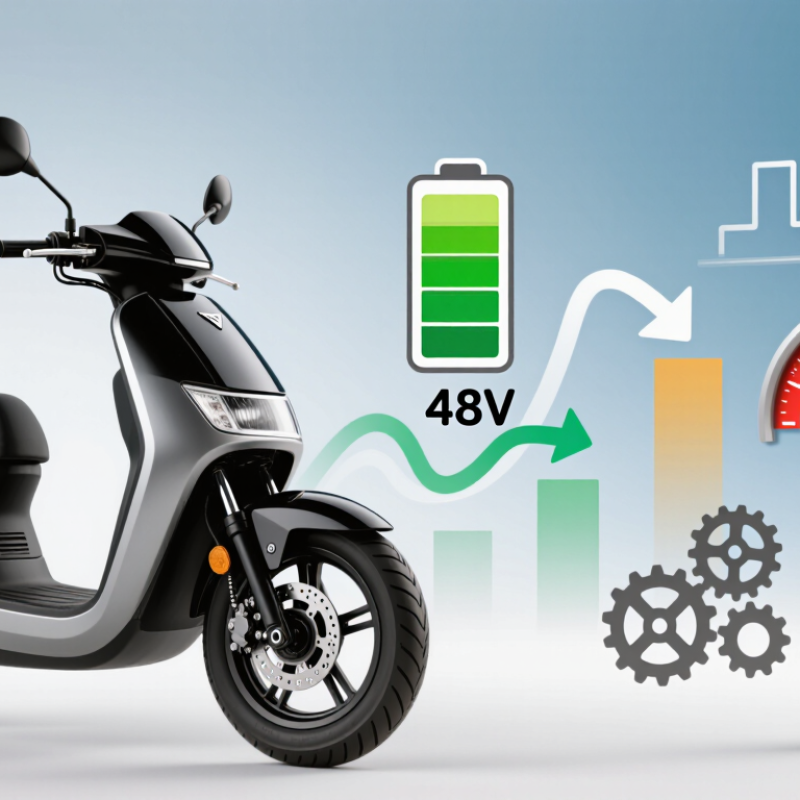
Why Choose a 48V Electric Scooter for Your Fleet?

How a 48V Electric Scooter System Works

A 48V scooter system starts with a battery pack made from connected cells. In a series arrangement, cell voltages add up to create the pack’s nominal voltage. A battery management system monitors cell balance, temperature, and current. Depending on its design, it can limit output or disconnect power when readings leave safe ranges. Details matter.

When a rider turns the throttle, the controller reads the signal and meters current from the battery to the motor. More current can provide stronger acceleration, but it also creates more heat and uses energy faster. The controller, motor, battery, and wiring need compatible ratings. A poorly matched setup may feel jerky, even on a smooth warehouse floor. That is worth checking.

Under load, battery voltage naturally dips. Rider weight, hills, tire pressure, and frequent stops all affect range, so a fleet’s real results may differ from a specification sheet. Operators can compare battery charge levels across shifts and note which routes drain packs fastest. A consistent charging area helps, too, though charging routines are easy to neglect during a rushed handover. For fleet planning, the 48V label is only a starting point; battery capacity, controller limits, and maintenance records explain more about daily performance.

Performance Benefits for Fleet Operations

For fleet operations, 48V is useful because it can deliver higher power with less current than a lower-voltage system. At equal output, a 48V setup draws roughly half the current of a 24V setup. With identical wiring resistance, that can reduce resistive losses to about one quarter. Less current can also mean less heat in cables and connectors, though real results depend on component quality and system design.

That difference matters on loaded starts and steep ramps. Riders may feel steadier acceleration, while dispatchers may see fewer slowdowns on demanding routes. There is a caveat. A 48V label alone does not guarantee more range or speed; the motor, controller, battery capacity, payload, and terrain all shape performance. The International Energy Agency’s Global EV Outlook 2024 estimates that nearly 10 million electric two- and three-wheelers were sold worldwide in 2023. Adoption is growing, but fleet needs still vary.

Before choosing a system, test it with the actual load and route. Track energy use per shift, hill-climb performance, connector temperature, and charging time. Small details count. A scooter that feels quick unloaded may struggle with a delivery box on a long incline. And higher voltage is not a shortcut around routine inspection or careful battery management.

Energy Use and Total Cost of Ownership

A 48V scooter can be a practical fleet choice, but voltage alone does not predict energy cost. Measure watt-hours per kilometer on the routes riders actually use. Include stops, slopes, payload, tire pressure, and cold mornings; a flat test track can flatter results. Record charger-meter readings over several shifts, since wall energy includes charging losses. Small differences matter when dozens of scooters repeat the same route.

Total cost of ownership should include purchase price, electricity, battery replacement, tires, brakes, service labor, and lost operating time. Compare cost per completed delivery or service trip, not just cost per charge. Keep a log of distance, charging time, and repair hours for each unit. Check battery capacity periodically, using the same route and load where possible. A 48V system may suit longer routes or heavier loads, yet the result depends on motor tuning and battery capacity. Voltage is only one clue.

There is a catch. A spreadsheet can look precise and still miss rider behavior or weather. Review real operating data monthly, then revise estimates when usage changes. If one scooter sits idle, its lower energy bill may hide a poor asset return. Fleet economics are less tidy than brochures suggest.

Safety, Maintenance, and Battery Management

A 48V electric scooter can suit fleet work where riders make frequent stops and carry moderate loads. The higher system voltage can support efficient power delivery, but it does not guarantee longer range. Actual performance depends on the motor, battery capacity, rider weight, terrain, and temperature. Check these factors against your routes before choosing a fleet configuration.

Safety and upkeep start with consistent inspections. Before each shift, riders should check tire pressure, brake response, lights, and visible cable damage. A loose brake lever or soft tire can turn a routine trip into a risky one. Schedule maintenance at regular intervals, and record faults instead of relying on memory. Small checks matter. Staff should use only a charger specified for the scooter’s battery system. Keep charging areas dry, ventilated, and clear of stored materials. Let a hot battery cool before charging, and remove damaged packs from service for qualified inspection. Battery management takes discipline. We sometimes miss small warning signs when the fleet is busy.

Tips: Keep a simple log of charge cycles, reported range, and battery temperature if available. Avoid routinely draining packs to empty, and do not leave them fully charged in hot storage for long periods. Follow the manufacturer’s instructions for storage and charging. Keep records.

Why Choose a 48V Electric Scooter for Your Fleet? — Safety, Maintenance, and Battery Management

Fleet Consideration 48V System Fact Operational Relevance Recommended Fleet Practice
Nominal voltage “48V” describes a nominal system voltage; the actual battery voltage changes with its state of charge and chemistry. Voltage affects compatibility among the battery, motor controller, charger, and other electrical components. Confirm that every replacement part and charger matches the scooter manufacturer’s specified voltage and battery chemistry.
Battery energy A 48V, 20Ah battery has a nominal energy rating of 960Wh (48 × 20). Available energy is lower than the nominal figure in real use. Watt-hours help compare battery capacity, but they do not guarantee a particular distance per charge. Estimate range using your own route, rider load, speed, terrain, temperature, and battery-age data.
Current at equal power For the same electrical power, a 48V system draws about 25% less current than a 36V system in an ideal comparison. Lower current can reduce resistive losses in wiring when power and circuit resistance are otherwise comparable. Actual results depend on the complete system. Use correctly rated wiring, connectors, fuses, and controllers; do not assume voltage alone determines efficiency or performance.
Charging voltage A common 13-series lithium-ion battery labeled 48V has a full-charge voltage of 54.6V. Other battery configurations may differ. Using a charger with the wrong output voltage or chemistry can damage the battery or create a safety hazard. Use only the charger specified for the exact battery pack. Check its label and inspect cables and connectors regularly.
Electrical safety A 48V battery can supply high current even though its nominal voltage is relatively low; short circuits can cause burns, fire, or equipment damage. Battery terminals, damaged cables, and conductive tools can present hazards during handling or repair. Train staff not to open battery packs or bypass protection circuits. Isolate damaged scooters and refer repairs to qualified technicians.
Battery management system A battery management system may monitor cell groups and provide protections such as overcharge, over-discharge, overcurrent, or temperature limits; features vary by pack. Protection features support safer operation but do not replace proper charging, inspection, or handling. Record battery alerts and faults, follow the pack maker’s instructions, and remove batteries that show swelling, leakage, unusual heat, or damage from service.
Routine maintenance Voltage does not eliminate normal wear on tires, brakes, fasteners, bearings, or electrical connections. Consistent checks can identify safety issues before a scooter is assigned to another rider. Set inspection intervals based on usage and manufacturer guidance. Check tire condition and pressure, brake operation, lights, fasteners, and visible wiring.
Charging and storage Safe temperature limits and preferred storage charge levels depend on the specific battery design and its manufacturer’s instructions. Heat, moisture, physical damage, and unsuitable storage conditions can shorten battery life or increase risk. Charge in a dry, monitored area away from combustible materials. Follow the battery instructions for temperature, storage charge, and long-term storage.
Fleet performance tracking Battery capacity and usable range can change with age, charging history, temperature, and operating conditions. Tracking usage helps identify declining batteries and plan charging or replacement needs. Log battery identification, charge cycles or charge events, reported faults, service work, and observed range under comparable operating conditions.

Planning reference only. Specifications, protection features, inspection intervals, and safe operating limits vary by scooter and battery pack; consult the relevant product documentation.

Fleet Applications and Selection Criteria

A 48V scooter can suit delivery routes, campus transport, and large sites with repeated stops. At equal power, a 48V system draws less current than a 36V system. With identical wiring resistance, that can reduce wiring losses; real results depend on the controller, motor, and load. Voltage alone does not predict range.

Fleet fit matters more. NACTO’s 2022 and 2023 shared micromobility reports counted 113 million and 133 million trips across the United States and Canada, respectively. That growth signals sustained use, but not that every route needs the same scooter. Measure daily distance, hill gradients, rider and cargo weight, and shifts between charges. Then check battery access, charging time, replacement cost, brake durability, and tire service. Downtime adds up.


Test on the actual route. A loaded scooter climbing a wet ramp may behave differently from one on a flat campus path. Record energy use per shift and inspect wear after several weeks. Small trials help. A 48V model may offer useful headroom, yet it can add purchase or battery costs without improving a short, flat route. The right choice is not always obvious. NACTO’s trip totals describe shared systems, not every private fleet, so local operating data should guide the final specification.