A 22m Telescopic Diesel Boom Lift is a mobile elevating work platform designed to place workers and tools at height. Its straight telescopic boom extends outward, helping operators reach façades, steelwork, lighting, and other elevated work areas. Diesel power is commonly suited to outdoor jobs where a robust machine and longer operating periods are useful. Still, the name alone does not tell you everything.
The “22m” figure may refer to working height or platform height, depending on the manufacturer. That distinction matters. A model’s data sheet should also show horizontal outreach, platform capacity, machine dimensions, gradeability, and operating weight. These details affect whether it can reach over an obstacle, carry the required crew and tools, or travel across a particular surface. A neat brochure number is not the whole story.
This guide explains how the lift works, where it is commonly used, and which specifications deserve close attention. It also covers practical considerations such as access routes, ground conditions, and operator training. On a real site, a narrow gate or soft ground can matter more than impressive reach. Exact performance varies by model and setup, so confirm figures with the manufacturer’s documentation before choosing equipment. No single lift suits every task. The right decision comes from matching verified specifications to the work, rather than relying on the headline height alone.
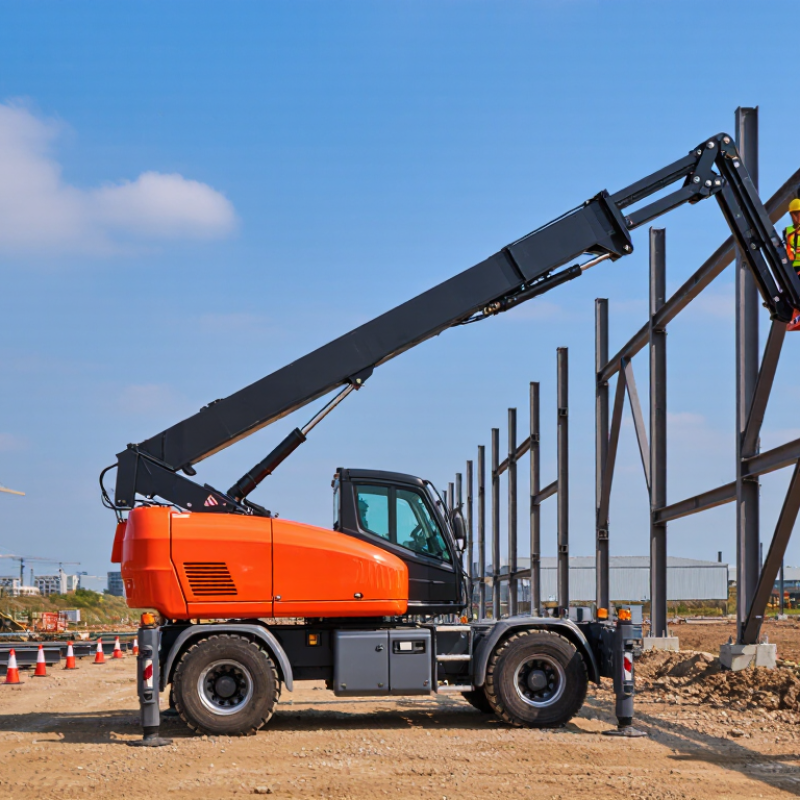
A 22m telescopic diesel boom lift is a mobile elevating work platform with a straight, extendable boom. The 22m figure usually describes platform height, not horizontal reach or total working height. Confirm the machine’s specification plate; terminology can vary between listings. The boom’s telescoping sections extend from a rotating upper structure, placing a work platform beside or above obstacles. Operators use controls in the platform and at ground level. The diesel engine powers travel and lifting, while a four-wheel-drive chassis is common for rough outdoor sites. Details vary.
Its core design combines reach, stability, and controlled movement. A heavy chassis supports the boom, and the platform has guardrails and an entry gate. Sensors and interlocks help prevent operation beyond specified limits, but they cannot replace a level-ground check or trained operation. The U.S. Bureau of Labor Statistics recorded 1,075 fatal work injuries in construction in 2023 in its Census of Fatal Occupational Injuries. This figure covers the construction sector, not boom lifts alone. Still, it underscores why load limits, ground conditions, and safe positioning matter. Even a tall machine has practical limits.
How Its Telescopic Boom and Diesel Drive System Work
A 22m telescopic diesel boom lift is a mobile work platform designed to raise workers and tools to elevated areas. Check what “22m” means in the supplier’s specifications: it may refer to working height, not platform height. That difference matters when a task sits near a roof edge or overhead structure. The lift’s straight, extendable boom reaches outward as well as upward, helping position the platform across obstacles.
The boom uses nested sections that extend through a hydraulic system. Operators can adjust boom length and angle from the platform controls, while the chassis supports movement around the worksite. A diesel engine supplies power for driving and hydraulic functions. On firm outdoor ground, this can be useful for moving between work areas without a separate power source. But added reach does not mean unlimited access. The permitted platform load and working envelope vary with boom position, so consult the machine’s load chart. A tight corner can change the plan.
Tips: Check ground firmness, slope limits, and overhead clearance before setup. Keep tools within the rated load. Diesel exhaust and noise also deserve attention, especially near enclosed or occupied areas. One easy detail to miss: measure the actual obstacle, not just the target height.
A 22m telescopic diesel boom lift combines a chassis, engine, boom assembly, platform, and control system. Its telescoping sections extend outward, while the boom pivots to reach work areas above and beyond obstacles. Typical machines offer about 22 metres of working height, though platform height is lower. Rated capacity, horizontal outreach, and machine weight vary by configuration; check the data plate and operating manual, not the headline height.
The chassis commonly uses four-wheel drive and a diesel engine for rough outdoor surfaces. Axles, tyres, and stabilisers—where fitted—affect ground contact and stability. At the platform, operators use guarded controls, an emergency stop, and a harness anchorage point. Small details matter. A tilted machine, soft ground, or excessive platform load can quickly change the risk. The U.S. Bureau of Labor Statistics recorded 885 fatal work-related falls, slips, and trips in 2023; its Census of Fatal Occupational Injuries underscores why positioning and fall protection deserve careful checks.
Key specifications include maximum platform height, horizontal outreach, rated platform capacity, gradeability, turning radius, and permitted wind speed. These figures are not interchangeable across models. For example, a 230-kilogram platform rating includes occupants, tools, and materials together. Consult the machine’s load chart and site conditions before extending the boom. I would not assume the advertised reach is available at every height; the operating envelope tells the more useful story.
A 22m telescopic diesel boom lift is designed to raise workers and tools to elevated work areas, often across open construction or maintenance sites. The stated height can mean platform height or working height, depending on the specification. Check the machine’s data plate and operating manual before planning a task. Its straight, extending boom can reach over ground-level obstacles, such as stored materials or low structures. Useful on large sites.
Typical applications include installing exterior cladding, inspecting roof edges, maintaining industrial equipment, and positioning steelwork. Workers may need to carry hand tools, but the platform’s rated capacity still applies. Measure the required outreach as well as the vertical height; a high work area may sit beyond the safe reach available from a particular setup.
Diesel models are generally suited to outdoor work, where exhaust can disperse and there is room to maneuver. Firm, reasonably level ground matters. Some models handle rougher terrain, but that should never be assumed. A wide yard can still hide soft soil, trenches, or uneven patches. Check ground conditions, overhead obstructions, and wind before raising the platform. Small details matter. A rushed site check is easy to regret.
What Is a 22m Telescopic Diesel Boom Lift?
Safety Requirements, Limitations, and Maintenance Needs
A 22-metre telescopic diesel boom lift raises workers and tools to elevated work areas, but its rated height does not guarantee access everywhere. Horizontal outreach, platform load, boom angle, and ground conditions all affect safe positioning. Check the machine’s load chart and manual before each task. Keep the platform within its rated capacity, including workers, tools, and materials. Use the designated harness anchor point, and never climb the guardrails. Simple checks matter.
The IPAF 2023 Global Safety Report recorded 102 powered access fatalities in 2022 across 22 countries. Its incident data is voluntarily reported, so it cannot represent every event; still, it highlights why falls, entrapment, and overturning risks deserve attention. Inspect the work area for soft soil, slopes, overhead obstructions, and power lines. Diesel exhaust also requires adequate ventilation, making enclosed spaces a poor choice without suitable controls. A 22-metre reach can feel reassuring, but it does not erase site hazards.
Before use, inspect tyres, brakes, hydraulic hoses, controls, and emergency-lowering systems. Look for fresh oil beneath the chassis and damage around the boom pins. Test platform controls and ground controls on level ground. Schedule servicing at the intervals specified by the manufacturer, and record defects before the lift returns to work. Do not operate equipment with unresolved faults. In practice, a rushed inspection is easy to rationalize; that is exactly when a small leak or faulty alarm can be missed.
| Category | Typical Information | Safety or Operating Note |
|---|---|---|
| Definition | A self-propelled elevated work platform with a straight, extending boom, a work platform, and a diesel engine. | “22 m” commonly refers to approximate working height; confirm whether a specification gives working height or platform height. |
| Working height | Around 22 m on a machine rated for that working height. Platform height is commonly about 2 m less than working height, but varies by design. | Use the exact height and reach chart in the machine’s operating manual; never estimate reach from the nominal height alone. |
| Horizontal outreach | Often approximately 17–18 m for machines in this general class; actual outreach depends on the model and boom position. | Outreach and platform load may be restricted at different boom angles. Consult the load chart before positioning. |
| Platform capacity | Many models are rated for roughly 230–300 kg, including occupants, tools, and materials. The rated capacity is model-specific. | Do not exceed the platform rating or any reduced capacity shown for a particular operating zone or configuration. |
| Power and terrain | Diesel power is commonly used for outdoor work and rough-terrain travel. Four-wheel drive and oscillating axles are available on some models. | A rough-terrain design does not make every slope or surface safe. Check the manual’s grade, axle, and driving limits. |
| Operator requirements | Operators should receive equipment-specific training and be familiar with the controls, emergency lowering, and site hazards. | Follow applicable local regulations and site procedures. Keep unauthorized people away from the work area. |
| Fall protection | Use the fall-protection system required by the manufacturer and applicable regulations; where required, connect a suitable harness and lanyard to the designated anchor point. | Do not attach to nearby structures or climb on platform rails. Keep both feet on the platform floor. |
| Wind and weather | Allowable wind speed is set by the machine’s rating plate and manual; some outdoor-rated lifts specify a maximum around 12.5 m/s (28 mph), but limits vary. | Do not operate above the stated limit. Consider gusts, large materials that catch wind, lightning, and deteriorating weather. |
| Ground and overhead hazards | The lift needs a firm, reasonably level surface within the machine’s permitted slope and loading limits. | Assess soft ground, trenches, drop-offs, underground services, traffic, and overhead obstructions. Maintain required clearance from power lines. |
| Common limitations | A telescopic boom provides direct outreach, but working envelope, capacity, turning space, transport dimensions, and ground pressure vary by machine. | Do not use the lift as a crane, push or pull objects with the boom, or drive elevated unless the manual permits it and site conditions are safe. |
| Pre-use inspection | Before each shift, inspect controls, alarms, emergency lowering, tyres, platform gate, guardrails, boom, hoses, leaks, and visible structural damage. | Remove a defective lift from service, report the issue, and do not operate it until repaired and cleared for use. |
| Routine maintenance | Follow the manufacturer’s service schedule for engine oil and filters, fuel and air filters, hydraulic fluid, boom wear pads, batteries, brakes, and safety systems. | Service intervals depend on the model, operating hours, and conditions. Use the specified fluids and qualified technicians. |
| Inspection records | Record inspections, faults, repairs, and scheduled maintenance as required by the manufacturer and local rules. | Keep manuals and inspection records accessible, and verify that required periodic examinations are current before use. |