Industrial Machinery Company

2026 Top Paper Box Glue Spraying Machine Types?

Choosing a Paper Box Glue Spraying Machine in 2026 is less about finding one universal winner and more about matching the machine to the box, adhesive, and production line. Folding-carton demand, shorter production runs, and automation are shaping equipment decisions. Smithers’ The Future of Folding Cartons to 2028 provides market context, while PMMI’s 2024 State of the Industry: U.S. Packaging Machinery examines machinery and automation trends. These reports help frame the investment, but they do not provide a direct ranking of glue-spraying machine types. That distinction matters.

This guide compares common options, including manual, semi-automatic, and fully automatic systems, as well as robotic and inline configurations. It considers practical details: nozzle control, spray consistency, changeover time, line speed, and maintenance access. A machine that suits a small batch of rigid boxes may struggle with high-volume folding cartons. And speed is not everything. Buyers should also check adhesive compatibility, box dimensions, operator skill, and service support before comparing quoted output rates. In real production, dust, board variation, and setup errors can affect results. Reports offer useful context, but a plant trial is still difficult to replace. The sections ahead explain where each machine type fits, what trade-offs to expect, and which questions deserve a closer look before purchase.
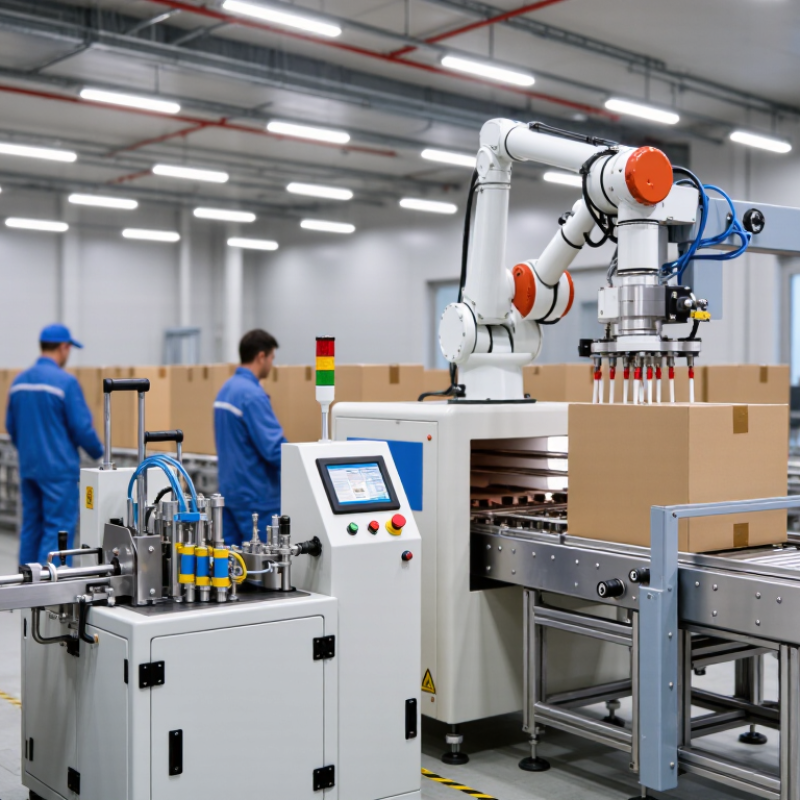
2026 Top Paper Box Glue Spraying Machine Types?

What Is a Paper Box Glue Spraying Machine?

A paper box glue spraying machine applies controlled adhesive to carton blanks before folding, forming, or sealing. It typically combines a conveyor, glue supply, pump, spray valves, and timing controls. The nozzles place glue as dots, narrow lines, or wider bands, depending on the box design. That distinction matters. A spray system differs from a roller or manual applicator because it can target specific areas without coating the entire surface. Operators adjust the pattern, pressure, and timing to suit the board and adhesive. In practice, results also depend on nozzle condition and glue viscosity. The terminology is not always neat: some suppliers use “spraying” for systems that actually dispense fine beads.

The machine’s purpose is repeatable bonding at production speed, not simply applying more glue. A poor setting can cause stringing, overspray, weak seams, or messy box interiors. FAO’s Global Forest Products Facts and Figures 2022 reports about 401 million tonnes of paper and paperboard production worldwide that year. This broad industry figure is not a machine-sales measure, but it shows the scale of material being converted into packaging. For buyers, useful checks include minimum and maximum box size, adhesive compatibility, pattern accuracy, changeover time, and cleaning access. Ask for trials using your own board and glue. Small details matter. A fast line is not automatically a good fit.

2026 Top Paper Box Glue Spraying Machine Types? - What Is a Paper Box Glue Spraying Machine?
Machine Type How It Works Common Applications Typical Advantages Key Considerations
Manual Glue Spraying Machine An operator positions the paperboard or box component and controls glue application with a hand-operated spray gun. Prototypes, samples, repair work, and small production runs. Simple setup and flexible handling of different shapes and sizes. Application consistency and output depend heavily on operator technique. Use suitable extraction and follow adhesive safety instructions.
Semi-Automatic Glue Spraying Machine The operator loads or positions each piece, while a powered conveyor, fixture, or controlled spray head applies adhesive. Small to medium batches of box components and specialty packaging. Offers more repeatable application than fully manual spraying while retaining flexibility. Loading and handling may remain manual. Setup must match the component dimensions and glue pattern.
Automatic Inline Glue Spraying Machine Conveyor-fed components pass through fixed or controlled spray heads, often as part of a packaging production line. Repeated production of cartons, sleeves, and other paperboard packaging. Supports continuous feeding and consistent, repeatable glue placement when correctly set up. Requires compatible upstream and downstream equipment, accurate feeding, and regular nozzle maintenance.
Multi-Head Glue Spraying Machine Two or more spray heads apply adhesive to separate areas or patterns during the same pass. Components that require glue in multiple locations, such as selected folding-carton or rigid-box operations. Can reduce repeated handling and apply several glue lines or zones in one cycle. Head spacing, spray pattern, and adhesive flow need to be matched to the product design to avoid excess glue or missed areas.
Programmable or Robotic Glue Spraying System A programmed motion system guides the spray head or workpiece along specified paths. Complex shapes, varied glue paths, and production requiring programmable pattern changes. Allows controlled application paths and repeatable recipes for suitable products. Typically needs product-specific programming, guarding, and skilled setup. Confirm that the system supports the required adhesive and spray pattern.
What Is a Paper Box Glue Spraying Machine? A machine that applies adhesive as a controlled spray onto paper, paperboard, or box components for bonding or assembly. Packaging converting and box-making processes where a sprayed glue pattern is appropriate. Can distribute adhesive over selected areas without relying solely on manual brush application. Adhesive choice depends on the substrate, machine design, drying requirements, and end use. Not every machine supports every glue; verify compatibility with the equipment supplier.

How Do Paper Box Glue Spraying Machines Work?

How Do Paper Box Glue Spraying Machines Work?

A paper box glue spraying machine applies adhesive to selected flaps before the carton is folded and pressed. In many systems, a feeder moves each blank beneath fixed or moving spray nozzles. Photoelectric sensors detect the board, while an encoder or controller times each spray pulse. The nozzle turns liquid adhesive into a controlled pattern; some jobs need short spots, while others need a continuous line. Pressure, nozzle distance, and adhesive viscosity all affect coverage. Then folding belts or compression rollers hold the glued joint while it sets. Small changes matter. Too little glue can weaken a seam; excess glue may squeeze onto the print surface.

The FEFCO 2023 European Database reports 47.3 billion square metres of corrugated board production in Europe, down 3.8% from 2022. That scale helps explain why repeatable application matters, but high output alone does not guarantee a sound bond. Board coating, dust, humidity, and line speed can change how adhesive behaves. A spray setting that works on one carton may fail on another. More glue is not automatically safer; that assumption deserves a check.

Tips: Test the actual board and adhesive at production speed. Inspect several glued flaps, including edges and corners. Watch for mist, clogged nozzles, and glue transfer to rollers. Record the settings, but verify them after changeovers. A clean spray pattern is useful; a well-bonded box is the real test.

Paper Box Glue Spraying Machines: Types & Working Sequence (2026)

Paper-box gluing systems can apply adhesive through spray or nozzle application, or by contact methods such as rollers. A typical workflow feeds and positions the blank, applies adhesive to designated areas, folds the panels, and compresses the box while the bond sets. The chart shows process order—not processing time or machine output; actual configurations vary by box design and adhesive.

What Are the Main Types of Glue Spraying Machines?

Paper box glue spraying machines are commonly grouped by how they apply adhesive: intermittent spot, continuous line, and programmable multi-nozzle systems.

Intermittent machines release short bursts at set points. They suit cartons with separated glue zones, such as side seams or corner tabs. A sensor can trigger each burst as a blank passes beneath the nozzle.

Small details matter.

Continuous-line machines lay down an unbroken bead or narrow spray path. They work well on long seams and repeated box flaps. Operators need to match conveyor speed with adhesive flow. Too much glue can squeeze onto the printed surface; too little may leave edges lifting after folding.

I have found that nozzle height matters more than it first appears.

Programmable multi-nozzle machines control several spray heads to create different patterns on one blank. They are useful for varied box sizes or complex folding designs, but setup takes care. Some systems use hot-melt adhesive, while others handle water-based glue; the choice affects drying time, cleaning, and suitable materials. These categories can overlap. A machine may combine pulsed control with multiple nozzles, so buyers should check pattern accuracy, adjustment range, and maintenance access—not just the number of heads.

Which Box-Making Tasks Suit Each Machine Type?

The right glue-spraying machine depends on box shape, batch size, and how often the design changes. For short runs, prototypes, and gift boxes, a hand-fed or semi-automatic unit gives operators control over each panel. It is slower, but nozzle position and spray width are easy to adjust. Watch for uneven coverage.

For repeated straight-line cartons, an inline system can apply glue at consistent points as blanks move through folding. This suits steady production with few design changes. FEFCO’s Key Statistics 2023 reports about 56.8 billion square metres of corrugated board production in Europe, illustrating the scale of standardized box work. High-volume output benefits from repeatable application, but only when blank alignment and conveyor speed stay stable.

Complex boxes need more flexibility. Programmable multi-nozzle systems can target corners, partitions, and irregular panels on display or multi-piece packaging. They reduce manual repositioning, though setup and calibration take time. Test the actual board, adhesive, and required bond area before choosing. A pattern that looks neat may still miss a flap edge.

What Factors Help Select a Glue Spraying Machine in 2026?

2026 Top Paper Box Glue Spraying Machine Types?

What Factors Help Select a Glue Spraying Machine in 2026?

Choosing a machine starts with the box, not the catalogue. Intermittent spray suits defined glue points on folding cartons. Continuous spray handles longer seams, while multi-nozzle systems cover wider panels. Match the pattern to board weight, line speed, and adhesive viscosity. FAO’s 2022 forest-products statistics report about 401 million tonnes of paper and paperboard production worldwide. That scale highlights the need for reliable, repeatable application, but it does not tell you which machine fits your line.

Check whether the system can hold a consistent bead at your actual production speed. Ask for a test using your board and adhesive. Inspect overspray near carton edges, nozzle access, cleaning time, and changeover steps. These details affect waste and downtime. Also confirm controls can adjust glue volume without disrupting registration. A faster machine may still be the wrong choice. That assumption can be wrong.

Tips: Bring sample cartons and record glue use, reject rates, and cleaning minutes during a trial. Small detail. It matters. Leave room for maintenance access; a nozzle hidden behind guards can turn a quick clean into a frustrating stop. Industry reports offer useful context, but your own line trial should guide the final selection.