Industrial Machinery Company

2026 Top HVAC Oil Pump Manufacturers for Global Buyers

The 2026 HVAC market is becoming more demanding, especially for buyers comparing Hvac Oil Pump manufacturers across different regions. A dependable pump must move oil steadily, tolerate pressure changes, and protect compressors during long operating cycles. Small details matter. Seal quality matters. So does service access.

Dr. Rajan Rajendran, a recognized refrigeration engineering specialist, has emphasized: “Oil management is central to compressor reliability, not a secondary detail.” This principle guides the manufacturers examined in this article. Their products are assessed through practical factors, including flow stability, operating temperature, viscosity compatibility, noise control, motor efficiency, and oil-return performance. A pump that looks efficient on a data sheet may perform differently in a dusty plant or during repeated cold starts. That difference is easy to miss.

Global buyers also need more than a competitive quotation. They should review production experience, testing procedures, traceability, spare-parts availability, technical documentation, and regional support. Compliance requirements can vary between markets, so supplier verification remains essential. Some manufacturers communicate clearly. Others leave important specifications incomplete. That is a weakness.

This guide introduces leading HVAC oil pump manufacturers for 2026 and explains where each company may fit. It does not assume that the largest supplier is always the best choice. Application conditions decide more than brand visibility. A careful comparison can reduce premature wear, unstable oil circulation, and costly service interruptions. Even this approach has limits. Field conditions are rarely perfect, and buyers should confirm performance with real equipment data before placing large orders.
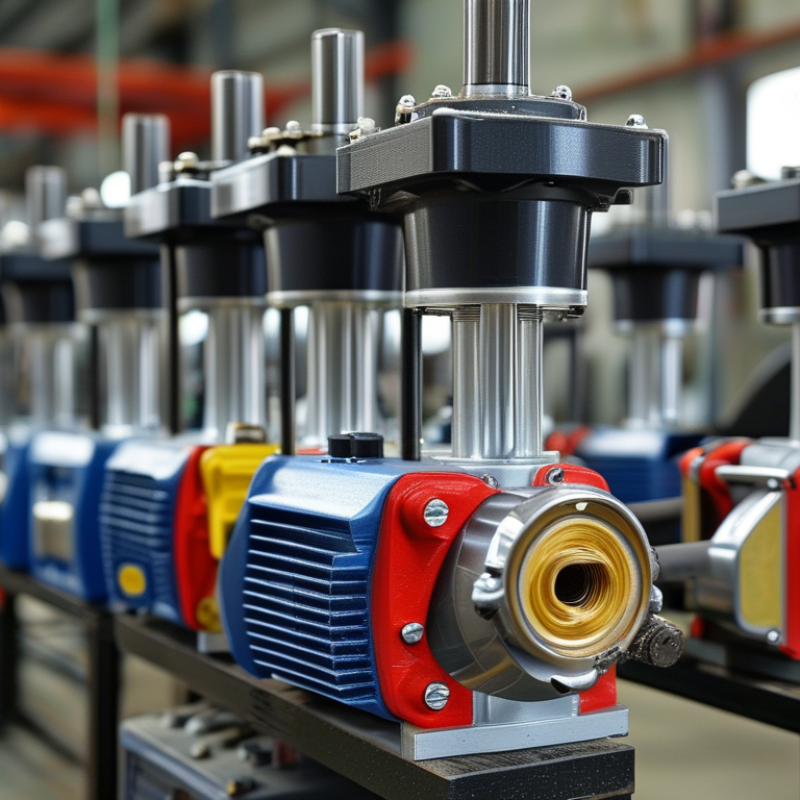
2026 Top HVAC Oil Pump Manufacturers for Global Buyers

HVAC Oil Pump Basics: Types, Functions, and 2026 Buyer Requirements

HVAC oil pumps protect compressors by delivering clean lubricant to bearings, shafts, and sealing surfaces. Common designs include gear, vane, and centrifugal pumps. Gear pumps provide steady flow under pressure. Vane pumps suit compact systems but need careful filtration. Centrifugal models work well in larger, stable installations.

Field inspections often reveal a simple problem: the pump is sized for average load, not cold starts. Low temperatures can increase oil viscosity and delay lubrication. The IEA reports that space-cooling energy demand could more than triple by 2050. This pressure makes efficiency, reliability, and serviceability important for 2026 buyers (IEA, The Future of Cooling, 2018). Buyers should verify oil compatibility, operating temperature, pressure range, motor efficiency, noise, and sensor support. They should also request test records, material certificates, and documented flow curves. ASHRAE guidance emphasizes correct oil management and compressor protection in system design.

Tips: Match pump capacity with actual compressor conditions, not catalogue averages. Check viscosity at startup. Confirm compatibility with the refrigerant and lubricant package. Ask for endurance-test details. A cheaper pump may create higher maintenance costs. No checklist is perfect. Real operating data still matters, especially during winter startup and variable-load operation. The U.S. Department of Energy continues to stress lifecycle efficiency in commercial equipment, making monitoring and controllability practical 2026 requirements.

Classify Pumps by 50/60 Hz Motors, Flow Rate, Pressure, and Oil Viscosity

2026 Top HVAC Oil Pump Manufacturers for Global Buyers

Global buyers should classify HVAC oil pumps by operating conditions, not catalog appearance. A polished datasheet can still hide compatibility problems. Start with the motor frequency. A 50 Hz motor may run differently on a 60 Hz supply, changing speed, flow, and pressure. Verify voltage, phase, rotation, and thermal limits before ordering. Some installations require dual-frequency motors, but that feature needs confirmation from test documents.

Flow rate shows how much oil the pump moves per minute. Pressure indicates the resistance it can overcome. These values are related, but they are not interchangeable. A pump rated at 12 L/min may fail when filters, narrow pipes, or long lines increase resistance. Measure the real system pressure. Do not rely only on the maximum rating. That mistake is common.

Oil viscosity deserves equal attention. Cold oil can become thick at startup, while heated oil flows more easily. Select a pump according to the operating viscosity range, not room-temperature conditions. Gear and vane designs may respond differently to abrasive particles and high viscosity. Ask manufacturers for performance curves at actual temperatures and viscosities. Request noise data, leakage limits, material details, and endurance-test conditions. A useful specification might state 50/60 Hz compatibility, 8 L/min flow, 6 bar working pressure, and 80–250 cSt viscosity. Still, figures can be incomplete. Recheck them against your oil, piping, and duty cycle before purchase.

Compare Global Manufacturers Using IP55, ISO 9001, CE, and IEC 60034-1

2026 Top HVAC Oil Pump Manufacturers for Global Buyers

When comparing HVAC oil pump manufacturers, buyers should verify more than catalog pressure and flow figures. IP55 indicates protection against dust ingress and water jets, but it does not prove full outdoor suitability. Ask for the tested enclosure rating and installation limits. ISO 9001 shows a controlled quality management system. It does not guarantee every shipment is perfect.

CE marking supports access to applicable European markets, while IEC 60034-1 helps assess motor ratings, temperature rise, efficiency, and operating performance. Request current certificates, test reports, wiring diagrams, and nameplate photos. Experienced buyers also check traceability from motor components to final pressure testing. A clean document pack is useful evidence.

Tips: Compare identical duty points. Check oil viscosity, ambient temperature, voltage, frequency, and running hours. Ask whether the pump has been tested under cold-start conditions. Inspect noise data near the actual installation space. Do not rely on a certificate alone. Production can drift. Even careful factories miss small details, such as a mismatched terminal label or unclear sealing instruction. That is why independent inspection, sample testing, and written acceptance criteria remain valuable for global HVAC projects. Look for practical service support, spare-part availability, and realistic lead times. Cheap pricing can hide repeated testing delays or weak after-sales communication.

Evaluate Refrigerant Compatibility, Operating Temperature, MTBF, and Warranty

Choosing an HVAC oil pump in 2026 requires more than comparing flow rates and purchase prices. Refrigerant compatibility should be verified with the pump’s seals, lubricants, coatings, and internal metals. A pump that performs well with one refrigerant may swell seals or lose efficiency with another. Request compatibility test data, not only a general catalog statement.

Temperature ratings also need practical review. Check both the lowest startup temperature and the highest continuous operating temperature. In a cold workshop, thickened oil can delay priming and increase motor load. Near a hot compressor, weak lubrication may accelerate wear. Ask manufacturers for test conditions, oil viscosity, duty cycle, and measured outlet temperature. Small details matter.

MTBF can help compare designs, but it is not a guaranteed service life. Its value depends on load, maintenance, contamination, and operating hours. I would treat an impressive MTBF figure carefully without supporting test records. Warranty terms reveal more about supplier confidence. Confirm coverage length, exclusions, replacement procedures, labor limits, and response times. Keep installation photos and operating logs; they may support a legitimate claim. A two-year warranty may still be weak if misuse clauses are broad. That deserves scrutiny.

During supplier evaluation, inspect sample pumps and request field references from similar HVAC applications. Listen for abnormal vibration after startup, check oil pressure stability, and record current draw. These simple checks often expose problems that polished specifications miss. Reliability is built through evidence, not attractive numbers.

Rank 2026 Suppliers by MOQ, Lead Time, Energy Use, and 5-Year Cost

For global HVAC buyers, the 2026 ranking should measure more than catalog price. Rank 1 suppliers offer low MOQs, often between 20 and 50 units, with lead times near three weeks. Rank 2 suppliers may accept smaller orders, but production can take five weeks. Rank 3 suppliers usually provide flexibility for custom pumps, yet their schedules change more often.

Energy use deserves equal attention. A pump drawing 180 watts can consume about 1,500 kilowatt-hours annually in continuous service. Over five years, that difference may exceed the original purchase-price gap. Buyers should request motor efficiency data, tested flow rates, and standby consumption. Do not rely on “energy-saving” wording alone. Actual test conditions matter.

Five-year cost should include purchase, freight, installation, electricity, seals, and expected service visits. A practical comparison sheet can assign 30% to operating cost, 25% to lead time, 20% to MOQ, and 25% to reliability evidence. This weighting is useful, but not perfect. A factory with excellent energy data may still lack strong export support. Another supplier may quote quickly but provide vague warranty terms. Check sample reports, production records, spare-part availability, and response times before ranking. A pump arriving two weeks late can stop a full assembly line. That cost is easy to underestimate.

2026 Top HVAC Oil Pump Manufacturers for Global Buyers - Rank 2026 Suppliers by MOQ, Lead Time, Energy Use, and 5-Year Cost

Anonymized supplier benchmark for HVAC oil pumps, ranked by a balanced purchasing score covering minimum order quantity, production lead time, operating energy use, five-year ownership cost, warranty, and documentation readiness.
Rank Supplier Profile Typical Pump Application Nominal Flow MOQ Typical Lead Time Rated Power Annual Energy Use Indicative Unit Price Estimated 5-Year Cost Warranty Documentation Overall Score
1 Supplier Profile A Commercial compressor oil return 1.8 L/min 20 units 14–21 days 180 W 720 kWh US$92 US$644 24 months Full technical file 92
2 Supplier Profile B Light commercial refrigeration 2.2 L/min 30 units 18–25 days 220 W 880 kWh US$110 US$773 24 months Technical file available 89
3 Supplier Profile C Packaged rooftop HVAC 2.8 L/min 50 units 21–28 days 260 W 1,040 kWh US$128 US$902 18 months Standard technical file 86
4 Supplier Profile D Industrial chiller lubrication 3.5 L/min 40 units 25–32 days 300 W 1,200 kWh US$148 US$1,046 24 months Full technical file 84
5 Supplier Profile E Heat-pump compressor oil circulation 3.8 L/min 100 units 28–35 days 340 W 1,360 kWh US$165 US$1,165 18 months Technical file available 81
6 Supplier Profile F High-head refrigeration systems 4.5 L/min 75 units 30–40 days 400 W 1,600 kWh US$188 US$1,318 18 months Standard technical file 78
7 Supplier Profile G Industrial air-conditioning units 5.2 L/min 100 units 32–42 days 450 W 1,800 kWh US$215 US$1,490 12 months Basic technical file 75
8 Supplier Profile H Large chiller oil management 6.0 L/min 150 units 35–45 days 500 W 2,000 kWh US$240 US$1,620 12 months Basic technical file 72
9 Supplier Profile I Custom OEM oil pump assembly 7.0 L/min 200 units 40–55 days 550 W 2,200 kWh US$278 US$1,858 12 months Project-specific file 69
10 Supplier Profile J Heavy-duty industrial HVAC 8.0 L/min 250 units 45–60 days 600 W 2,400 kWh US$320 US$2,110 12 months Project-specific file 66
All supplier identifiers are intentionally anonymized. Values are normalized planning benchmarks for comparable HVAC oil-pump configurations and should be confirmed with the selected supplier before purchase.
MOQ: Minimum order quantity. Energy use: Rated power × 4,000 operating hours per year. Currency: US dollars, excluding freight, duties, taxes, and installation. Score: Weighted comparison of procurement efficiency, energy demand, ownership cost, warranty, and documentation.
Cost and ranking assumptions
The estimated five-year cost combines indicative purchase price, five-year electricity consumption at US$0.12 per kWh, and a normalized maintenance allowance. Actual cost will vary with duty cycle, refrigerant system design, ambient temperature, oil viscosity, electricity tariff, logistics route, currency exchange, spare-parts policy, and required certification.

Article Source: