2026 Best Warming Chafing Dish for Catering Buyers?
Choosing the 2026 Best Warming Chafing Dish for Catering Buyers is about more than appearance. The right unit should hold food at a steady serving temperature, fit your menu, and work smoothly during a busy service. A buffet line serving soup, rice, and roasted vegetables has different needs from a compact wedding station. Capacity matters. So do pan depth, lid design, and how easily staff can refill each dish.
This guide looks at practical details buyers can verify before ordering. Compare fuel-powered and electric models, check the listed dimensions, and confirm that standard food pans fit securely. A clear lid can help guests see the food, while sturdy handles make setup and transport easier. Stainless steel is common in catering equipment, but thickness, finish, and construction quality vary. Small details matter. Ask suppliers about replacement parts, cleaning instructions, and product support, then test a sample under realistic service conditions when possible. One point deserves a second look: a larger dish is not always the better choice if it slows replenishment or takes up valuable table space. The best Warming Chafing Dish is the one that suits your event’s menu, staffing, and service pace—not simply the model with the most features.
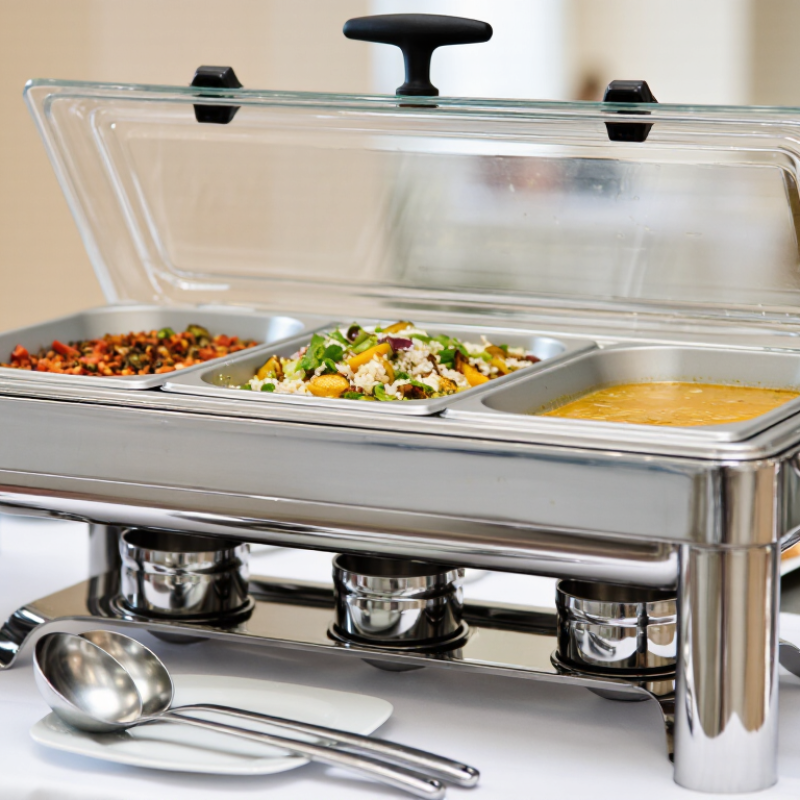
What a Warming Chafing Dish Does in Catering Service
A warming chafing dish keeps prepared food hot and ready to serve during catering. It is a holding tool, not a cooker. A typical setup uses a water pan beneath the food pan, with heat from fuel or an electric source. The water helps distribute warmth gently, while the lid slows heat loss and protects food from dust and passing hands. Small details matter. A loose lid or shallow water pan can make temperature control less steady.
During service, the dish supports a smoother buffet line. Guests can serve themselves while staff refill trays, clear plates, and answer questions. For example, a covered pan of vegetables can stay accessible without sitting directly over intense heat. That helps reduce scorching, though food can still dry out if held too long. Check the food temperature with a suitable thermometer, and follow applicable food-safety guidance for hot holding. A chafing dish does not replace monitoring.
For catering buyers, the right unit should fit the menu, venue, and pace of service. Consider pan capacity, fuel or power access, lid design, setup time, and how easily staff can clean it between events. A polished finish looks good on a buffet, but stable legs and simple handling matter more when the room gets busy. It is easy to focus on appearance. In practice, the awkward latch may be what staff remember.
2026 Best Warming Chafing Dish for Catering Buyers? - What a Warming Chafing Dish Does in Catering Service
| Buying or Service Dimension | What It Does | Practical Guidance for Catering Buyers |
|---|---|---|
| Primary purpose | Keeps prepared hot food warm for service; it is generally a holding unit, not a cooking appliance. | Cook food fully before placing it in the chafer. Do not rely on a chafer to safely heat cold or undercooked food. |
| Water pan and indirect heat | In a standard wet-heat setup, hot water in the water pan transfers gentle heat to the food pan above it. | Follow the unit’s instructions for water level and setup. Check the water during service and refill carefully when needed. |
| Safe hot holding | Hot-holding requirements are set by applicable food-safety rules, not by the chafer’s appearance or fuel flame. | As a widely used benchmark, the FDA Food Code specifies holding time/temperature control for safety food at 135°F (57°C) or above. Verify local requirements and use a food thermometer. |
| Fuel-heated models | Chafing fuel warms the water pan and is often useful at venues without convenient electrical access. | Fuel type and burn time vary. Follow the fuel and chafer instructions, keep flames away from combustible materials, and never leave a lit unit unattended. |
| Electric models | An electric heating element provides heat without an open chafing-fuel flame. | Confirm that the venue has suitable outlets and that the circuit can support the equipment. Keep cords secured and away from walkways and hot surfaces. |
| Food pan compatibility | The food pan holds the dish for service; dimensions and compatible pan formats depend on the chafer model. | Check the manufacturer’s stated pan size and depth before purchasing. For buffets, smaller pans can make it easier to replenish food in manageable batches. |
| Service capacity | The amount a chafer can serve depends on pan dimensions, food type, portion size, and replenishment frequency. | Estimate capacity from the actual pan and menu rather than the exterior size of the chafer. Plan enough units to avoid overcrowding the buffet. |
| Lid and access | A lid helps cover food between servings; lid designs may be lift-off, hinged, or roll-top. | Choose a design that suits the service line and staff workflow. Keep the lid closed when practical and use utensils that fit the food and pan. |
| Temperature monitoring | A chafer’s heat setting or fuel flame does not confirm that food is at a safe holding temperature. | Check food temperature with a clean, suitable food thermometer at regular intervals and record checks if required by the food-safety plan. |
| Outdoor and mobile catering | Wind, cold weather, and frequent lid opening can affect heat retention and service conditions. | Use the unit only in locations permitted by its instructions. Protect the setup from wind without blocking ventilation or creating a fire hazard. |
| Cleaning and durability | Food-contact surfaces and removable parts need cleaning after use; material and finish affect care requirements. | Check that pans and parts are removable and follow the cleaning instructions. Inspect hinges, handles, fuel holders, and electrical components before each event. |
| Best-fit selection | The most suitable chafer depends on the menu, venue, service duration, power access, and staffing. | Compare compatible pan dimensions, heat source, lid style, setup requirements, cleaning needs, and local safety rules before buying. |